
Burnside Lakes
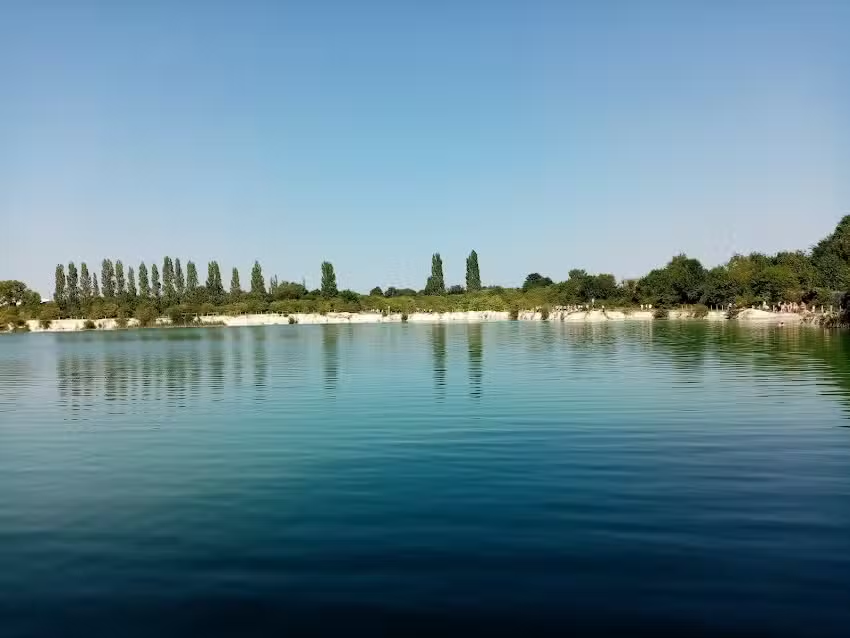
BackBurnside Lakes sits quietly in the southern part of Cambridge, an area that might easily catch the eye of those looking for tranquil fishing spots or secluded angling lakes. On first impression, the site inspires curiosity — broad, deep waters formed from an old quarry and surrounded by natural greenery. However, what gives this place its mystery is also what keeps most people away: Burnside Lakes is a private property with tightly controlled access, protected by metal fencing for safety reasons.
Many locals have expressed a mix of fascination and frustration over this landscape. From a distance, it appears an ideal location for coarse fishing, carp angling or even birdwatching, yet entry is restricted due to the site’s hazardous depth and industrial past. Historically, the lakes were created from former excavation pits, which have since filled with rainwater. While visually stunning, the water is said to contain remnants of chemicals from its quarrying era — making it unsuitable for recreational swimming or unregulated public use. As such, even though it looks like an ideal sanctuary for anglers, it remains off-limits for legitimate fishing activities.
For those searching online for places to enjoy a day of recreational fishing near Cambridge, Burnside Lakes often pops up among local place listings, perhaps misleadingly. Online reviews frequently reflect this misunderstanding. Visitors write that they hoped to set up a rod and relax by the still waters, only to discover steel fencing and warning signs barring access. Some comments empathise with the safety concerns, noting previous accidents involving swimmers and the unpredictable depth of the water. Others express disappointment that such a picturesque location could not be adapted into a managed fishing lake or public nature reserve.
The appeal of Burnside Lakes’ setting
The physical environment surrounding Burnside Lakes certainly adds to its allure. While not functioning as a public angling venue, the site offers beautiful scenery when viewed from authorised footpaths nearby. The interconnected pools mirror the sky and change tone with the weather, turning deep grey under cloud cover and bright teal under sunlight. Photographers have shared striking images online — particularly at sunrise when the mist clings low to the surface. From afar, the site conveys the peaceful charm often associated with popular fisheries such as Milton Country Park or Cherry Hinton Lakes, but with a more untamed atmosphere.
For environmental observers, Burnside Lakes also provide value as a haven for wildlife. Birds frequent the surrounding scrubland and reeds, and it is rumoured that the site supports small aquatic ecosystems. Yet, this is largely speculative, as public studies and ecological surveys are limited due to private ownership. Some environmental advocates argue that, if regulated properly, this location could serve as a safeguarded habitat and selective angling water for licensed fishermen, thereby balancing conservation goals with recreation.
What visitors say online
In reading through online feedback, a consistent narrative emerges: admiration mixed with disappointment. Several reviewers note that Burnside Lakes cannot be accessed legally, describing the fencing as imposing but necessary. One visitor mentioned that its depths and chemical makeup from its quarry past make it unsuitable for swimming or open access. Another called it a ‘great looking lake’ but criticised the principle of it being private land. Others shared that they wished such an attractive area was available as a community space, similar to other managed fishing lakes near Cambridge. Only a few positive notes appear, mainly from those who appreciate its aesthetic value and the serenity of the nearby riverbanks.
- Some appreciate the beauty of the landscape, describing the waters as ‘very pretty’ and reflective.
- Others criticise the limited access, arguing that natural areas like this should serve local recreation.
- Many acknowledge that safety and environmental concerns justify the restricted access, given past incidents.
Strengths of Burnside Lakes
Despite the criticisms, Burnside Lakes does possess genuine strengths. Its scenic quality makes it one of the more striking water features in the Cambridge outskirts. The balance between nature reclaiming an industrial site and its quiet isolation offers something rare in a busy region. The 24‑hour operational listing often confuses potential visitors, but it mainly refers to its existence as a geographic location rather than an active business. The area’s quietness and photographic potential have even attracted occasional nature enthusiasts who admire it from afar. Its location — close to both residential areas and major roadways — means it’s easily visible for those passing through, sparking regular curiosity online.
Areas where Burnside Lakes falls short
For practical anglers, Burnside Lakes offers little utility. There are no registered fishing pegs, no day‑ticket facilities, and no evidence of fish stock management. It is not a licensed fishery, meaning no permits are issued and no club or organisation maintains the water. The fence and private signage make it clear that entry without permission is prohibited. Because of this, the site cannot yet be considered a true destination for those seeking carp fishing or similar activities. Instead, customers seeking active facilities are often redirected online toward managed venues like Milton Country Park or Magpie Lake at Huntingdon, where angling is fully sanctioned and supported with amenities.
Another challenge is the perception of waste. Many reviewers emphasise that Burnside Lakes could be transformed into a safe, managed location for licensed anglers and local recreation. Several comparisons are made to neighbouring parks, which have successfully turned reclaimed quarries into safe freshwater fisheries. Such a redevelopment could potentially revitalise local interest and bring a sustainable model for public access and conservation together.
Safety and environmental management
Given its quarrying origins, Burnside Lakes present considerable safety hazards. The reported depth makes it unsuitable for unsupervised swimming or boating, and potential contamination from residual minerals further complicates matters. While the surrounding vegetation has recovered naturally, management appears limited. Access control — through fencing and signage — reflects the owner’s attempt to prevent accidents. For visitors, this reality serves as a reminder that visually inviting waters can conceal genuine risks. From an environmental standpoint, restricted access might have preserved wildlife undisturbed, allowing flora and fauna to thrive without human interference.
Burnside Lakes and community perception
Among Cambridge residents, discussion around Burnside Lakes often centres on unrealised potential. Some advocate for converting the grounds into a regulated fishing park or closed‑season angling site. Others prefer keeping it untouched, allowing nature to continue reclaiming the area free of disturbance. Both perspectives highlight how prominent the lakes have become in local thought — not as an active leisure site, but as a missed opportunity. The few photographs available online reveal an oasis of calm that could, with careful investment and control, rival popular angling venues in surrounding counties.
At its core, Burnside Lakes symbolises the tension between safety, ownership, and the public’s passion for outdoor recreation. While beautiful in form, its current private status restricts its potential as a fishing destination. Those looking for accessible fishing lakes near Cambridge may have better luck elsewhere, yet Burnside Lakes continues to intrigue both locals and online searchers with its quiet mystery and the dream of what it could one day become.