Whittle Dene Fishery
BackWhittle Dene Fishery is a long-established coarse venue that attracts anglers who enjoy natural waters, steady sport and a peaceful setting rather than a heavily stocked commercial pool. The complex is run as part of the Waterside Parks group and consists of three main coarse reservoirs, each offering slightly different challenges for pleasure anglers and match anglers who are used to working for their bites and building their weights over the course of the session.
The first thing many visitors notice is that Whittle Dene is set up for anglers who value a traditional day on a reservoir, with banks that feel natural and a layout that rewards good watercraft. Rather than platform after platform, you get a choice of roadside pegs for convenience or more remote grassy banks if you prefer quiet water away from the road. This balance means the fishery can work for less mobile anglers who want simple access, and for more active anglers keen to push a trolley a little further to find less pressured fish.
As a coarse venue, Whittle Dene has built a reputation for consistent sport from silver fish, with particularly good stocks of roach, perch and skimmers. Anglers’ reports talk about days with plenty of bites from skimmers, roach, perch and even the odd gudgeon, with some surprisingly hard-fighting brown trout also showing up when you are fishing light tackle. While it is not marketed as a specimen venue, there are shoals of quality roach that can run to a pleasing size, especially if you get your feeding right and keep fish grazing over your baited area.
For anyone searching online for a solid coarse fishing venue in Northumberland, Whittle Dene often appears as a recommended option thanks to its mix of species and the generally reliable action it can provide. Anglers who enjoy float work, especially a pole or waggler approach, tend to speak positively about the way the fish respond to regular feeding. A typical pleasure session might involve building a line with groundbait, loosefeeding small particles and picking off roach, skimmers and perch throughout the day, with the occasional bonus fish to keep things interesting.
Whittle Dene is also popular with those looking for a quieter alternative to busy commercials, and that is both one of its strengths and a potential drawback depending on what you want from a day’s fishing. If you are used to heavily stocked lakes where a bite every cast is almost guaranteed, the more natural character of Whittle Dene can feel tougher, especially on days when the weather is poor or the fish switch off. However, for many anglers this is exactly the appeal: a venue where you have to think about presentation, adapt to conditions and read the water, with the reward of more satisfying catches when everything comes together.
The complex includes several distinct waters, often referred to as the Northern and Lower lakes plus the Great Southern lake. The roadside banks on the Northern and Lower lakes provide the easiest access, allowing anglers to park nearby and fish within a short walk of the car. These banks are well suited to traditional match fishing and pleasure fishing tactics such as pole work, running line with waggler or feeder, and straight ledgering for skimmers and roach. For those prepared to move around, the far banks and the Great Southern lake are reputed to offer some of the best roach fishing on the complex, with fewer anglers and fish that can grow on a little better away from regular pressure.
Anglers who have fished matches or regular sessions at Whittle Dene often comment on the importance of working your peg sensibly rather than rushing. Building a swim with careful feeding of groundbait, casters, hemp or other small particles can make the difference between a slow day and a busy net of fish. Float anglers in particular mention that the fish can patrol at a specific distance, so finding the right line and depth can be crucial. This approach appeals to anglers who enjoy fine-tuning rigs and feeding patterns, making the fishery a good place to hone skills that transfer to other natural waters.
From a practical point of view, the fishery is run with clear rules and an emphasis on fish care. Coarse fish are to be returned unharmed, with anglers required to use micro-barbed or barbless hooks and to look after both the fish and the banks. Trout caught while coarse fishing are treated carefully: brown trout must go back, while rainbow trout retained for the table are managed within the rules of the wider operation. This structured approach makes Whittle Dene suitable for responsible anglers who appreciate a well-run venue where standards are actively enforced.
Access to the water is generally straightforward, but potential visitors should be aware that this is a reservoir environment rather than a purpose-built commercial complex. Some banks are grassy and can become slippery, and moving around the lakes may involve walking over uneven ground. For many anglers, this is part of the charm – it feels like fishing a genuine reservoir rather than an artificial pool – but anyone with limited mobility should plan their visit carefully and stick to the more accessible roadside banks. Suitable footwear and a sensible trolley make life easier if you intend to fish further along the banks.
In terms of crowd levels, Whittle Dene is often described as a quiet venue where you can enjoy your fishing without feeling hemmed in by other anglers. Even when there are matches or organised events, the fishery usually retains a relaxed atmosphere. For some anglers this peaceful setting is a major plus, offering a break from busy urban waters and giving plenty of space to concentrate on rigs, feeding and presentation. On the other hand, if you enjoy the buzz of packed pegs and constant bankside chatter, you may find Whittle Dene a little subdued compared to more commercial fishing lakes.
Match and club anglers regularly use Whittle Dene for competitions, with day tickets and permits managed through the Waterside Parks booking system. Events are typically capped at a sensible number of anglers to prevent overcrowding, and draw times and fishing times are well defined, which suits organised clubs. For pleasure anglers, this does mean that parts of the fishery may occasionally be busier on match days, so checking ahead can help you choose a quieter time or a different area of the complex if you prefer a solitary session.
Reviews from visiting anglers paint a broadly positive picture, with several highlighting the quantity and health of the fish. Reports talk about “plenty of healthy fish”, with nets of skimmers, roach and perch put together even when conditions are not ideal. Anglers who are new to the sport sometimes report blank sessions or fewer fish than they hoped for, which reflects the fact that this is a natural reservoir rather than a heavily stocked pool. For beginners, it may take a little time to work out the most effective methods, but once you get to grips with feeding and depth, the venue can be forgiving enough to reward simple, well-presented rigs.
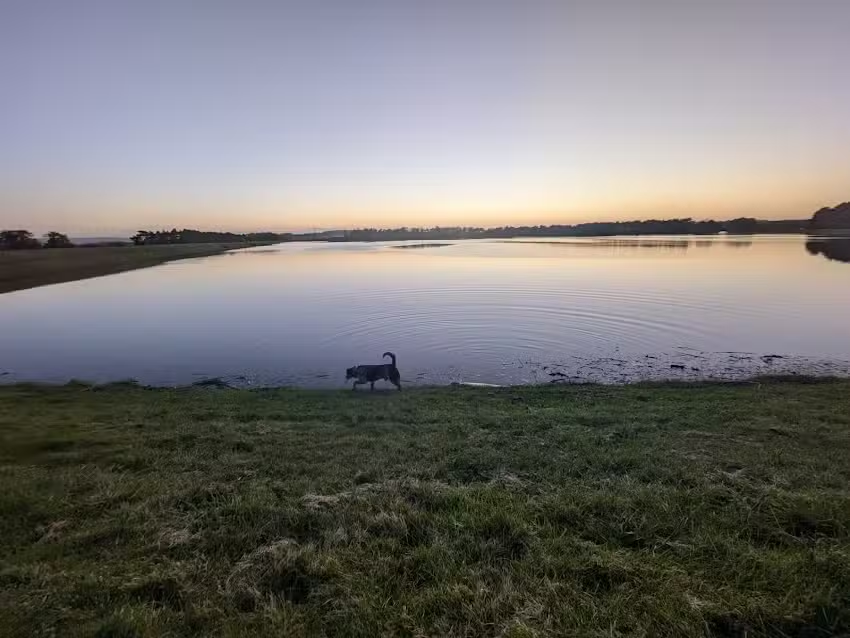
Beyond the fishing itself, visitors sometimes use Whittle Dene simply for a walk around the reservoirs, commenting on the pleasant surroundings and the number of anglers on the bank. This indicates that the fishery is not just a functional facility but also part of a wider recreational area. While this is generally positive, it does mean anglers should be mindful of walkers and passers-by when casting, particularly near paths or on dam walls. Checking behind you before you cast and keeping tackle tidy helps avoid issues and keeps relationships with other visitors amicable.
On the safety side, anglers are encouraged to take sensible precautions. Reservoir banks, especially dam walls and grassy slopes, can be slippery in wet weather, and care is needed when carrying gear or moving between pegs. As with many rural waters, there may be local wildlife such as adders present in the area, which are best left undisturbed. The presence of on-site rangers and a structured rule set provides reassurance that the fishery is actively managed, with the option for management to suspend fishing in severe weather or other adverse conditions.
For anglers focused on value, Whittle Dene’s coarse permits are typically priced competitively compared with other reservoir venues in the region. Day tickets are purchased through the official booking system, which simplifies administration and means you can secure your place in advance. This online permit approach suits modern anglers who are used to booking sessions ahead of time, although it may be less convenient for those who prefer to simply turn up and pay in person. Checking the latest permit information before travelling is sensible, as prices and arrangements can change from season to season.
Technique-wise, Whittle Dene lends itself well to a range of methods. A pole approach can be effective for building weights of roach and skimmers at manageable distances, allowing precise feeding and presentation. Waggler fishing also has a strong following here, especially on days when fish are patrolling the shelves at medium range, and feeder tactics can pick off skimmers and other species further out. The venue is therefore a good testing ground for anglers seeking to refine classic coarse fishing tackle and methods rather than relying on heavy carp gear and large feeders aimed only at big fish.
In terms of who the fishery suits best, Whittle Dene is likely to appeal most to anglers who enjoy traditional reservoir angling, mixed bags of silvers and the challenge of reading a natural water. Experienced coarse anglers will appreciate the variety of pegs, the presence of multiple species and the satisfaction of piecing together a weight. For newer anglers, the venue offers an opportunity to learn the basics of feeding, depth control and presentation, though expectations should be realistic: this is not a guaranteed bag-up venue every visit, and results can vary with weather, time of year and angler approach.
Balancing the positives and negatives, Whittle Dene Fishery stands out for its peaceful atmosphere, healthy stocks of silver fish and well-managed rules that support fish welfare and safety. The natural banks, mix of easily accessed and more remote pegs, and the scope for both pleasure and match fishing make it a versatile coarse fishery. On the downside, the reservoir environment can be physically demanding in places, the fishing can be challenging on hard days, and the absence of heavily stocked carp means it will not suit everyone. For many anglers, though, these factors combine into a venue that rewards skill, patience and thoughtful angling, offering an authentic experience that is increasingly hard to find.