Willow Fisheries
BackWillow Fisheries in Huntworth operates as a dedicated coarse fishing venue that aims to balance relaxed angling with a structured, well‑managed environment for visitors. Anglers come here primarily for its stocked waters, where species such as carp, tench and bream offer steady sport across different seasons, making it a viable choice for those searching online for a reliable carp fishing lake in Somerset. The site is compact enough to feel contained yet large enough to accommodate multiple swims, so visiting anglers can usually find room to adjust their tactics and positions during a session.
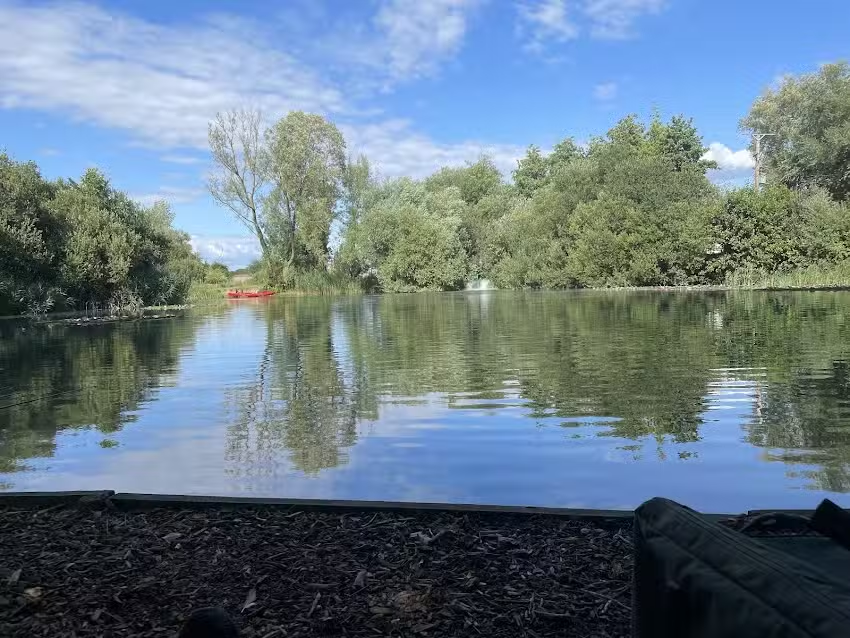
The fishery sits in around 4.5 acres of land and features a main lake, often referred to as Willow, alongside a separate match pond aimed at those who prefer more intensive, bite‑filled sessions. This mix appeals both to anglers who favour specimen‑style carp lakes and to those who enjoy traditional coarse fishing with higher stocking densities in smaller waters. For visiting anglers, this layout means that one trip can offer a variety of approaches, from targeting larger fish on the main water to lighter float or feeder fishing on the match pond.
Regular visitors highlight that Willow Fisheries is, above all, a straightforward place to fish, with banks that are generally tidy and swims that are clearly defined. Anglers have described it as a “great place to fish” and appreciated the combination of a pleasant setting and practical angling conditions, rather than an over‑commercialised complex. For many coarse anglers, especially those looking for day ticket carp fishing within reach of Bridgwater, this no‑nonsense approach is a core part of its appeal.
The stocking policy focuses on popular coarse species, especially carp, which remain the main draw for most visitors who search for carp fishing near Bridgwater or similar terms. Alongside the carp, tench and bream provide additional interest, which suits anglers wanting mixed‑bag sessions rather than solely specimen hunting. While detailed catch reports are not exhaustively published, the presence of multiple species and a match pond suggests that Willow Fisheries is set up to offer consistent action rather than extremely low‑stock, ultra‑hard specimen fishing.
In terms of management, Willow Fisheries has been under its current ownership since 2011, and that continuity shows in the clear rules and structured booking system. Anglers are required to pre‑book, and the fishery limits bookings to a maximum of four anglers at a time on 24‑hour tickets, which reduces overcrowding and helps maintain a calmer atmosphere around the lake. This capped number means there is usually an opportunity to move swims if the fish are showing elsewhere, a significant advantage compared with heavily pressured venues where every peg is taken.
The rules at Willow Fisheries are extensive but fairly typical of a carefully run carp fishery, with the emphasis on fish safety and considerate behaviour. Anglers must use provided landing nets, slings and unhooking mats, barbless hooks only, no fixed rigs, and no braid, echoing standard best practice across many UK coarse fishing lakes. Keepnets are restricted to match conditions, and there is a strict policy on handling fish, including a ban on standing with fish for photographs, underlining the owner’s determination to protect stock.
On the positive side, many anglers appreciate the presence of on‑site facilities and the overall care taken with the venue. Comments from visitors mention good facilities and a friendly welcome from the owner, Steve, which is particularly reassuring for those who may be booking their first 24‑hour session and want a clear explanation of the rules and layout. The fact that the fishery provides essential fish‑care equipment also removes the worry for occasional anglers who might not own all the specialised gear required by some specimen carp lakes.
The owner’s attitude is frequently mentioned by anglers who have stayed, with several people remarking that Steve is approachable and helpful, especially with those who may need advice on where to set up or which methods tend to work well in particular conditions. This personal interaction can make a noticeable difference to visiting anglers, particularly when booking a 24‑hour session and wanting to make the most of limited time on the bank. For some, this level of engagement is a key reason to return, as they feel the fishery is actively managed rather than left to run itself.
Not every comment about Willow Fisheries is completely positive, and potential visitors should weigh up both strengths and weaknesses before booking. One reviewer described the site as pretty yet somewhat abandoned, suggesting that at certain points in the past the venue may have felt a little under‑used or in need of extra upkeep. Another comment referred to disturbance from noise, which hints that, despite the relatively rural setting, the lake is not entirely insulated from external sounds. For anglers seeking absolute seclusion and silence, this could be a drawback.
The perception of being “abandoned” conflicts somewhat with the more recent remarks about good facilities and a helpful owner, which indicates that the fishery may have improved in condition over time or that different visitors have visited at different stages of its development. As with many small UK fishing lakes, maintenance and appearance can vary across seasons, and what one angler experiences on a quiet weekday might differ from another’s impression at a busier time. Prospective visitors who place a high priority on pristine presentation may want to check more recent feedback or photographs to see the current state of paths, banks and swims.
Accessibility is a practical consideration that Willow Fisheries does address, with information indicating a wheelchair‑accessible entrance, which is an important feature for anglers with reduced mobility. This makes it a more inclusive option than some older fisheries with steep or uneven banks where access is limited. That said, anglers will still need to consider how much gear they bring and how far they may need to move it from the parking area to the chosen swim.
Speaking of logistics, the rules make it clear that vehicles must be parked only in designated areas and remain at the owner’s risk. This is comparable to other day ticket fisheries, but visitors should plan accordingly, especially if bringing valuable tackle or planning overnight sessions. The requirement to remove all litter from the site and even pick up any rubbish in or around one’s swim reinforces the expectation that anglers play an active role in keeping the fishery presentable.
Another point that may divide opinion is the strict stance on bait boats, wading and carp sacks, all of which are prohibited. For many traditional coarse anglers, these restrictions will be perfectly acceptable and align with the way they already fish, relying on careful casting and bank‑based watercraft. However, specialist carp anglers who rely heavily on bait boats or like to wade to position rigs might find these rules limiting, and could prefer alternative venues that allow a wider range of tactics.
In terms of the angling experience itself, Willow Fisheries positions its main water and match pond as suitable for a mix of short and extended sessions, with booking often centred on 24‑hour tickets at a fixed price. The limited number of anglers per booking helps ensure that even during a longer stay, you are not tightly hemmed in by other rods, something that can be a frustration on many popular commercial fisheries. For those planning a focused weekend of carp fishing, this balance between access, stock and angler numbers can be a strong selling point.
Compared with some of the larger complexes in the region, Willow Fisheries remains relatively modest in scale, and that modesty is reflected both in its atmosphere and the way it is talked about by visitors. It does not attempt to present itself as an all‑singing, all‑dancing holiday park; instead it offers a straightforward coarse and carp lake environment with clear rules and a defined target audience. Anglers who enjoy simple, focused sessions, with a good chance of catching carp, tench and bream in a controlled setting, are the ones most likely to find it suits their needs.
Potential visitors considering Willow Fisheries alongside other local options such as Summerhayes or Beeches will find that it sits somewhere between a quiet, club‑style water and a busier commercial complex. Its emphasis on limited angler numbers, fish safety and a friendly welcome may appeal more to those who prefer quality of watercraft over the hustle of heavily pegged match venues. On the other hand, those seeking varied facilities, on‑site shops or large social groups of anglers may find its quieter, more focused approach a little restrained.
Overall, Willow Fisheries presents itself as a sensible choice for anglers searching online for carp fishing lakes in Somerset or similar terms, particularly those who value controlled numbers and a clear set of rules. Its strengths lie in its consistent species mix, stock‑protection measures and approachable management, while the main drawbacks relate to occasional perceptions of noise or under‑use and the relatively strict stance on certain tactics. For many coarse and carp anglers within reasonable travelling distance of Bridgwater, it is a venue worth considering as part of a broader rotation of local fisheries, offering solid fishing in a manageable, clearly run setting.