
Wybunbury Anglers Association
BackWybunbury Anglers Association is a long‑established coarse fishing club that offers access to a range of waters for anglers who value well‑kept venues, structured coaching and a strong sense of community. Founded in 1949, the association has grown from a small village club into an organisation with multiple fisheries and a clear focus on developing new anglers while maintaining quality fishing for experienced members. For anyone looking for a friendly base to enjoy coarse fishing in Cheshire, it represents a serious option, although its membership‑based model and structured rules will not suit every casual visitor.
The association controls fishing rights on several stillwaters and on Wybunbury Brook, a tributary of the River Weaver, giving members a mix of intimate pools and moving water. Its flagship venue is the Jubilee Pool complex on Wrinehill Road, a twenty‑acre site comprising three different waters dedicated to carp fishing, match fishing and pleasure angling. The club also holds rights on four stretches of the Shropshire Union Canal around Nantwich and towards Beeston, which broadens the offer for those who enjoy traditional canal pole fishing and light feeder fishing. This variety means that anglers can target species such as carp, bream, tench, roach and perch in different environments across the club’s portfolio.
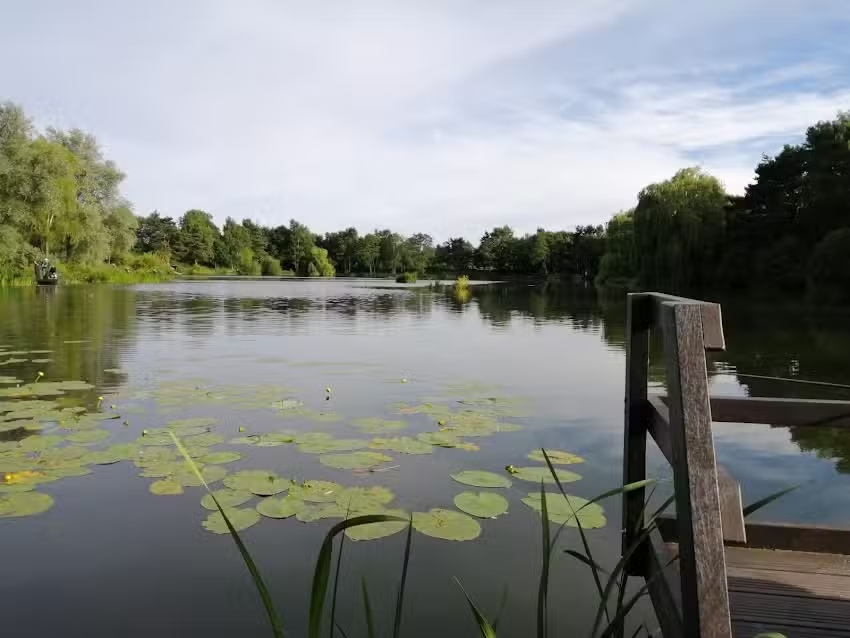
One of the most positive aspects highlighted by visitors is the condition and presentation of the waters. Reviews consistently mention that Jubilee Pool is peaceful, well maintained and clearly cared for by a committed team of volunteers. Pegs, banks and paths show evidence of regular work, and anglers remark on how tidy the fishery looks, particularly after a significant programme of improvements completed around 2022. For many, this level of maintenance makes long sessions with specimen carp rods or relaxed float fishing more enjoyable, as access to pegs and bankside safety feel carefully considered rather than an afterthought.
The club has received external recognition and funding to support this ongoing work. A substantial grant of £25,000 was awarded to Wybunbury Anglers Association to restore the banks of Jubilee Pools, which has been used to stabilise the banks and add fishing platforms made from recycled materials. These platforms have dual benefits: they help protect the pool margins from erosion and improve accessibility for disabled anglers and juniors, who can now fish from safer, more level stages. This investment strengthens the fishery for the long term and underlines how seriously the club takes bank protection, habitat and safe access for its members.
In terms of atmosphere, many anglers describe Wybunbury Anglers Association as a genuinely family‑friendly club. Grandparents bringing children to taster days and regular sessions comment on how welcoming the organisers and fellow anglers are, often mentioning specific committee members and coaches by name when recalling friendly receptions on site. There is a strong culture of supporting youngsters as they catch their first fish and encouraging families to participate in events together. For adult anglers who value a quiet day’s pleasure fishing amid wildlife rather than a heavily commercial day ticket fishery, this sociable yet relaxed feel can be a major attraction.
A distinctive strength of Wybunbury Anglers Association is its structured approach to coaching. The club is closely involved in national initiatives such as “Let’s Fish” and has developed its own junior coaching academy, backed by a team of qualified level one and level two angling coaches. Coaching started with just a few events in 2018 and has expanded into a regular programme using both the Shropshire Union Canal and the Jubilee complex to introduce young people to coarse angling, fish care and water safety. Many parents and grandparents remark that children who attend these events become confident young anglers, and in some cases join the club and go on to take part in junior coaching sessions and club activities.
The coaching team emphasises passing on skills, building confidence and giving juniors structured, safe experiences on the bank. Sessions cover simple but essential techniques such as setting up a waggler float, plumbing the depth, handling small silver fish carefully and using suitable nets and unhooking mats. Coaches highlight that they gain as much satisfaction from teaching as from their own fishing, which helps create a positive learning environment where youngsters do not feel intimidated by more experienced anglers. For a family looking for a club where a child can progress from first whip to more advanced match fishing techniques, this development pathway is one of the association’s most compelling advantages.
Beyond structured coaching, the association organises events that encourage social interaction and regular attendance. “Let’s Fish” taster days provide newcomers with free or low‑cost access to tackle, bait and coaching support on both canal and stillwater venues. The Jubilee Pool complex is often used for junior and mixed‑ability sessions, where pegs are set up to allow safe supervision and straightforward fishing to reliable species. Combined with working parties, matches and informal gatherings, these events give members multiple ways to engage with the club rather than simply turning up to fish in isolation.
Fishery management is another recurring positive theme. Anglers note that the waters are regularly improved and have benefited from stocking and habitat projects that keep the fishing productive. The club invests in bank repairs, platforms and vegetation control, while also balancing access with wildlife value so that Jubilee Pool, in particular, retains a natural feel rather than becoming an over‑manicured commercial complex. With stillwaters, a stream and canal lengths all under its care, the association offers a broad mix of options for ledgering, method feeder fishing or more traditional stick float fishing depending on conditions and personal preference.
Members and visitors often remark on the tranquil character of Jubilee Pool. The site is described as peaceful, full of nature and a comforting place for quiet reflection as well as fishing. For some families, the location has become a meaningful spot due to memorial trees and personal connections, which deepens the sense of respect and care anglers show for the water. Wildlife such as ducks, dragonflies and songbirds is commonly noted, adding to the appeal of spending long summer sessions there with a match rod or carp setup in the water while enjoying the surroundings.
However, Wybunbury Anglers Association is not designed as a casual walk‑on venue, and this may be a drawback for those simply looking for a one‑off fishing day ticket. Access to key waters such as Jubilee Pool is restricted to club members, with canals often providing the most flexible options for non‑members. This membership‑based structure helps preserve the character of the waters and limits angling pressure, but it does mean that occasional visitors who prefer spontaneous trips without joining a club might find the setup less convenient than a standard commercial carp fishery that sells tickets on the bank.
The focus on coaching and community also brings expectations about behaviour and adherence to rules. The association has clear standards regarding fish care, use of appropriate landing nets and unhooking mats, and general conduct around the banks. For experienced anglers accustomed to responsible practice, these requirements are straightforward, but newcomers who want a very informal approach may find the structure demanding at first. In the long term, though, these rules contribute to better fish welfare and a more enjoyable experience for everyone on the water.
As with many clubs that rely heavily on volunteers, there can be occasional limitations. Working parties, events and coaching days depend on a small group of highly committed individuals, and at busy times this can mean that communication or response to enquiries is slower than some anglers would like. The club has public social media channels that share updates, but there may not be the same level of instant messaging response that some people expect from commercial fisheries. Prospective members prepared to be patient and perhaps to contribute to working parties will usually gain more from the association than those seeking a purely transactional relationship.
Car access and facilities are generally considered reasonable, with parking close to the Jubilee complex and canal access points, but this is still a traditional club rather than a modern holiday park fishery. Anglers should not expect on‑site cafés, tackle shops or 24‑hour staffing; instead, they will find straightforward facilities focused on providing safe pegs and good pleasure angling rather than additional amenities. For some, this simplicity is a positive, keeping attention on the water and the fish rather than non‑fishing distractions, though others might prefer venues with more comprehensive services.
On the water, the club’s canals offer classic canal fishing with roach, perch, skimmers and occasional bonus carp along stretches that have hosted sections of national championships. These lengths are suited to anglers who enjoy fine tackle, careful feeding and reading boat traffic and towpath activity, rather than simply casting to an island on a heavily stocked commercial pool. The Jubilee complex, by contrast, allows slightly more conventional stillwater tactics with feeders, method feeders and carp rigs, and is popular with those who like mixing natural surroundings with the chance of better‑sized fish.
Anglers who value youth development will likely see the club’s coaching academy as one of its standout features. The presence of multiple level two and level one coaches, plus volunteers, means that juniors benefit from structured progression rather than ad‑hoc advice. Events such as “Get Fishing” and “Let’s Fish” are used not only to give children a first taste of the sport but also to build a pathway into long‑term membership and regular coaching sessions. Parents commenting after these events frequently say that their children have become enthusiastic about pole fishing, kept interested by catching a variety of small but lively fish and learning at each session.
From a potential member’s point of view, Wybunbury Anglers Association offers several clear advantages: well‑maintained waters, a choice of stillwater and canal venues, a particularly attractive Jubilee Pool complex, and a serious commitment to junior development and accessible angling. The atmosphere is described as friendly and supportive, especially for families and new anglers, and the club actively invests in platforms, bank repairs and coaching infrastructure to support its activities. For anglers who share these values and are happy to join a club rather than rely solely on day ticket fishing, Wybunbury can provide a rewarding base for regular sessions throughout the year.
On the other hand, those seeking very high‑profile specimen carp fishing with intensive stocking, extensive on‑site facilities and complete flexibility on access might find other commercial fisheries better aligned with their priorities. The membership requirement, structured rules and volunteer‑run nature of the association inevitably make it feel different from profit‑driven venues built around maximum convenience for visiting anglers. As with any club, it is wise for prospective members to consider how often they plan to fish, whether they are interested in contributing to the community through events or working parties, and how much they value coaching and family‑friendly activities alongside their own fishing.
Overall, Wybunbury Anglers Association presents itself as a traditional yet forward‑thinking angling club that balances heritage with active development of new anglers. Its combination of peaceful, well‑kept waters, a structured coaching programme and investment in accessibility and bank protection makes it an appealing option for many coarse anglers in the area who want more than just a commercial carp lake. At the same time, the reliance on membership, rules and volunteer effort means it will feel more suitable for committed club anglers and families than for occasional, purely convenience‑driven visitors.