Ashdown Forest Fly Fishery
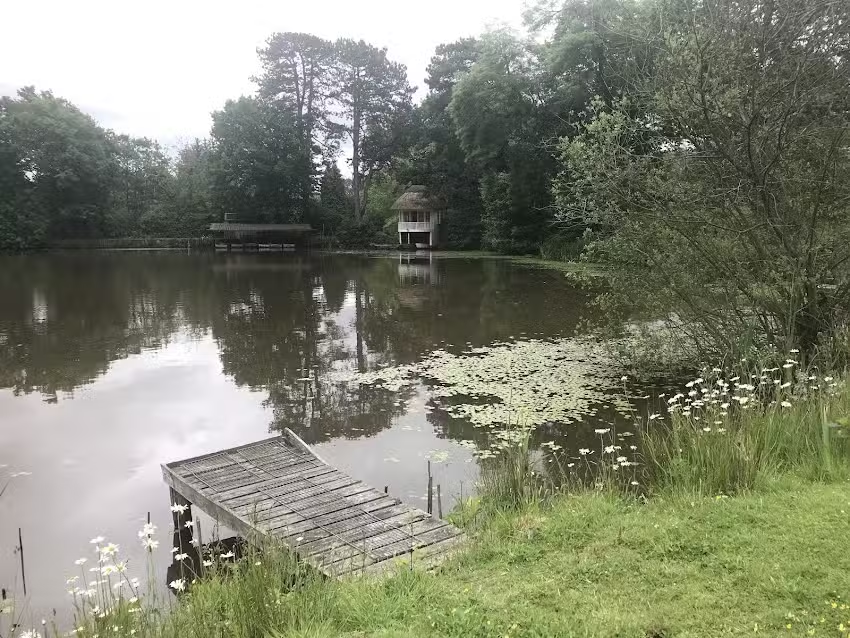
BackAshdown Forest Fly Fishery is a long‑established stillwater venue dedicated to fly anglers who want a focused day targeting stocked trout rather than a multi‑species coarse water. The fishery occupies an attractive spring‑fed lake of around four to four and a half acres, with a history that goes back to medieval industry when the basin was dug to power a mill that once bored cannons for the British fleet and later ground grain. This background gives the site a distinct character compared with many modern purpose‑built trout fishery complexes, and it appeals to anglers who value a traditional setting alongside their fishing.
The water is managed specifically for fly fishing, and it has been known over the years under both the Ashdown Forest Fly Fishery and Boringwheel Trout Fishery names. Management remains relatively hands‑on despite the fishery often being unmanned on a day‑to‑day basis, with an honesty box system for cash payments backed up by steward spot checks to ensure rules are followed. For visiting anglers, this creates a quiet, unhurried atmosphere with minimal on‑site staffing, which some see as part of the charm while others may miss the presence of a resident bailiff.
The core attraction is straightforward: regularly stocked rainbow trout, typically in the low‑to‑mid single‑figure weight range, with occasional better fish. Recent feedback from regulars and suppliers indicates that stocking has been stepped up under the current management, with hard‑fighting rainbows going in on a frequent basis and each fish inspected at the rearing farm before transport. One angler on a standard four‑fish ticket recently reported a full bag totalling just over ten pounds, describing the fish as lively and the session as a very satisfying way to spend an afternoon.
Earlier comments from visitors mentioned concerns about fish condition, including damaged fins and signs of disease on some trout, and at least one angler was uncomfortable about taking the fish for the table. These older experiences appear to contrast with more recent reports that emphasise fully finned fish, strong fights and improved overall quality, suggesting that active restocking and husbandry changes have been made to address previous issues. Potential visitors who are particularly focused on table‑quality fish may still want to pay attention to the most up‑to‑date word‑of‑mouth, but current information points towards a more positive picture than some of the historical reviews.
From a layout perspective, the lake is nicely shaped with an island and several features that create different lies and drifts for fly presentation. There are around eight well‑spaced stages or platforms positioned around the island, giving bank anglers clear casting space and good coverage of the main holding areas. Visitors frequently mention that foliage and margins are kept tidy enough to reduce snagging, without stripping away all the natural cover that trout use, so casting feels comfortable even for those who are still gaining confidence with their fly line.
For those who prefer a different angle or want to reach awkward spots, flat‑bottomed boats are available on the lake. These offer a distinct advantage in terms of covering water and adjusting to wind direction, which is particularly valuable when trout are tracking a narrow band of depth or cruising just off the island shelves. Anglers are advised to bring their own life jackets, and although earlier information sometimes suggested free use of boats, visitors now note a modest charge, so it is sensible to factor that into plans.
The fishery is designed to support a relaxed day rather than a rushed session, and typical permits allow two to six fish with corresponding time limits on the smallest ticket. Prices have evolved and are subject to change, particularly with new structures announced in recent years, but the basic concept of fixed‑bag tickets for stocked rainbows remains central. For families, there is provision for an adult‑and‑junior ticket on a shared bag and two rods, provided the younger angler is under sixteen and supervised, making this a potential introduction point for youngsters to experience fly fishing for trout in a controlled environment.
On the water itself, anglers who adapt to conditions and move to find fish tend to report steady action. The lake is spring‑fed, and with regular top‑ups of stocking, there is generally a good head of trout distributed around ledges, drop‑offs and windward banks. Fly patterns that imitate small baitfish, buzzers and generic lures are commonly effective in this type of stillwater, and the structured shape of the lake with its island and varying depths favours a mobile approach, covering likely features at different levels in the water column.
The surrounding environment is regularly praised as peaceful and attractive, with several visitors describing the site as a quiet, pretty place to spend an afternoon. Views across the water, the presence of wildlife such as kingfishers and the absence of heavy commercialisation give the fishery a low‑key feel that matches many anglers’ idea of a dedicated fly fishing lake. For those who prioritise calm surroundings over extensive facilities or on‑site catering, this setting can be a strong plus.
Facilities are simple but adequate for a day’s fishing, with a small lodge area, toilets and parking near the water. Some feedback has highlighted minor shortcomings, such as toilets without running water and boats occasionally holding rainwater that would benefit from bailing before use, which can detract slightly from the overall impression if you expect everything to be immaculate. On the other hand, the lodge offers basic shelter and, according to recent comments, complimentary tea and coffee, which is a welcome touch between sessions on the bank or after a spell afloat.
The management structure is somewhat unusual in that the fishery is generally unmanned, relying on anglers to pay into an honesty box and observe clearly posted rules. Authorised stewards make spot checks to ensure compliance, which supports a sense of order without constant supervision, but it also means that new visitors should take the time to read the rule board outside the lodge before setting up. This arrangement tends to suit self‑reliant anglers who are comfortable managing their own session; those expecting on‑hand tuition or shop‑style support might find the absence of staff limiting.
In terms of accessibility and practicalities, the fishery sits just off a main route, with clear directions from both north and south using the A22 and local lanes. Access to the site is straightforward by car, and there is a dedicated parking area close to the water’s edge, reducing the need to carry gear over long distances. There is also step‑free access to the grounds noted in some listings, though as with many rural fishing lakes the terrain around platforms and banks may still be uneven in places, so visitors with mobility concerns may wish to check the most recent feedback before visiting.
Over time, online comments paint a mixed yet gradually improving picture. On the positive side, many anglers praise the lake’s shape, peaceful atmosphere, hard‑fighting stocked rainbows and the efforts of current management to restore and enhance the fishery, including regular restocking and careful selection of fish from specialist farms. On the critical side, some older visitors have raised concerns about fish condition and certain aspects of maintenance and facilities, as well as finding the absence of running water in the toilets and the occasional need to bail boats inconvenient.
Recent developments, including a change in full‑time oversight and increased restocking, are aimed at bringing the venue back to what long‑time customers describe as its former standard, when it was regarded as a small gem for fly fishing in the area. Positive comments from both anglers and fish suppliers in the last couple of seasons suggest that these efforts are bearing fruit, at least in terms of the quality and fighting spirit of the stocked fish. Nevertheless, the fishery retains its straightforward, almost old‑fashioned style: there is no on‑site tackle shop, no elaborate café and no heavy marketing, just a modest stillwater where the focus remains on casting a fly line over trout in a quiet setting.
For potential visitors considering where to spend a day with the fly rod, Ashdown Forest Fly Fishery offers a balance of strengths and limitations. Strong points include its dedicated trout fishing focus, regular stocking policy, attractive surroundings, boat availability and generally good access. Points to weigh carefully are the honesty‑box operation, the relatively basic facilities, and the uneven history of fish condition that appears to have improved but may still be a deciding factor for those chiefly interested in taking fish home to eat.
Anglers who prefer a quiet, traditional stillwater with simple rules, reasonable ticket options and a clear emphasis on fly fishing trout lakes are likely to find this venue aligns with their expectations, especially if they value time on the water over additional amenities. Those prioritising a highly serviced commercial complex with extensive infrastructure may feel that Ashdown Forest Fly Fishery is more stripped‑back than they would like, but it remains a realistic option within the local trout fisheries scene for anyone seeking a straightforward day of casting for stocked rainbows in a setting with genuine history.