Hanningfield Waterside Park
BackHanningfield Waterside Park brings together a large stillwater trout fishery, a small tackle offer and a busy cafe, creating a multi‑purpose venue that appeals both to dedicated anglers and to families who simply want somewhere pleasant to spend a few hours by the water.
The reservoir is widely recognised as one of the UK’s premier venues for trout fishing, with regular stocking of rainbow trout throughout the season to keep catch rates consistent and to give visiting anglers a realistic chance of connecting with quality fish on each outing. Reports indicate that tens of thousands of rainbow trout are introduced annually, including home‑reared specimens that can reach double‑figure weights, which is a key draw for those targeting bigger fish rather than just making up the numbers. Coarse species such as carp, pike, perch and roach are present in good numbers, giving an additional dimension for those who enjoy a mixed‑species approach, although local rules make clear that all coarse fish must be returned unharmed to protect the wider ecology of the reservoir.
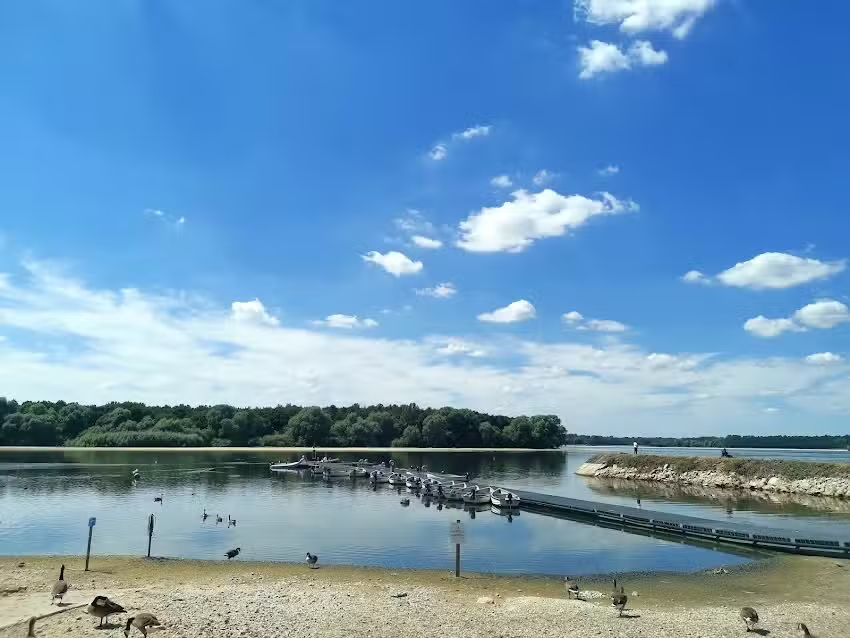
Access for anglers is reasonably flexible, with the option to fish from the dam, various stretches of bank or from one of a fleet of motorboats that can be hired for one or two people, depending on preference and budget. Bank anglers make use of long concrete sections interspersed with tree‑lined areas and dedicated fishing platforms, which provide safer and more comfortable footing when casting into the deeper water that runs close to the margins. These platforms and marked zones are important because the reservoir can be deep and cold with rapidly changing conditions, and the emphasis on structured access reflects the operator’s focus on safety and fish welfare.
For many visitors, the ability to hire a boat is one of the main reasons to choose Hanningfield over smaller stillwaters. Boat angling opens up productive drifts over deep water, allows you to follow trout that are feeding in open expanses and offers a different experience from simply casting off the bank. However, there are strict safety rules and age limits: boats are capped at two occupants, at least one must be an adult, lifejackets and common‑sense behaviour are expected, and the ranger team reserves the right to suspend boat fishing if the weather turns unsafe. For some anglers this controlled framework inspires confidence; for others it can feel slightly restrictive, particularly when conditions change mid‑session and everyone is asked to return to the jetty.
The fishery is managed under an “any method” approach, which has broadened its appeal beyond traditional fly anglers and helped maintain attendance in recent years. You will find fly, lure and bait anglers sharing the water, though methods are regulated by detailed rules that, for example, require single hooks on float or ledger rigs and prohibit the use of multi‑hook traces or unattended rods. For newcomers, the level of regulation can be slightly daunting at first and does require some preparation, but it is clear that these measures are there to protect the stock, reduce deep‑hooking and keep both anglers and wildlife safe.
From a facilities perspective, Hanningfield Waterside Park offers more than the typical fishing reservoir. On site there is a cafe with extensive windows, allowing guests to sit indoors while looking out across the water, as well as an outdoor deck area that becomes a focal point in finer weather. Visitor feedback consistently highlights the cafe as a pleasant place to start or end a session, with multiple comments praising the cleanliness of the space, the friendliness of the staff and the quality of traditional breakfasts, cooked meals, cakes and hot drinks. Several reviews mention generous portions and reasonable prices, which makes it easier for anglers and families to justify making a full day of it rather than cutting the visit short.
At the same time, the catering offer is not without criticism. Some diners feel that certain items, such as sausages for cooked breakfasts or elements of hot snacks, could be improved by sourcing from local producers or paying closer attention to consistency. There are also isolated reports of slow service at busy times and occasional issues with how some dishes are prepared, suggesting that while the cafe can deliver very satisfying meals, the experience is not entirely uniform day after day. For potential visitors this means expectations should remain realistic: many people enjoy what is served, but those looking for a high‑end food destination may find it more functional than exceptional.
One point that emerges clearly from guest feedback is the attitude of the staff, both in the cafe and around the fishery. Numerous visitors describe the team as welcoming, helpful and ready to offer advice, whether that is explaining menu options, clarifying fishing rules or pointing out the best areas to see wildlife from the hides. Anglers mention interactions with rangers in positive terms, particularly when it comes to safety briefings for boat hire and guidance on suitable tactics for the conditions on the day. This friendly, practical approach is an important asset for a venue that attracts a mixture of experienced anglers, casual visitors and families who may not be familiar with the etiquette of a working fishery.
For those focused on angling, the reservoir offers a variety of features that can make each trip different. Distinct banks, bays and points fish differently depending on water level, weed growth and wind direction, and experienced regulars talk about certain areas coming into their own at particular times of year. Deep water close to the bank, clearer sections over concrete walls and more natural shallows all create opportunities for anglers to adjust their approach with different lines, flies and baits. With a substantial stock of rainbow trout and coarse species present, it is possible to target fast‑moving fish close to the surface one day and work deeper lies in cooler conditions the next, which can be especially appealing to those who enjoy refining their tactics.
Family visitors and non‑anglers often focus less on the detail of the fishing and more on the broader experience. Paths and designated walking routes allow people to enjoy views across the water, and there are bird hides where you can sit quietly and watch wildlife, which many reviewers describe as a highlight of their visit. This blend of fishing lakes and nature‑watching means a mixed group can find something to do even if not everyone wants to spend the day with a rod in hand. However, the site’s designation as an important conservation area (including Sites of Special Scientific Interest) leads to firm policies that some visitors find restrictive, particularly regarding dogs.
Dog‑owners should be aware that the park enforces a no‑dogs policy, apart from assistance animals, to protect sensitive wildlife and habitats around the reservoir. This has generated negative feedback from some visitors who feel that well‑behaved pets could be accommodated, especially on outdoor terraces, and who contrast the ban on dogs with the presence of noisy children in public areas. For potential customers this is an important consideration: the site is best suited to those happy to leave dogs at home and who are comfortable with a focus on conservation and controlled access.
From a value perspective, the fishery positions itself in line with other large, well‑stocked stillwaters that offer regular stocking and boat hire. Day permits for taking trout, catch‑and‑release options and various concessions are available, with pricing structured so that juniors and certain eligible groups can fish at reduced rates or even share permits with accompanying adults. Some anglers view the cost of a day’s fishing plus optional boat hire as a fair reflection of the stocking levels and facilities on offer, while others accustomed to smaller commercial fishing lakes may perceive it as a more premium outing and will want to make the most of a full day on the water to feel they have had value for money.
The on‑site tackle provision is designed to support a day’s session rather than operate as a large standalone shop, but it carries a useful range of essentials: rods, reels, lines, terminal tackle, flies, lures, worms and other baits, along with some clothing and accessories. For anglers who have forgotten an item or who want to adjust their approach in response to conditions, this is practical and saves an extra journey. That said, those who prefer a very specialised or brand‑specific selection may still choose to buy their main gear elsewhere and treat the onsite offer as a convenient backup rather than their primary source.
In terms of atmosphere, Hanningfield Waterside Park tends to be busy during popular periods, particularly when the weather is settled and the trout are feeding well. Cyclists, walkers and families use the cafe, anglers congregate around productive banks and boat anglers move steadily across the open water, creating a steady sense of activity. For some, this adds to the appeal and creates a social environment where it is easy to chat to other visitors, share tactics or simply enjoy being around people who share an interest in angling and the outdoors. Others who prefer a quieter, more secluded feel may find peak times a little crowded and might choose early or late sessions to avoid the busiest periods.
Overall, Hanningfield Waterside Park offers a well‑developed combination of large‑scale trout fisheries, practical facilities and a cafe that can turn a quick visit into a full day out. Strengths include consistent stocking of rainbow trout, structured access to bank and boat fishing, friendly staff and the opportunity for families and non‑anglers to enjoy walks and wildlife watching alongside more serious angling. On the other hand, firm rules around dogs, the necessarily strict safety regime, occasional inconsistency in the cafe offer and the potential for crowds at busy times mean that the park will suit some visitors better than others.
For potential customers considering Hanningfield, it is worth thinking about priorities. Those primarily interested in well‑stocked trout lakes with boat access and a structured, safety‑conscious environment are likely to find the reservoir an appealing choice. Families and casual visitors who appreciate good views, wildlife, straightforward walking and the convenience of a cafe on site also tend to respond positively, provided they are comfortable with the policies in place and the fact that the venue is, first and foremost, a working fishery with rules designed around conservation and safety.