
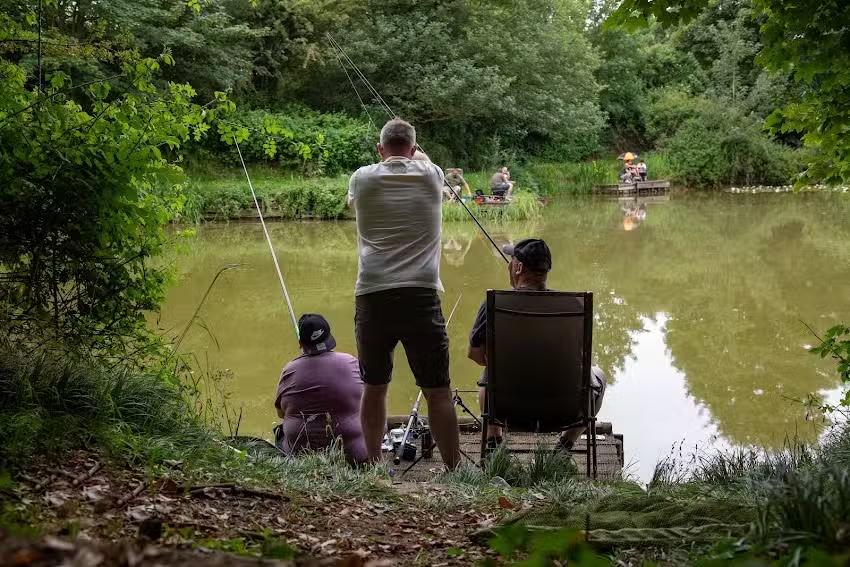
Docking angling club
BackDocking angling club is a long‑established coarse fishing club that focuses on giving everyday anglers access to relaxed, well‑managed waters rather than operating as a commercial fishery. It is not a large tackle shop or a glossy holiday venue, but a members’ club where the emphasis is on practical fishing, learning and a sense of community on the bank.
The club controls a former village pit and other stillwaters that offer traditional British coarse fishing, with carp, silver fish and other species that appeal to pleasure and club anglers. For many local members these waters are their regular spot to practise coarse fishing techniques, try out new rigs and enjoy quiet sessions without the bustle often associated with commercial day‑ticket venues.
Angling experience and atmosphere
Feedback from visitors suggests that the overall experience at Docking angling club is friendly and welcoming rather than intimidating, especially for families and newer anglers. One review highlights a morning where a young child and parent spent time learning to fish with help from club members, turning a simple session into a highlight of their holiday. This reflects a culture where more experienced anglers are prepared to share tips on casting, feeding patterns and fish care rather than keeping everything to themselves.
As a non‑commercial club water, the banks and swims tend to feel less crowded than heavily promoted day‑ticket lakes, particularly outside peak summer weekends. Anglers who value a quieter approach to carp fishing often appreciate being able to set up, adjust their rigs and watch the water without constant pressure on every peg. That said, like any club water, the best swims and known productive areas will still attract regulars, so newcomers may need a few visits to learn where fish tend to show at different times of year.
Focus on juniors and beginners
One of the most distinctive aspects of Docking angling club is its emphasis on encouraging young anglers and complete beginners. Club information describes events specifically for children aged 16 and under where all equipment is provided and participation is free, making it accessible for families who do not yet own rods, reels or tackle. This approach stands out at a time when many venues charge premium rates and expect visitors to arrive fully equipped and experienced.
These junior days are not simply about catching numbers of small fish; they are used to teach basic watercraft, safe handling and the fundamentals of modern fishing tackle. Youngsters are introduced to simple float and feeder methods, taught how to net and unhook fish correctly and reminded about barbless hooks, fish care and leaving no litter. For parents who may be unsure how to start their children in the sport, having organised coaching and supervision on a club water can be a significant advantage.
Club structure and membership
Docking angling club is run as a members’ organisation rather than a pay‑per‑day commercial concern, and this comes with both strengths and limitations for potential visitors. Members usually pay an annual fee which gives access to the waters for pleasure sessions and club matches, while non‑members do not have the option of casual day tickets. For anglers living nearby who plan to fish regularly this can represent good value, but for those only in the area occasionally it may feel restrictive.
Club communications highlight annual general meetings and organised work parties, where members are expected to contribute to maintenance and improvement of banks, platforms and swims. These days are often described as informative and social, giving members a chance to learn more about the water, depths, features and stocking policies while carrying out practical jobs. Some anglers enjoy this sense of ownership and community; others may prefer simply to pay a ticket and fish without any expectation of volunteering, so this model will not appeal to everyone.
Fish stocks and methods
Local anglers describe the main pit controlled by the club as a typical mixed coarse fishery rather than a heavily stocked commercial. Carp are present, but they are not wall‑to‑wall; anglers need to think about location, feeding and presentation, which can be rewarding for those who enjoy building a swim and working for their fish. Silver fish such as roach and skimmers provide sport on lighter tackle, making the water suitable for general coarse fishing sessions as well as more targeted carp fishing.
Standard methods include waggler and pole fishing for silvers, light feeders for bream and tench, and more specialised carp tactics using boilies, pellets and method feeders. The relative lack of extreme pressure compared with some day‑ticket complexes means that subtle changes in hookbait, rig length and feeding can make a difference, which appeals to anglers who like to refine their approach. However, those expecting instant action on every cast may find that the water demands a little more patience and observation, particularly in winter or during prolonged high‑pressure weather.
Coaching and support on the bank
Although Docking angling club is not a formal coaching centre, its junior events and family‑friendly ethos effectively provide informal tuition for those who want guidance. Club volunteers and more experienced members often help novices to set up rods, choose suitable end tackle and understand basic rules, from safe casting to unhooking and returning fish. This supportive environment is reflected in accounts from visitors who felt their children were genuinely taught, not just left to get on with it.
Compared with dedicated tuition services or fully structured angling schools, the coaching at Docking angling club is more relaxed and centred on club activities rather than paid one‑to‑one sessions. Anglers seeking highly technical instruction in specimen carp rigs, long‑range techniques or advanced match tactics may need to look elsewhere or supplement club fishing with specialist coaching. For most casual anglers and families, however, the level of help available on the bank is likely to be sufficient to get them fishing confidently and safely.
Facilities, access and maintenance
The club’s waters are described as having reasonable access with paths and swims that are maintained through regular work parties. This ongoing maintenance relies on member participation, so the standard of pegs and paths can vary slightly depending on recent volunteer turnout and weather conditions. Bank space is generally adequate for typical pleasure sessions, but as with many older pits the layout may not match the neatly pegged platforms seen on purpose‑built commercial fisheries.
Information indicates that there is a wheelchair‑accessible entrance, which is a positive for anglers with limited mobility, though not every peg will necessarily be fully adapted. Parking and access arrangements are usually detailed to members through club channels rather than publicly advertised, reflecting the private nature of the fishery. Anyone who requires specific accessibility details would be wise to contact the club in advance or speak to existing members before committing to membership.
Communication and information
Docking angling club communicates primarily through a mix of online updates and word‑of‑mouth within the membership. Social media groups and simple websites are used to share news of work parties, rule changes and junior events, but the club does not promote itself in the same way as heavily marketed commercial complexes. For prospective members, this can mean that detailed information about stock, catch records or specific rules is not always immediately obvious without joining the conversation in the club community.
On the positive side, this lower‑profile approach helps preserve a more relaxed environment on the bank and reduces the likelihood of sudden surges in angling pressure following social media publicity. The downside is that visiting anglers or holidaymakers may find it harder to understand exactly what the club offers unless they invest time in contacting committee members or reading through online posts. This is an important consideration for those comparing different venues for their next fishing holidays or short breaks.
Strengths for potential visitors
- The club offers a calm, traditional setting for coarse fishing with a mix of carp and silver fish, appealing to anglers who value a more natural feel over heavily commercialised venues.
- A strong focus on juniors and beginners, including free events with all tackle provided, makes it particularly suitable for families looking to introduce children to angling.
- Friendly, supportive members and volunteers often help newcomers with rigs, bait choice and fish care, reducing the learning curve for less experienced anglers.
- Work parties and member involvement foster a sense of ownership and community, which some anglers find rewarding beyond simply catching fish.
- The absence of day‑ticket crowds can provide quieter sessions, allowing thoughtful anglers to focus on watercraft, presentation and developing their carp fishing skills.
Limitations and points to consider
- Access is through membership rather than casual day tickets, so anglers visiting the area briefly may find it difficult to justify joining solely for a short stay.
- Information about stock levels, catch reports and specific rules is relatively limited in public spaces, requiring more effort from prospective members to obtain details.
- Because the waters are not heavily stocked commercial lakes, catch rates can be more variable and may demand patience, observation and a thoughtful approach to fishing tackle and bait.
- Facilities such as platforms and paths depend on ongoing member work parties, so standards can vary, and not every swim will suit all mobility needs despite an accessible entrance.
- Those seeking intensive, structured tuition in specialist methods may find the informal coaching at club events less comprehensive than paid angling schools.
Overall impression for anglers
For anglers assessing Docking angling club as a potential venue, the key attraction lies in its balance between community‑run waters and genuine opportunities to develop coarse fishing skills. Families and newcomers are likely to appreciate the junior events, accessible coaching and relaxed atmosphere that have already left positive impressions on visitors. More experienced anglers who enjoy thinking carefully about rigs, feeding patterns and swim choice may find the pit an engaging venue to refine their carp fishing approach over a season rather than chasing instant results.
On the other hand, the lack of day‑ticket access, relatively low public profile and reliance on member involvement mean the club will not suit everyone. Holidaymakers wanting a single, spur‑of‑the‑moment session or anglers looking for heavily stocked waters with constant action might prefer alternative commercial fisheries nearby. Docking angling club is better viewed as a place for those who are prepared to commit some time, become part of a membership and value steady progress in their fishing tackle skills alongside time spent by the water.