Church Hill Fishery
BackChurch Hill Fishery presents an interesting case for anglers looking for a quiet stillwater venue, but also raises legitimate questions about current access and management. While it has historically attracted interest from coarse and specimen anglers, recent visitor feedback indicates uncertainty over whether the fishing lake is still actively run as a commercial venue. For anyone considering a visit, understanding both the appeal of the water and the possible limitations is essential.
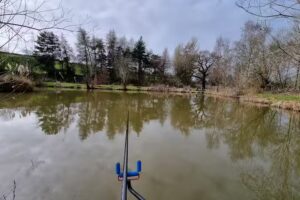
The fishery is set around a mature body of water that has long been regarded as an attractive spot for coarse fishing. Anglers describe it as a “fantastic bit of water” to target, suggesting a layout that lends itself to thoughtful watercraft, careful baiting and a patient approach. The banks and surrounding land give the impression of a traditional English fishery rather than a highly commercialised complex, which in the past would have appealed to those who prefer a quieter session focused on watercraft rather than the bustle of heavily stocked match venues.
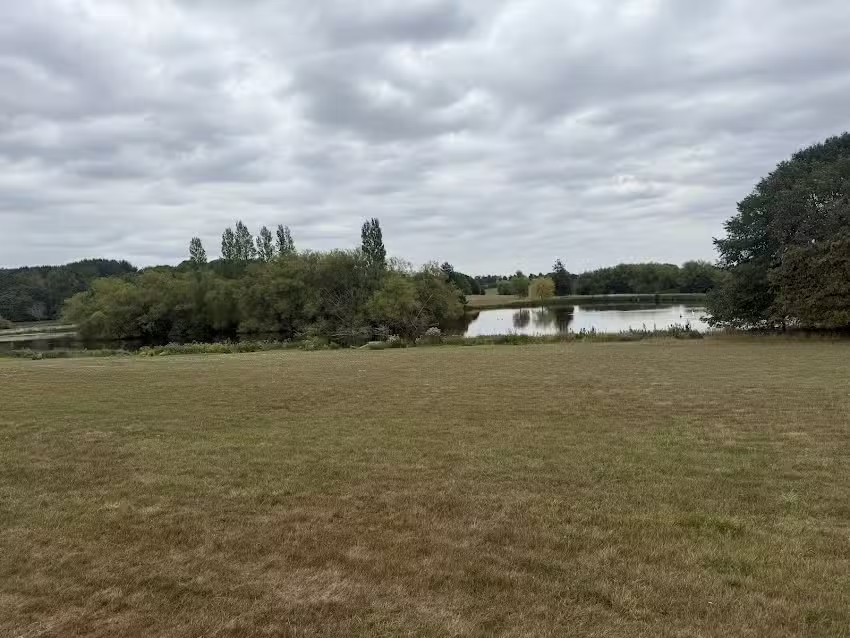
From the perspective of someone choosing between different fishing lakes, the visual appeal of Church Hill Fishery is a clear strength. Mature trees, established margins and what appears to be a relatively unspoilt environment suggest potential for quality carp fishing and mixed coarse sport when the venue is open and well managed. For anglers who value ambience and a more natural setting over crowded pegs, this kind of water is often more desirable than a purpose-dug commercial pool.
However, one of the central issues with Church Hill Fishery today is whether it genuinely operates as a public day ticket fishery any longer. Recent comments from visitors mention that the lakes appear to have been closed to fishing for some time, with no anglers present even during ideal fishing conditions. There is also mention of a right of way footpath running just west of the site, allowing people to see the water as they walk by, yet not witnessing any signs of active angling. This strongly suggests that, at present, regular public access may not be available.
Another concern for potential visitors is the lack of up-to-date online information. Anglers have reported problems accessing what appears to be the official website, noting that it does not load and offers no current details about fishing tickets, rules or booking arrangements. In a market where other venues and fishing tackle shop websites provide clear, current information about stock, prices and facilities, this silence makes it challenging for anyone to plan a trip with confidence. For many modern anglers, particularly those travelling any distance, a working website or active social media presence is now a basic expectation.
Feedback from one reviewer suggests that the lake may effectively have become part of the private residence which backs directly onto the water, and that the current occupiers might not be interested in continuing open access angling in the way it once operated. If this impression is accurate, it reinforces the idea that Church Hill Fishery functions more as a private fishing lake than an accessible commercial fishery. While there is nothing unusual about a lake being retained for private use, this shift does mean that past information or older references to the venue as a regular coarse fishery can now be misleading to new visitors.
Not all visitor comments are negative. One angler described having a great day out at the venue, highlighting a pleasant experience on site. This suggests that when access is granted, the setting and the water itself can still deliver enjoyable pleasure fishing. For anglers who manage to arrange permission, the combination of a quiet environment and an attractive water body could still result in satisfying sessions, especially for those who prefer relaxed rod and reel fishing over highly competitive sport.
For potential customers assessing their options, it is useful to compare Church Hill Fishery with more clearly structured commercial fisheries and carp lakes in the wider region. Many alternative venues publish detailed stocking information, provide clear guidance on fishing tackle, bait policies and fish care rules, and maintain active communication channels. They may also offer on-site facilities such as toilets, parking areas near the pegs, or even small tackle shop counters supplying bait and basic gear. In contrast, Church Hill Fishery’s current lack of communication and ambiguity over access make it difficult to treat it as a straightforward choice for an impromptu fishing trip.
The absence of transparent information also has implications for different angling styles. A dedicated carp angler planning an overnight session will usually want certainty around rules on bivvies, night fishing, bait boats and the use of alarms. Similarly, a match or pleasure angler targeting mixed species with coarse fishing tactics will want to know about peg layout, depth profiles, stocking density and any restrictions on groundbait or keepnets. At present, Church Hill Fishery does not provide the clarity that many anglers would expect when deciding where to fish.
Another point to consider is that the UK angling scene has become increasingly competitive, with many venues upgrading swims, improving access and investing in bank work to create more comfortable pegs. Pathways, parking close to swims and well-maintained platforms make a substantial difference for older anglers, families and those carrying heavier gear such as multiple rods, large umbrellas and full fishing tackle setups. There is limited public information to indicate whether Church Hill Fishery has undergone such improvements or if the infrastructure remains basic.
For someone new to the Milton Keynes area or planning a short visit, the uncertainty surrounding Church Hill Fishery can be frustrating. On the one hand, the water is visually appealing and described as a “fantastic bit” of water to fish, suggesting real potential for those who manage to secure access. On the other hand, the combination of a non-functioning website, reports of apparent closure and the sense that the lake is now primarily attached to a private house all point towards a venue that may not currently operate as a typical day ticket fishery.
From a neutral standpoint, this mix of strengths and weaknesses means that Church Hill Fishery sits in an awkward position for directory purposes. As a body of water with history and character, it holds clear attraction for those who enjoy traditional angling in mature surroundings. Yet for many everyday anglers, particularly those who rely on online information and prefer venues with clearly advertised fishing rules and straightforward booking, the lack of clarity is likely to push them towards alternative fisheries where the status is beyond doubt.
Potential visitors who remain interested in Church Hill Fishery should approach it with realistic expectations. Rather than assuming open access, it would be wise to seek independent confirmation that angling is welcomed and to check whether any conditions or permissions are required. As with any venue where details are limited, anglers may wish to have a backup plan involving another nearby fishing lake or coarse fishery in case access is not possible on arrival. This approach helps avoid wasted journeys while still leaving open the possibility of discovering a quiet session on a water that clearly has natural appeal.
Ultimately, Church Hill Fishery appears to offer a picturesque setting and a water that many anglers would be keen to fish, but the limited and sometimes negative feedback on current access cannot be ignored. For those compiling a shortlist of venues, it may be regarded as a potential option, particularly for anglers who appreciate more secluded coarse fishing environments and are willing to do some extra legwork to clarify access. At the same time, it stands as a reminder that, in the modern fishing landscape, reliable communication, updated information and clear angler access policies are just as important as having a good-looking lake.