
Baileys Fishing Club
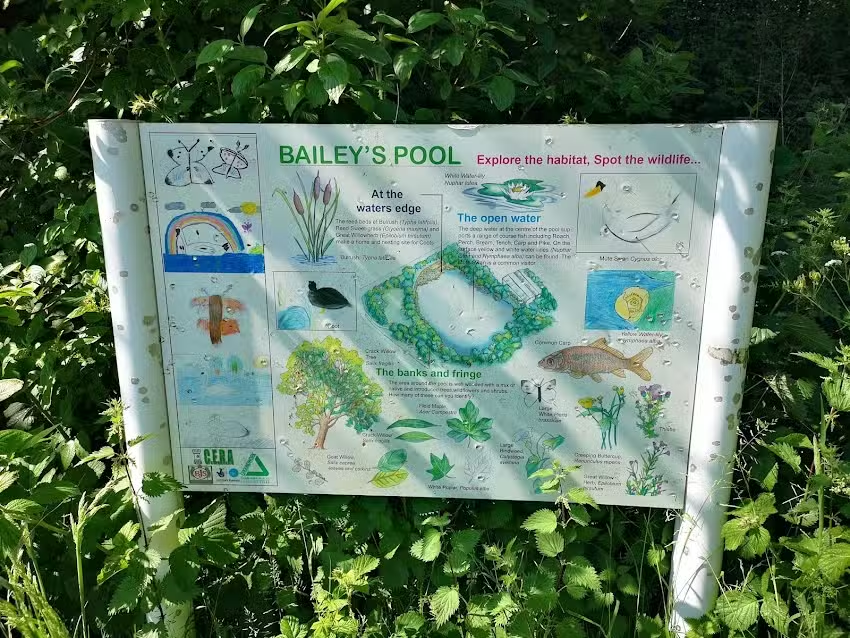
BackBaileys Fishing Club is a long‑established coarse fishing venue set around a modest pool that has been part of local angling life for many years. It appeals mainly to anglers who value a simple, no‑nonsense water where they can focus on the basics of coarse fishing rather than on commercial‑style facilities. As with many traditional club waters, its strengths and weaknesses matter to anyone weighing up where to spend time and membership fees.
The pool has historically been known as a community‑orientated venue, offering reasonably easy access for nearby residents who want somewhere familiar to practise pleasure fishing. Regular visitors describe a straightforward layout, with banks that are generally approachable and pegs that do not require specialist wading or difficult climbs. This simplicity can be attractive to those who are more interested in a quiet session with a rod and keepnet than in chasing match‑style prize money or high‑profile competitions.
One of the key attractions of Baileys Fishing Club has traditionally been the opportunity to target typical British coarse species on standard fishing tackle. Anglers coming with a simple float rod, feeder setup or basic ledger rig will find the venue suited to relaxed sessions rather than high‑pressure, heavily stocked commercial tactics. The pool has previously supported a mix of species, allowing anglers to experiment with different fishing baits such as maggots, worms, sweetcorn and pellets, making it a useful practice ground for refining presentation and bite detection.
However, several regulars and occasional visitors have pointed out that recent seasons have not matched the standards of earlier years. One review notes that after speaking to two anglers on the bank, the feedback was that fishing was slow with very little showing. This impression of reduced sport is echoed by others who remember the water as a strong local venue, but now feel that catch rates can be disappointing. For anglers prioritising consistent action and busy keepnets, this decline in form is a significant drawback.
The most serious concern repeatedly mentioned is the impact of algae on the pool. An angler familiar with the venue commented that it used to be a brilliant place to fish for local residents, but that it is now covered in algae which has allegedly killed a very high proportion of the fish stock. While exact figures are difficult to verify, the perception that a large percentage of fish have been lost shapes expectations: newcomers should not assume that the water currently offers the same density of fish as better‑maintained commercial fisheries or well‑managed club waters.
For potential visitors, this algae issue raises practical considerations. Heavy algal growth can affect water clarity, oxygen levels and the general health of fish, which in turn influences how productive a day with carp rods or match fishing gear is likely to be. It also limits the effectiveness of some tactics, as fish may become lethargic or pushed into small, healthier pockets of the pool. Anglers who enjoy fine‑tuning their fishing rigs in more balanced waters may find the current condition challenging rather than rewarding.
Despite these problems, Baileys Fishing Club still retains some positives for particular types of angler. Those who fish for the enjoyment of being bankside, rather than for guaranteed hauls, may appreciate the quieter atmosphere compared with busier day‑ticket commercials. The absence of crowds can be an advantage for anglers wanting to practise casting, setting up pole sections or experimenting with different feeder fishing techniques without pressure on peg choice. For some, the challenge of coaxing bites from a harder water is part of the appeal.
Another aspect in its favour is the club‑style operation, which usually creates a sense of shared responsibility among members. While formal facilities such as on‑site tackle shops, cafés or bait vans are not a feature here, anglers who are self‑sufficient and arrive with their own fishing rods, nets and bait can settle in for long, unhurried sessions. The venue’s all‑day access policy means keen early risers or anglers who prefer dusk into dark can time visits to suit the feeding patterns they have observed over repeat trips.
On the other hand, the same low‑key setup can be a disadvantage for those who expect the level of service found at larger fishing lakes or commercial complexes. There is no emphasis on hire gear, tuition or family‑orientated extras, so complete beginners or occasional visitors may feel less supported than they would at a fully serviced day‑ticket fishery. Anglers who like to combine their trip with access to a café, toilets or a stocked on‑site shop for last‑minute terminal tackle may find the venue less convenient.
Catch feedback from visitors reinforces the impression that results are mixed. Some anglers report sessions where bites are limited and long casts or frequent changes of method are needed to tempt fish. Slow days are not unusual, and this is important for anyone travelling specifically to test new carp fishing setups or record a steady flow of fish on a keepnet. The water appears to suit patient anglers prepared to accept blank or low‑catch sessions as part of the experience.
In terms of fish variety, the pool has been associated with the typical mix of British coarse species rather than specimen‑only fishing. It has not gained a reputation as a leading carp fishery with named fish or a strong head of doubles and twenties. Instead, its traditional role has been to provide local anglers with a general coarse venue where they can run through everything from light waggler work to small method feeders, testing different hookbaits and shotting patterns. With the reported fish losses, however, anyone expecting a heavily stocked water should moderate expectations.
Water management and maintenance are clearly central to how Baileys Fishing Club is perceived. The comments about extensive algae and fish deaths reflect a need for sustained remedial work, such as improving water circulation, controlling nutrient input and, where appropriate, carefully restocking. Until such interventions become visible and consistently effective, the venue is likely to remain more attractive to long‑term locals and club loyalists than to anglers who actively search for the most productive day ticket fishing venues.
From a value perspective, the club approach can still appeal to anglers who fish regularly and live nearby. For them, having a familiar pool on the doorstep to practise with poles, whips or light float fishing outfits can justify ongoing support, even if the fishing is currently below its past peak. They may also appreciate the chance to be involved in work parties or discussions about how best to improve water quality and stock health over time, seeing their membership as an investment in recovery rather than simply in short‑term sport.
By contrast, occasional visitors or those who travel specifically in search of top‑performing coarse fisheries may decide that Baileys Fishing Club does not yet offer enough to compete with better‑maintained alternatives. With modern anglers increasingly comparing venues online, high expectations around stocking levels, water clarity and consistent catches are now common. Against that backdrop, the club’s current reputation for slow fishing and heavy algae puts it at a disadvantage in attracting new members who are not already attached to the venue.
Prospective anglers considering Baileys Fishing Club should think carefully about what they want from a session. If the priority is a peaceful, familiar environment to practise rigs, shotting patterns and bait presentation without heavy footfall, the venue can still play a useful role. Those seeking fast‑paced action, clear water and a strong head of carp or mixed species, supported by modern facilities, are likely to find other coarse fishing lakes more closely aligned with their expectations at present.
Overall, Baileys Fishing Club represents a traditional, understated angling club water that has faced real challenges in recent years. Its history as a much‑loved local pool contrasts with current reports of algae, fish loss and slower sport, and this mixed picture is important for potential visitors to understand. Anglers who value community, familiarity and a quiet bankside experience may still find it worth supporting, while those looking for consistently productive fishing venues and higher stock levels might reasonably look elsewhere until clear improvements are evident.

