Black Moss Fly Fishing Association
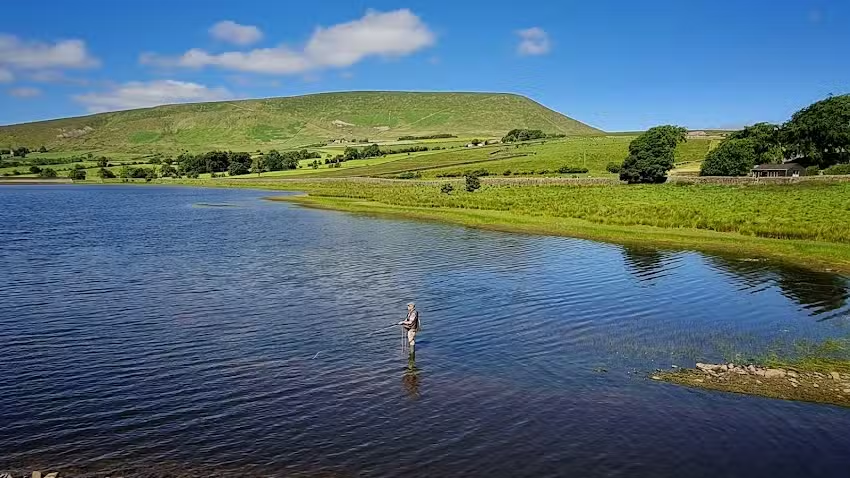
BackBlack Moss Fly Fishing Association offers a focused, traditional approach to stillwater angling on two upland reservoirs, appealing to those who value quiet banks, simple access and a strong emphasis on trout rather than commercial attractions. The association controls fly-only fishing on a pair of waters beneath Pendle Hill, giving members and visiting anglers access to brown and rainbow trout in a setting that feels more like a natural fishery than a heavily engineered venue.
The upper reservoir is dedicated to brown trout, including a population of wild fish that appeals to anglers who prefer challenging, more cautious quarry over heavily stocked fish. Feedback from visitors highlights that this water rewards careful presentation, accurate casting and thoughtful choice of flies, which will suit more experienced anglers or those looking to sharpen their skills with subtle patterns such as small emergers and traditional wet flies. For many, the chance to target wild or semi-wild browns in a reservoir setting is a key reason to visit, even if it means accepting fewer fish compared with highly stocked commercial pools.
The lower reservoir is stocked with hard-fighting rainbow and brown trout, providing a more forgiving and action-oriented experience while still remaining dedicated to fly fishing only. Reviews mention that the stocked fish are powerful and energetic, which can be especially appealing for anglers who enjoy using streamers or larger lures to provoke aggressive takes. The combination of stocked fish and fly-only rules creates a compromise between a traditional club water and a modern pay-per-day venue, giving scope for different styles from subtle nymphing to more visual fishing with surface patterns when conditions allow.
Day tickets are available and can be purchased from a cabin in nearby Barley, which keeps the access system straightforward but does require a short detour and a little planning. For regular visitors, membership of the association offers ongoing access and the sense of belonging to a small community of anglers who share an interest in maintaining the water and its surroundings. This club-style structure means Black Moss Fly Fishing Association sits somewhere between a public reservoir and a private syndicate, and prospective anglers should be prepared to follow the association’s rules and etiquette closely.
Anglers consistently mention the setting as one of the most appealing aspects of the fishery, with open views and the distinct outline of Pendle Hill forming a backdrop to a day on the water. It is often described as a place where time on the bank feels worthwhile even if the fish are not in a cooperative mood, thanks to panoramic vistas, changing light and the sense of space that comes with upland reservoirs. Birdlife is a regular feature, with curlew, lapwing, oystercatcher and cuckoo frequently noted during spring, adding an extra layer of interest for visitors who appreciate wildlife as much as the fishing itself.
As a venue dedicated to fly-only methods, the association suits anglers who want to concentrate on improving or applying their casting and presentation rather than mixing techniques. The waters lend themselves to a range of tactics, from fishing small nymphs deep along the dam walls to working larger patterns on windy days when wave action stirs the margins. Those who enjoy fly fishing as a craft, and who carry a selection of patterns to match different light and wind conditions, are likely to get the most from these reservoirs.
Prospective visitors looking for a classic stillwater experience will find that Black Moss Fly Fishing Association encourages the use of varied techniques that many anglers associate with traditional trout fishing. On cooler days, weighted nymphs and buzzers fished at depth can be effective, while warmer periods may see fish feeding higher in the water where dry flies and emergers come into their own. Some anglers report exciting sport when using fly fishing rods rigged with intermediate or sinking lines and streamers, particularly on the lower reservoir where trout can respond aggressively to patterns that imitate baitfish.
Because the venue is not a heavily commercialised complex, facilities are fairly minimal, which many anglers consider part of the appeal but others may see as a drawback. There is no emphasis on on-site catering or retail, and visitors will generally need to arrive prepared with their own food, drink and equipment. For those who expect a tackle shop, café or extensive shelter at the water’s edge, this may feel sparse, but anglers who prefer quiet banks and fewer distractions often see the same simplicity as a major positive.
Access to the reservoirs involves minor roads and tracks, and while these are manageable for most vehicles and visitors, they may not be ideal for everyone, particularly in poor weather. Parking is generally associated with nearby access points rather than directly by every peg, and anglers should expect to walk short distances along the shore to reach preferred spots. The banks themselves are relatively open, but the upland location means that wind can be a significant factor, which can make casting more demanding for beginners learning to use fly rods and line management techniques.
Reviews from visiting anglers tend to emphasise the tranquillity and unhurried character of a day spent at Black Moss, rather than fast-paced fishing with a guaranteed bag. Some report that a blank day is still enjoyable because of the scenery and sense of escape, while others highlight the satisfaction of finally connecting with a fish after adapting their approach and changing flies through the session. This suggests that anglers who measure success purely by numbers of fish landed might find the venue less satisfying than fully stocked commercial ponds, but those who appreciate patience and watercraft are likely to value the experience.
The limited volume of public feedback online means that information about stocking frequency, exact fish sizes and seasonal patterns is less detailed than at some commercial stillwaters, which can be a disadvantage for anglers who like to plan precisely. However, the association maintains an active presence through its community channels, providing updates and occasional comments about conditions, events and plans for the water. This direct communication helps regulars stay informed, but new visitors may need to be proactive in checking recent notes before deciding when and how to fish the reservoirs.
One aspect that many anglers appreciate is that both reservoirs remain strongly focused on trout fishing lakes rather than being developed into multipurpose recreational hubs. There are no competing water sports or powered craft to disturb the surface, so anglers can work their flies across relatively undisturbed water and concentrate on reading wind lanes, subtle rises and changes in depth. For those used to busier reservoirs, this focus on angling creates a more relaxed pace and fewer interruptions, even if it also means fewer non-fishing amenities.
The upland setting and manageable size of the waters make them a useful testing ground for a wide range of fly fishing gear, from lighter outfits suited to delicately presenting small dries on calm evenings to sturdier rods and lines designed to turn over larger patterns in blustery conditions. Anglers who enjoy refining their casting or experimenting with different leaders, tippets and retrieves will find that the reservoirs respond clearly to changes in technique, providing useful feedback over the course of a session. This characteristic, combined with the mix of wild and stocked fish, makes Black Moss an attractive option for anglers who want practical experience rather than solely chasing large individual fish.
For first-time visitors, it is worth noting that the association expects responsible behaviour, respect for the banks and careful handling of fish, particularly the wild browns on the upper reservoir. This ethos is in line with broader practice across many dedicated fly fishing associations, where conservation and long-term quality of sport take priority over short-term numbers. Anglers who are used to catch-and-release, barbless hooks and considerate wading will find the expectations familiar and reasonable, while those newer to this style of fishing may see it as an opportunity to learn better habits.
Black Moss Fly Fishing Association is not the best choice for those seeking family entertainment, non-angling activities or guaranteed high catch rates, but it does offer a distinctive experience centred on thoughtful fly fishing for trout in a striking landscape. Potential visitors should weigh the strengths – scenic banks, wild browns, hard-fighting stocked trout and calm surroundings – against the limitations, such as basic facilities, exposure to weather and relatively sparse public detail on stocking and rules. For anglers who value quiet water, traditional methods and the challenge of making each take count, these reservoirs can provide a rewarding day with rod and line.