
Chilham Mill Fisheries
BackChilham Mill Fisheries presents itself as a quietly regarded coarse and game fishing venue set within the Chilham Mill Estate, appealing mainly to dedicated anglers who value privacy and syndicate-style waters more than casual day-ticket convenience. The fishery operates on a membership basis, so it tends to attract committed carp and specimen hunters rather than occasional visitors, which shapes both its strengths and its limitations from a customer point of view.
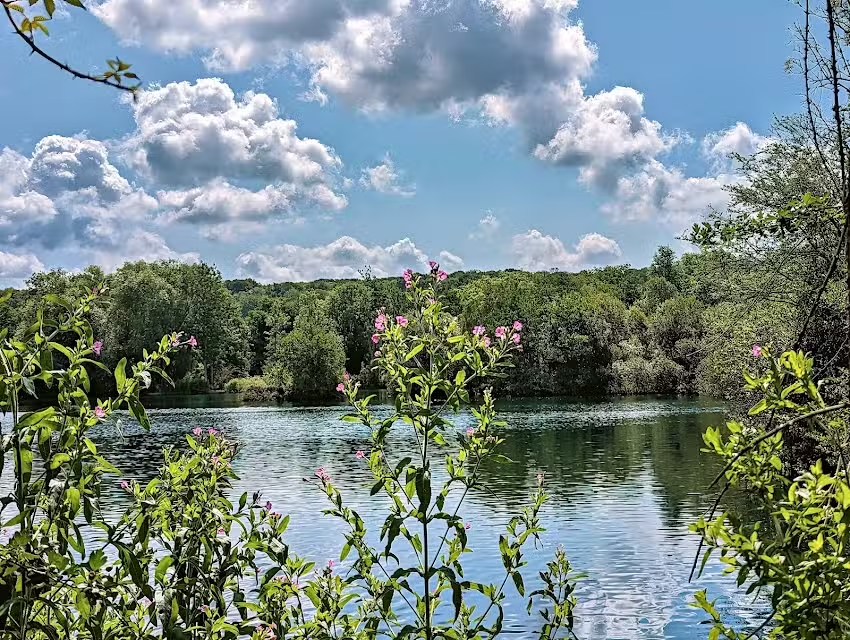
The centrepiece of the venue is a large spring-fed lake, described by visitors as picturesque, with islands, mature bankside vegetation and overhanging trees that provide natural cover and features for fish holding areas. This setting will appeal strongly to anglers looking for a more traditional environment rather than a heavily commercialised complex, and it gives a clear sense that the fishery is managed as part of a wider rural estate rather than as a high-turnover day-ticket water. The estate feel contributes to the sense of seclusion for members, especially important for those who enjoy longer sessions in a relatively peaceful spot.
From a fishing perspective, Chilham Mill Fisheries is known in angling circles for its carp, with a reputation for sizeable fish that attract dedicated carp anglers prepared to invest in membership. For those who follow specialist forums, a water with this kind of background is often associated with careful stock management and the potential for memorable captures rather than high numbers of small fish. Alongside carp, there are also pike, bream and tench present, increasing the appeal for coarse anglers who like a mixed-species challenge rather than targeting a single quarry on every trip.
The venue also benefits from access to the adjacent river, offering fly fishing for brown trout in addition to the stillwater options. This combination of coarse and game fishing means Chilham Mill Fisheries can appeal to anglers who enjoy switching between methods and species, from stalking carp and pike in the main lake to working a fly along moving water. For members who like variety without travelling between multiple fisheries, this is a significant advantage and adds an extra dimension to the overall experience.
Accessibility around the main lake is a clear practical plus. Reports mention 32 swims spaced around the water, with car access available to each, which is particularly valuable for anglers carrying substantial gear or those who prefer to avoid long walks with heavy tackle. Carpy-style sessions can involve bivvies, bedchairs, bait buckets and multiple rods, so being able to get close to your chosen peg makes sessions more manageable and opens the venue up to a wider range of ages and physical abilities.
At the same time, the membership-only structure will be seen very differently depending on what potential customers are looking for. On the positive side, restricting access to syndicate members helps keep angling pressure under control, which can improve fish welfare, reduce crowding on popular swims and generally make it easier to fish in a relaxed way. Anglers who dislike busy commercial waters may see this as one of the fishery’s strongest qualities, giving them space and time to fish methodically without queues for favoured pegs.
However, the same policy is a clear drawback for others. Casual anglers or those wanting to try the venue for a one-off trip may find the lack of open day tickets frustrating, particularly if they are used to booking short sessions at other fishing lakes or carp fishing complexes. Prospective customers may also find that information about availability, pricing structures and membership waiting lists is less straightforward to access than for fully commercial venues, and this lack of immediate transparency can be off-putting for newcomers who are simply looking for their next fishing trip location.
In terms of surroundings, the lake is positioned between the Great Stour and a nearby railway line, with a major road not too far away. Visually, the water and bankside are widely regarded as attractive, but visitors do note that traffic noise from the A28 can intrude on what might otherwise feel like a completely tranquil setting. For anglers whose priority is pure quiet, this could be a noticeable downside, especially during busy traffic periods. For others more focused on their rods than on background sound, the noise may become less of an issue once they settle into a session.
Public footpaths along one side of the lake and by the river add another layer of complexity. On the one hand, this access helps integrate the fishery into local walking routes and can give non-anglers a glimpse of the water and surroundings. On the other hand, many of the most attractive parts of the lake are restricted to members, meaning walkers may feel they are excluded from the best viewpoints. For anglers, this restriction is a benefit, as it reduces disturbance and maintains privacy on the swims, but it does underline that Chilham Mill Fisheries is run primarily for syndicate members rather than as a broader leisure attraction.
In terms of facilities, the fishery is clearly more aligned with traditional estate waters than with large, retail-oriented tackle shop complexes. Those who expect on-site food outlets, tackle sales or equipment hire may find that the focus here is firmly on the fishing itself rather than on a wide commercial offer. Anglers will normally arrive with their own rods, reels and terminal gear already prepared, and the venue suits those who are already invested in their hobby. For potential visitors searching phrases such as fishing tackle, carp rods or bait and tackle online, Chilham Mill Fisheries is less about retail choice and more about the quality of the water they will fish once their kit is sorted elsewhere.
Where the venue does score highly is in the sense of exclusivity and the quality of the environment for members. Syndicate anglers generally value stable fish stocks, well-managed banks and clear rules designed to protect both fish and habitat. While detailed rules are not extensively publicised, the limited number of swims and membership control suggest a management approach focused on long-term sustainability. This is often important to anglers who are prepared to travel and pay for well-run carp lakes rather than frequenting heavily pressured day-ticket venues.
For those weighing up whether Chilham Mill Fisheries might suit them, it is useful to consider how it compares with more commercial waters. Anglers searching for heavily stocked coarse fishing venues with easy booking systems, high catch rates of smaller fish and extensive on-site services may find this fishery too quiet, too restricted or simply too membership-oriented. Conversely, those who prioritise a more intimate atmosphere, the potential for larger carp and pike, and the option to fly fish for trout on the river are likely to see the syndicate model as a positive trade-off.
Customer feedback, while limited in volume, is generally favourable about the overall experience. One reviewer highlights the lake’s beauty and the appeal of the spring-fed character, noting islands and natural features that create interesting fishing scenarios. Positive ratings also suggest that anglers who understand what a syndicate water offers are largely satisfied with what they find, even if the location is not without its imperfections. The absence of detailed negative comments about fish welfare or overcrowding is a positive sign, though the sample size of public reviews is relatively small.
On the less favourable side, the scarcity of comprehensive, up-to-date information for non-members can make it harder for new anglers to assess the fishery from a distance. In an era when many fishing venues and carp fisheries maintain active social media profiles, catch reports and detailed FAQs, a more understated online presence can feel old-fashioned or opaque. For prospective customers accustomed to comparing multiple waters online before making a choice, this may slow down their decision-making or push them towards better-documented alternatives.
Despite these limitations, Chilham Mill Fisheries holds a clear place in the local and regional angling landscape as a membership-based water with a focus on quality rather than volume. Its combination of spring-fed lake, river access, mixed coarse species and brown trout fly fishing offers a breadth that many single-focus venues do not match. Potential members who value a blend of coarse fishing, carp fishing and river sport are likely to see strong appeal, provided they are comfortable with the membership structure and the realities of the surrounding infrastructure.
For anglers considering joining or making enquiries, it is worth reflecting on their own priorities: if peace, specimen potential and a more traditional estate setting matter more than instant access and commercial facilities, Chilham Mill Fisheries could be a good fit. If, however, an angler prefers open-access fisheries, on-site services and a more retail-oriented setup, they may find the syndicate approach and limited public information restrictive. In that sense, the fishery is not trying to be all things to all people, but instead serves a particular segment of the angling community that appreciates its specific balance of strengths and compromises.