
Combwich fishing lakes
BackCombwich fishing lakes operates as a small, straightforward fishery that appeals to anglers who value quiet water, uncomplicated access and a natural setting over commercial frills. The venue is primarily about time on the bank and the chance of connecting with quality fish rather than being a fully serviced holiday complex. For prospective visitors looking for a relaxed session with minimal distractions, this can be a positive; for others expecting on-site catering, tackle shops or structured tuition, it may feel limited.
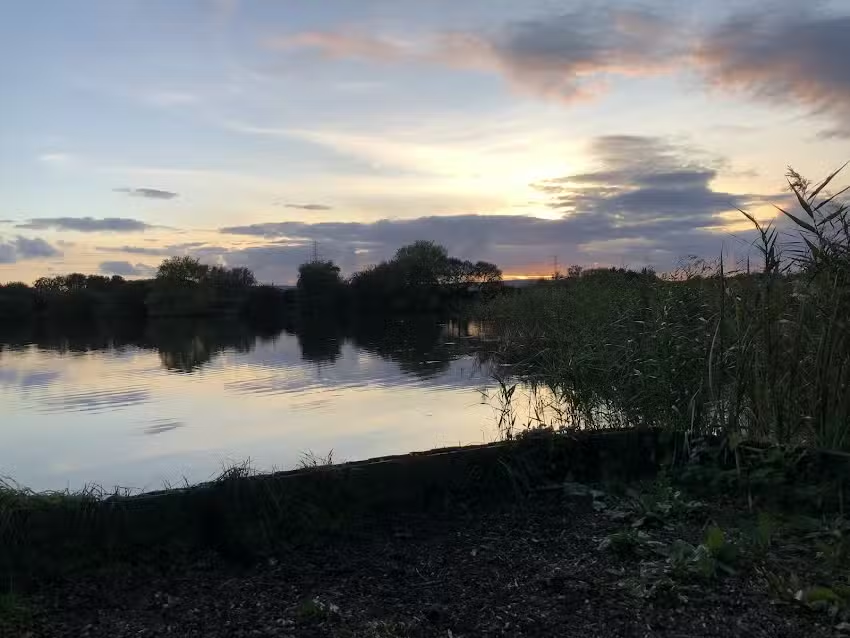
One of the clearest strengths of Combwich fishing lakes is the overall atmosphere of calm. Anglers describe a peaceful, almost secluded lake where noise is minimal and wildlife is a constant presence. Regular sightings of kingfishers, along with other birdlife and lush bankside vegetation, add to the sense of escape that many anglers seek when planning a trip. This quieter character suits those who want to sit behind the rods, listen to the water and enjoy the day without crowds or heavy footfall.
The water itself has earned appreciation from visitors who rate it very highly in informal feedback, praising both the views and the stock. While exact stocking information is not promoted in detail, anglers refer enthusiastically to carp, pike, perch and other mixed species that provide varied sport. In practice, this means the venue is not limited to a single style of fishing: pleasure anglers, predator enthusiasts and multi‑species anglers all find enough here to keep them engaged, even though the fishery remains relatively modest in size compared with heavily marketed commercial complexes.
For anyone interested in carp fishing, Combwich fishing lakes offers a particularly appealing proposition. Reports highlight a good head of carp, with fish showing regularly and responding well to thoughtful baiting and quiet bankside behaviour. The lake’s more natural character means that carp are not pressured in the same way as on extremely busy commercials, which can make them more willing to feed during steady, low‑key sessions. At the same time, this is not a venue where every cast guarantees a run, so anglers should expect to apply watercraft, observe conditions and adjust rigs and bait rather than rely on numbers alone.
Predator anglers also have reasons to visit, as pike and perch feature among the species encountered. The presence of these fish adds seasonal interest, particularly in the colder months when many coarse anglers are turning their attention away from carp. Those who enjoy lure fishing or deadbait tactics can find satisfying sport, although it remains important to approach predator fishing responsibly, with suitable tackle and unhooking gear. The absence of a large on‑site retail facility means visitors must come prepared with appropriate terminal tackle, traces and nets in advance.
The mix of species and the relatively tranquil water make Combwich fishing lakes a viable option for developing skills across different methods. Anglers can practice float work close in, experiment with simple feeder tactics at range, or use basic bolt rigs for carp without feeling crowded. This flexibility is helpful for newer anglers who may still be building confidence with different lines and presentations. However, the fishery does not position itself as a formal training venue, so those seeking structured tuition or family coaching sessions will need to organise that independently or already have some experience.
In terms of access and practicalities, Combwich fishing lakes sits in a rural area reached by local roads, which adds to the feeling of being away from busy environments. For many, the drive is part of the appeal, and arriving at a quiet countryside location suits the overall tone of the fishery. That said, a countryside setting can also pose challenges: public transport options are limited, and visitors who do not drive may find it difficult to reach the water reliably. Prospective visitors should plan routes in advance and be prepared for country‑lane navigation rather than large, signposted entrances.
The banks and swims, from reports and imagery, appear fairly natural rather than heavily engineered. This traditional layout can be a major advantage for anglers who prefer a more authentic environment with grass underfoot, reeds at the margins and varied features to cast to. On the other hand, it may pose difficulties for anyone requiring very level, paved peg access or those with reduced mobility. There is no clear suggestion of extensive platforms or disability‑specific infrastructure, so visitors who need such facilities may wish to make enquiries before committing to a visit.
Combwich fishing lakes does not come across as a highly commercialised operation with on‑site cafés, large car parks or dedicated social areas. For anglers who are accustomed to big commercial venues with extensive services, this can feel sparse, but for those who prioritise the fishing rather than amenities, it is part of the charm. The focus remains on the water, the fish and the surrounding countryside. This lean approach often helps keep the atmosphere relaxed, though it does mean that basic needs such as food, drink and any additional tackle must be organised beforehand.
Feedback from anglers consistently references the beauty and quiet of the lake, with visits often described in positive terms even when catch reports are not specified in detail. A high proportion of comments reflect satisfaction with the experience as a whole, indicating that the venue delivers what many anglers hope to find: a clean, pleasant environment and a realistic chance of bending the rod. Occasional constructive remarks tend to centre on the limited volume of information available online about rules, stock and facilities, which can make planning slightly more difficult for first‑time visitors.
For online‑minded anglers, the relatively low digital profile of Combwich fishing lakes is both a strength and a weakness. On one side, the lack of intense social media exposure and constant catch‑photo promotion helps the fishery retain its quieter, almost local feel, reducing pressure and preserving the sense of discovery for those who do visit. On the other side, it can leave practical questions unanswered, such as the most appropriate ticket arrangements, preferred methods, or any seasonal restrictions that may be in place. Anglers who like to research every detail before travelling may need to rely more on personal enquiry and word‑of‑mouth accounts here than at highly marketed commercial fisheries.
Despite this limited online detail, Combwich fishing lakes still aligns well with many expectations associated with a good day ticket fishery: accessible coarse fish, a focus on angling rather than non‑fishing activities, and a setting that encourages long, undisturbed sessions. Visitors expecting a polished, tourism‑driven complex with on‑site accommodation and entertainment might feel underwhelmed, but those seeking a simple venue where they can arrive, set up and spend long hours watching the float or listening for carp activity into the evening are likely to be satisfied. The emphasis lies firmly on the core experience of fishing rather than on add‑ons.
For travelling anglers comparing Combwich fishing lakes with heavily stocked, high‑turnover waters, it is worth understanding that catch rates can vary depending on conditions, time of year and angler approach. This is not presented as a venue where fish practically queue to be caught throughout the entire day, but rather as a place where some thought and patience are rewarded. Anglers willing to adapt methods, change hookbaits and pay attention to wind direction, water temperature and fish movement will usually fare better than those relying on a single set‑up and fixed tactics.
From a broader perspective, Combwich fishing lakes fills a specific niche in the local angling landscape. It offers a low‑key, nature‑focused alternative to larger, more intensively developed sites, making it attractive to seasoned anglers who appreciate quieter waters and to those who want to combine their fishing with simple enjoyment of the outdoors. The key trade‑off is between tranquillity and convenience: visitors benefit from a serene, wildlife‑rich environment but must accept that facilities are limited, information is not exhaustively documented, and a degree of self‑reliance is required throughout the visit.
Overall, Combwich fishing lakes presents a credible option for anglers seeking a restful coarse and carp lake with the added bonus of pike and perch. It will suit those who enjoy traditional bankside sessions, value wildlife and welcome the absence of heavy commercialisation. Less suited are visitors who need high levels of accessibility, extensive on‑site services or detailed online guidance at every step. For anyone prepared to plan ahead, bring their own provisions and embrace a quieter, more natural environment, this fishery can offer rewarding days with genuine potential for memorable captures.