
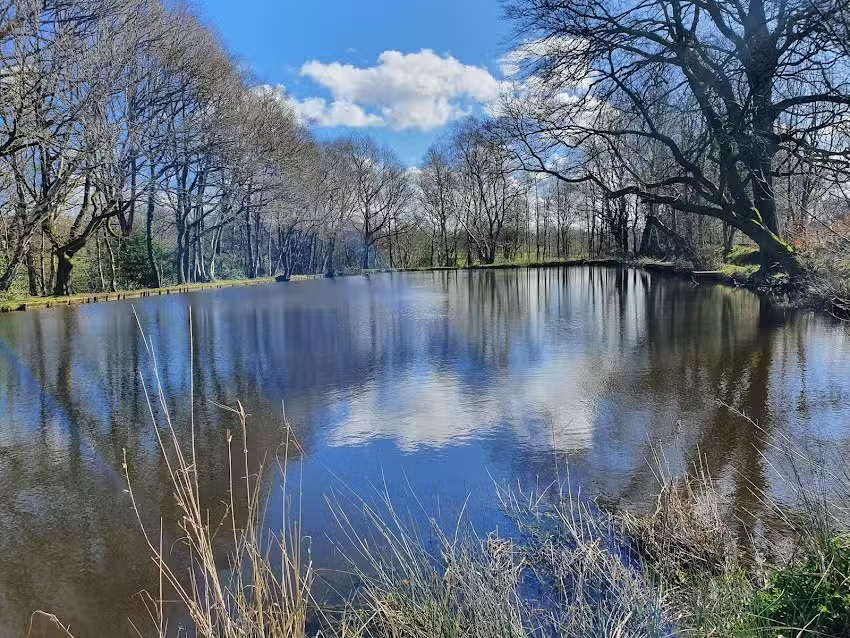
Croft Fisheries
BackCroft Fisheries is a commercial coarse fishery that attracts a wide range of anglers, from beginners arriving with family or school groups to experienced specimen hunters looking for hard-fighting carp and characterful mixed species. Set around several distinct waters operated under the same management, it offers a varied fishing experience where visitors can target everything from small silvers through to sizeable perch and double-figure carp, with enough challenges and quirks to appeal to those who enjoy putting some thought into their sessions.
The fishery is best known locally for its three main waters: Lilypad Lake, Huyton 1 and Huyton 2. Each has been developed with its own stocking policy and personality, so returning anglers often pick a favourite. Lilypad is a relatively shallow pool averaging around five feet, thick with summer lilies that create natural cover and obvious targets for margin and open-water tactics. Huyton 1, next to the ticket point, is more of a classic commercial match-style lake with a high head of F1s and carp of several strains, while Huyton 2, the bottom lake, is a moodier proposition that rewards patience and careful watercraft. This variety is one of the main strengths of Croft Fisheries, as it allows regulars to alternate between easier days of bites and more demanding sessions in search of fewer but larger fish.
Anglers commenting on the fishery frequently highlight the quality and diversity of the stocking. Lilypad Lake carries a big head of silver fish, including roach, rudd, skimmers and various hybrids, interspersed with gudgeon and ruffe that provide almost constant interest when fishing light tackle. There are also F1s and a modest number of carp to around the low double range, as well as small pike and the likelihood of tench and bream that show occasionally rather than forming the bulk of catches. The real talking point on this water, however, is the perch population. Many local anglers describe the lake as being full of perch of all sizes, with the potential to connect with fish approaching four pounds. For those interested in predator-style coarse fishing, this makes it an appealing venue to experiment with worms, prawns or small lures presented sensitively among the lilies.
Huyton 1 is more obviously geared towards those who enjoy consistent action with carp and F1s. It is heavily stocked, so anglers using efficient commercial tactics, such as method feeders, pellets and short-pole work, can usually build up a series of bites across a session. Mixed in with the F1s are mirror, common, koi and ghost carp that can reach mid-double figures, so there is always the chance of a more serious bend in the rod. Roach in this lake can reach around two pounds, and the perch also include some better specimens reported to over three pounds, which adds another dimension for those who fancy switching from carp tactics to a more refined float or feeder approach. Reports from regulars also mention the odd chub, eels, rudd, gudgeon, bream and even sticklebacks, suggesting that the water supports a broad ecosystem. Some anglers have encountered pike into the mid-teens here, further underlining the diversity of species.
Huyton 2, the bottom lodge, is described by many as a more temperamental proposition. It does not appear to be stocked as densely as Huyton 1, which can mean quieter spells between bites but a stronger sense of achievement when a good fish finally slips over the net cord. The carp here – mirrors, commons and ghosts up to mid doubles – are often regarded as worthwhile targets for anglers who prefer a more traditional, less bag-up oriented session. Perch in this lake have been reported at weights around four and a half pounds, which is significant for any coarse angler focusing on predators. There are also pike that have been mentioned at around the high teens, along with the likelihood of decent eels that sometimes reveal their presence through dropped runs on deadbaits and occasional captures in matches. For patient anglers willing to think carefully about bait, presentation and location, Huyton 2 provides a more old-school challenge.
One of the consistent positives that comes through from visiting anglers is the general upkeep of the fishery. Several comments describe Croft Fisheries as a pleasant, well-kept venue, with banks that are maintained and pegs that provide enough space to set out multiple rods, seatboxes and accessories comfortably. Some visitors have specifically mentioned the good size of the fishing platforms, which is particularly helpful for those who like to bring plenty of gear or set up for longer sessions. The presence of a voluntary bailiff and a manager with a hands-on approach to matches and events contributes to a sense of organisation and oversight, and there are accounts of the lake being closed to facilitate junior competitions, indicating a commitment to encouraging young anglers and structured activities.
The social side of the fishery also deserves attention. There are anecdotes of angling coaching sessions being run on site over several years, particularly between 2023 and 2024, involving local councils and schools. This suggests that Croft Fisheries has established itself as a venue that is accessible to newcomers and young people, not just seasoned regulars. Coaches who have worked repeatedly on the site describe getting to know the lakes in detail, which implies a level of consistency in how the waters fish and how they are managed. Having that kind of activity on the lakes can be reassuring for parents and beginners, as it shows that the venue is used for structured, supervised learning as well as standard day-ticket angling.
Customer interaction with staff appears to be generally positive. Anglers describe the leaseholder and lake manager as approachable and willing to support events such as junior matches. The voluntary bailiff is sometimes described as strict or blunt, but the consensus in these accounts is that anyone who follows the rules will not encounter serious problems. For a commercial fishery, firm rule enforcement can be a positive factor because it protects the fish stocks and ensures that anglers who behave responsibly are not disadvantaged by those who might otherwise push boundaries on things like litter, barbed hooks or handling practices. That said, those who prefer a very relaxed atmosphere with minimal oversight may find the presence of a visible bailiff slightly less appealing, depending on personal preference.
However, there are also recurring criticisms that potential visitors should be aware of. One of the most common is the issue of litter around the lakes, which is noted as a problem that, unfortunately, Croft shares with many other waters. Some regulars urge fellow anglers to take their rubbish home and play their part in keeping the environment tidy. While the presence of litter is mainly a reflection of visitor behaviour rather than management policy, it nonetheless affects the overall impression of the fishery and can detract from the otherwise pleasant banks and surroundings. Those planning a visit may wish to be prepared for occasional untidiness in some areas, especially during busier periods.
Another practical point raised in feedback concerns access to facilities. There are toilets on site, but anglers mention that the walk to them from the second pond can be significant, particularly when carrying gear. Those with mobility issues or without a barrow or trolley may find this inconvenient, especially during wet or cold weather. For some, this is a minor trade-off for fishing on relatively natural-feeling lakes rather than heavily concreted venues, but it is worth considering if easy access to amenities is a priority. In practice, many regulars seem to manage by planning visits to the facilities around natural breaks in their fishing, but the distance is still mentioned often enough to count as a drawback.
Water quality and seasonal conditions also receive mixed commentary. During warmer months, Huyton 1 in particular has been described as suffering from algae, which can affect both the appearance of the lake and, at times, the fishing itself. Management has taken steps to address this with the addition of aerators and improvements to peg infrastructure, suggesting a willingness to invest in solutions rather than ignore the issue. Even with these measures, visiting anglers should expect that during hot spells the water may still carry visible algae, which can influence both presentation and fish behaviour. Those who are flexible with venue choice might favour other lakes on the complex during peak bloom periods.
Stock density is another area where opinions differ. Many visitors report excellent sport and regular catches, especially from the more heavily stocked waters, but some find certain lakes – particularly Huyton 2 – to be on the leaner side in terms of fish numbers. This can be experienced either as a frustration if someone arrives expecting fast-action commercial fishing, or as part of the appeal for anglers who enjoy more tactical, selective sessions where every bite is earned. Croft Fisheries therefore sits somewhere between heavily stocked, almost guaranteed catch venues and low-stock specialist waters. Prospective visitors will benefit from matching their expectations to the particular lake they choose on the day.
In terms of angling style, the fishery supports a range of approaches. Traditional coarse methods such as waggler and pole fishing for silvers and F1s are popular, especially on Lilypad Lake and Huyton 1, where bites can be frequent and varied. Carp anglers can scale up with stronger lines and more robust rigs to cope with koi, ghost carp and commons that run into mid doubles, while those targeting predators like perch and pike can adapt with live or deadbaits (subject to fishery rules) or subtle lure tactics. This flexibility makes Croft Fisheries attractive to clubs and groups, as it can accommodate different abilities and preferences on the same day.
It is also worth noting that Croft Fisheries appears to be a venue where sessions are often described as rewarding when anglers think carefully about how they approach the water. Visitors emphasise that while there are some very good fish present, they are not always straightforward to catch. Wind direction, time of year, pressure and angler positioning all seem to influence results, and the lakes are frequently described as moody, particularly the Huyton waters. For those who enjoy adjusting rigs, changing baits and reading the water throughout the day, this can add a satisfying dimension. For those who want guaranteed heavy nets every trip, there are probably easier commercials nearby.
From a value perspective, the fishery positions itself as a day-ticket coarse venue with multiple waters and a good cross-section of species. While detailed pricing structures are not discussed directly in visitor comments, the fact that coaching organisations, councils and schools make regular use of the lakes suggests that the cost is considered reasonable for group bookings and educational activities. The presence of established match scenes, including junior events, indicates that local clubs view the fishery as a reliable option for organised competitions, which generally requires confidence in both stock and management.
For potential visitors considering Croft Fisheries for their next outing, the overall picture is of a pleasant, evolving coarse fishery with plenty of character. The lakes offer real variety, from lily-lined margins packed with silvers and perch to more demanding carp and predator fishing on the deeper or lower-stocked waters. Bank maintenance and peg size are commonly praised, and there is an evident effort from management to improve facilities and water quality where issues arise. At the same time, recurring problems with litter, the distance to facilities from some pegs, and the moody nature of certain lakes are genuine downsides that could influence how much different anglers enjoy the venue. Anyone prepared to bring a trolley, tidy up around their peg, and approach the lakes with an open mind and a bit of patience is likely to find Croft Fisheries a rewarding place to spend a day or two on the bank.