
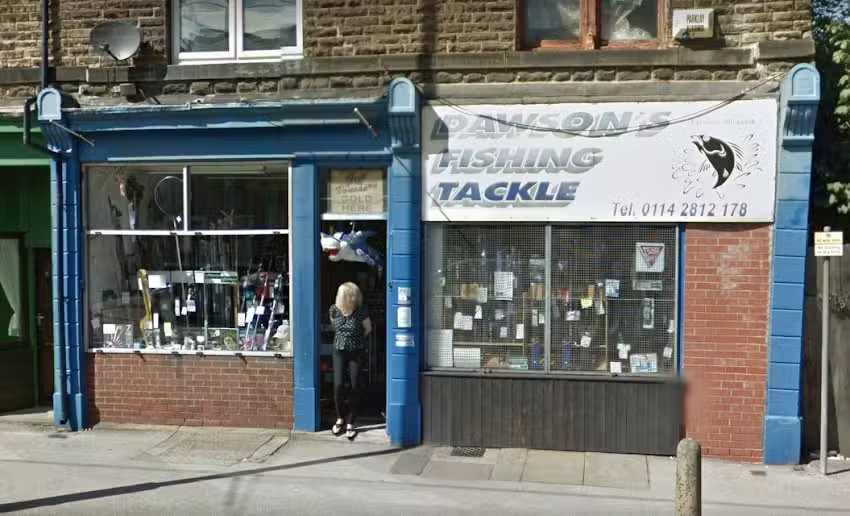
Dawson’s Fishing Tackle
BackDawson's Fishing Tackle on Holme Lane built a reputation as a traditional angling shop where personal service mattered as much as the products on the shelves. Over well over a century, several generations of the same family created a place that many local and visiting anglers came to see as a fixed point in their fishing lives, providing advice, repairs and bait alongside an extensive selection of tackle. Although the shop has now closed, the impression it left on customers and the local angling scene remains strong, and potential visitors to the area still ask about it when looking for somewhere to buy gear or talk fishing.
The shop was known for stocking a broad mix of traditional and modern equipment, with glass-fronted displays and packed walls that gave it the feel of a classic angler’s den rather than a minimalist retail unit. Anglers described it as an Aladdin’s cave of tackle, with racks of rods, cabinets of reels, trays of hooks and drawers of small accessories that rewarded patient browsing. The interior also reflected the history of the business, with old photographs and mementos that showed earlier premises and earlier generations of the Dawson family, underlining how long the name had been part of Sheffield’s angling culture. This atmosphere set it apart from large chain stores and online sellers, giving customers a tangible sense of continuity and craft.
One of the main reasons many anglers sought out Dawson's Fishing Tackle was its combination of hands-on knowledge and practical help. Staff and owners were experienced anglers themselves, able to give specific recommendations on local waters, seasonal methods and the right end tackle for different situations rather than repeating catalogue descriptions. Regulars highlight how easy it was to walk in with a question about rigs, line choice or venues and come away with both suitable gear and a clear plan for the next session. This kind of informal coaching made the shop especially valuable for beginners who might otherwise feel overwhelmed by the choice of equipment available today.
Another significant strength was the in-house repair and problem-solving service. Customers frequently mention taking damaged rods and poles into the shop and being impressed by the quality and reliability of the repairs, which extended the life of their gear rather than forcing a replacement. This practical help added real value at a time when many anglers are encouraged to replace rather than mend, and it reflected the skills built up over generations of working with fishing tackle. The shop’s willingness to track down items they did not currently stock, or to source them at a fair price, further reinforced its reputation for going beyond basic retail.
Bait was another area where Dawson's Fishing Tackle stood out. Anglers travelling from outside the area had heard of the shop’s reputation for fresh bait, particularly high-quality maggots and casters that were treated as a local benchmark. This emphasis on quality bait was important for both match and pleasure anglers who rely on consistency when fishing heavily pressured venues, and it added to the sense that the business was run by people who genuinely understood what makes a difference on the bank. The shop backed this up with shelves of modern groundbaits, pellets and additives, combining traditional live baits with contemporary products.
In terms of range, Dawson's Fishing Tackle covered several main disciplines under one roof, which is less common today than in the past. Customers could find coarse gear alongside sea and fly tackle, enabling families or groups of friends with different interests to shop in one place. While it could not match the vast stock lists of warehouse-style retailers, the selection was curated, with an emphasis on practical items that anglers genuinely used rather than an overwhelming array of near-identical products. When something specific was not available immediately, staff would typically offer to order it, so the shop functioned as both a local supplier and a gateway to a wider market.
For many regulars, the real value of the shop lay in the relationships built over years and even decades. Several anglers describe starting to visit when they were children or teenagers with only a small amount of money to spend, yet still receiving patient advice and suitable, budget-friendly suggestions. That welcoming attitude persisted across generations, with some families now counting three generations of customers who had all bought their first tackle there. Younger anglers even completed work experience placements in the shop, which speaks to how integrated it was in the local angling community. This social dimension is something that cannot be replicated by online-only retailers, and it remains one of the reasons the closure has resonated so strongly.
From the perspective of product choice, Dawson's Fishing Tackle managed to balance tradition and modernity. Visitors recall seeing classic items such as peacock quills for making floats and hand-made floats produced by older members of the Dawson family, displayed alongside contemporary carp chairs, modern feeders and a broad array of hooks and terminal tackle from well-known brands. This mix allowed nostalgic anglers to indulge their interest in older methods while still equipping themselves for today’s fisheries, particularly commercial venues and heavily stocked lakes. It was an environment that encouraged conversation about techniques across generations of anglers, blending stories of the past with current trends.
However, like many independent tackle shops, Dawson's Fishing Tackle faced challenges that eventually led to its closure. Competition from large chains with warehouse-style premises and extensive online operations meant that some customers turned elsewhere for bulk purchases or heavily discounted big-ticket items. Although regulars often found the shop competitive on day-to-day prices, particularly for bait and smaller items, it was harder to match the promotional deals and stock depth of major national retailers. The growth of internet shopping also reduced the number of casual visits that historically gave traditional shops a steady flow of trade and conversation.
Rising costs and changing shopping habits added to this pressure. Independent retailers in many sectors have had to contend with increasing overheads, from rent and energy to supplier prices, while customer expectations continue to be shaped by next-day delivery and online discounting. For a family-run business built on personal service and time-intensive advice, this environment can be difficult, as every lengthy conversation and repair carries a cost that is not always reflected in the profit on individual sales. In that context, it is understandable that after more than a century of trade, the owners chose to bring the business to a close rather than attempt to transform it into something very different from the shop customers loved.
Another limitation for potential new customers today is simply availability. With the shop no longer trading, anglers in Sheffield and visitors to the area now need to look to other independent shops or larger chains for their day-to-day equipment and bait. For those who value in-person advice from long-established staff, that change can be disappointing, and it underlines how important it is to support remaining independent retailers where possible. Some anglers have turned to online communities, videos and forums to fill part of the gap, but there is a difference between remote information and the kind of tailored suggestions that used to be offered across the counter at Dawson's Fishing Tackle.
Despite these realities, the legacy of Dawson's Fishing Tackle offers a useful reference point for anyone comparing options for buying angling equipment. On the positive side, the shop demonstrated what many anglers still look for: knowledgeable staff, a trustworthy source of fresh bait, a credible range across different disciplines and a welcoming atmosphere where questions are encouraged. On the negative side, it shows how even highly regarded independent shops are vulnerable when market pressures push more trade towards high-volume retailers and digital platforms. Potential customers weighing up where to buy their gear can therefore consider whether a retailer offers the kind of service and community connection that made Dawson's Fishing Tackle so valued, or whether they are trading some of that personal contact for convenience and price.
For anglers interested specifically in traditional tackle, heritage and the social side of the sport, Dawson's Fishing Tackle has become something of a reference in conversations about classic shops. Video features and online discussions now preserve images of the crowded displays, the hand-made floats and the friendly conversations that characterised a visit there, allowing new generations to see what a long-running family business looked like at its peak. At the same time, the closure is a reminder that such places cannot be taken for granted, and that even shops with a loyal following need sufficient everyday trade to remain viable. When anglers today decide where to buy their rods, reels, line and bait, many are influenced by the qualities that Dawson's Fishing Tackle embodied, even if they never had the chance to step through its doors.
Dawson's Fishing Tackle combined the strengths of a traditional family business with a clear understanding of what coarse, sea and fly anglers need from a local shop. Its strengths lay in personal service, deep-rooted knowledge, high-quality bait and the ability to repair and source equipment, making it an important part of Sheffield’s angling scene for more than a century. Its weaknesses were largely structural, reflecting the wider pressures on small independent retailers from large chains and online platforms rather than failings in day-to-day service. Anyone interested in fishing tackle shop culture or in understanding what makes a good coarse fishing retailer will find that Dawson's Fishing Tackle is frequently cited as an example of how to do things well, even though the business itself has now come to an end.
Key points for potential customers of angling retailers
- Look for a retailer that offers knowledgeable, discipline-specific advice rather than simply stocking a large volume of products.
- Consider the quality and consistency of bait, as this is often where smaller shops like Dawson's Fishing Tackle built their reputation.
- Assess whether repair services and custom sourcing of tackle are available, which can extend the life of existing gear.
- Balance the convenience and pricing of large chains against the personal service and community connection of independent shops.
- Remember that supporting independent fishing tackle retailers helps maintain diversity and expertise within the angling market.