Deal Angling Club 1919
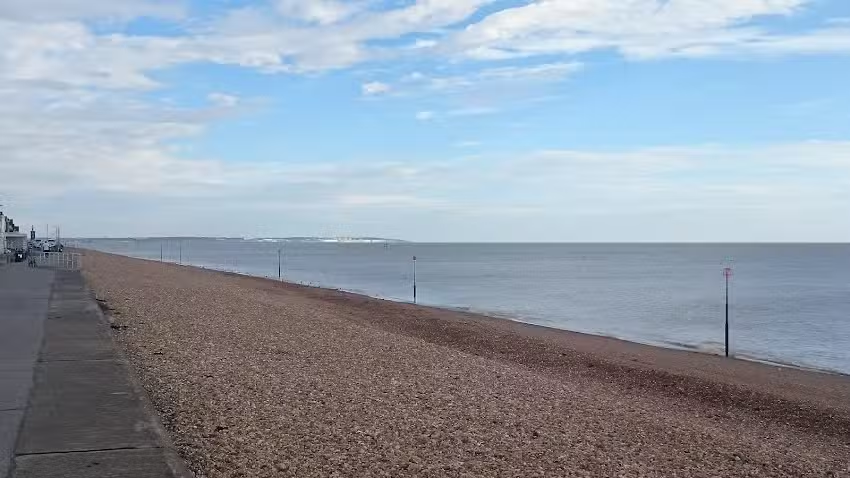
BackDeal Angling Club 1919 is a long‑established sea fishing club with its own clubhouse looking over the shingle and channels that attract anglers from across Kent and beyond. Founded over a century ago, it has grown into a sizeable community of local and visiting anglers, combining social facilities with easy access to productive marks along the seafront. For anyone interested in joining a club rather than heading out alone, it offers a structured way to enjoy sea fishing while having a base to return to between tides.
The club was originally formed in 1919 and is now regarded locally as one of the more successful sea angling organisations around the coast, with hundreds of senior and junior members. This depth of membership means new anglers are rarely short of company or advice when trying to understand how the beach and nearby pier fish at different times of year. At the same time, the scale of the club can make it feel busy for those who prefer quieter, more intimate venues, especially when events are taking place or when popular competitions are running.
One of the stand‑out features is the fully licensed clubhouse situated directly on the seafront, which serves as the club’s headquarters. Anglers value having somewhere warm and dry a short walk from the pegs, particularly in winter when east‑coast winds can be harsh. This is not a tackle shop or commercial café but a private members’ facility, so it suits those who want a social base as well as access to the beach, rather than day‑ticket visitors who simply want to cast a rod and leave.
The interior includes a spacious function room that local users describe as suitable for events and gatherings, which can be an advantage if you want a club that doubles as a social venue. Functions and private events mean the atmosphere is not purely focused on shore fishing, and some prospective members will appreciate this multi‑purpose feel while others may prefer a more utilitarian anglers‑only base. The function space supports quizzes, presentations, prize‑givings and seasonal get‑togethers, adding to the sense of community that many sea anglers look for after long sessions on the shingle.
From a fishing perspective, the stretch of coastline in front of and around the club is noted for a variety of species, including bass, mackerel, Dover sole, codling, plaice, whiting and dogfish in the wider area. Local information sources highlight the beaches and nearby pier as popular spots, with particular groynes and tide states producing better results for certain species. By using the club as a base, members can make the most of these conditions, timing their beach fishing sessions for key tidal windows and returning to the clubhouse between bites.
Sea anglers interested in competitions are likely to find plenty going on. The club has a longstanding reputation as an active organisation in a town where match reports and results are regularly mentioned in local sports coverage. While individual event calendars change over time, this history of organised activity suggests that those who enjoy competitive sea angling will have opportunities to fish alongside experienced locals and take part in structured matches.
On the positive side, the club’s heritage and continuity are strong attractions. Being able to join a sea angling organisation that dates back to 1919 carries a certain assurance that it is well rooted in local fishing culture and has weathered changes in marine conditions, tackle trends and membership expectations. For newer anglers, this translates into access to accumulated knowledge about rigs, baits and seasonal patterns that are specific to this part of the Kent coast, which can shorten the learning curve compared with going it alone.
The membership structure, with a clear distinction between seniors and juniors, also indicates a willingness to involve younger anglers and families. This can be an important factor for parents who want their children to experience sea fishing in a supervised and sociable environment rather than simply standing on a pier without guidance. A larger junior section, however, can sometimes mean the clubhouse and nearby marks feel lively and busy during school holidays and organised youth sessions, which may not appeal to anglers seeking solitude.
Accessibility is another practical point in the club’s favour. The premises include a wheelchair‑accessible entrance, which makes it easier for anglers with limited mobility to participate in events or enjoy the social side of the club. Combined with the relatively flat promenade, this helps open up pier fishing and beach access to a wider range of people, although the natural challenges of shingle and changing tides will still require care along the waterline.
Food and drink provision is supported by the fact that the venue is fully licensed, with standards monitored through the local food hygiene rating system. For members who like to combine an evening of angling with a drink or a social gathering, this can be a significant advantage. Those who are more focused on early‑morning sessions and quick turnarounds may see the bar and social side as less essential, though it remains a useful bonus when poor weather delays fishing.
In terms of reputation, online feedback and local references tend to be favourable, highlighting the club’s facilities and overall experience rather than providing detailed technical fishing reports. Some comments draw attention to the roomy function areas and the general atmosphere, which suggests that the environment is comfortable for both anglers and non‑angling guests at social events. However, the modest number of public reviews compared with the size of the membership means that word‑of‑mouth locally is likely to be just as important as online ratings when assessing whether the club suits your needs.
For anglers travelling in, it is worth noting that the town has a number of independent tackle outlets and nearby coarse venues, but the angling club itself is oriented toward sea fishing rather than supplying bait and equipment. Many members will still rely on local tackle shops for fresh bait, end tackle and advice on current catches, then use the club as a social and organisational hub. This separation of roles may disappoint anyone expecting a combined club and shop, but it keeps the clubhouse focused on community and events rather than retail.
Potential members who prefer freshwater or specimen carp will find that local coarse angling is centred on day‑ticket complexes and lakes outside the club’s remit. In practice, Deal Angling Club 1919 is best suited to anglers whose main interest is sea angling from the shore, using the club as a base for beach marks and pier sessions, rather than those looking for carp fishing or mixed‑fishery day tickets. If you want both sea and coarse options, you may end up combining club membership with visits to separate inland venues.
Another point to consider is that a fully licensed clubhouse in such a prominent position naturally attracts demand for private hires and community events. This adds life and additional income to the organisation, but it also means that the feel of the building can shift from focused angling club to general function venue at times. Prospective members who enjoy a busy social calendar will see this as a benefit, while those seeking a quiet, purely angling‑centric retreat might prefer to visit at off‑peak times or during non‑event days.
From the perspective of someone comparing options along the Kent coast, Deal Angling Club 1919 offers a combination of history, seafront location and club facilities that is not always matched by smaller, less established groups. The proximity to productive marks, the scale of the membership and the availability of a function room and bar make it appealing to anglers who value both the fishing and the social side of sea fishing. At the same time, the emphasis on saltwater, the busy nature of a large membership and the occasional shift toward functions and events mean it will not suit everyone equally.
For potential visitors or new members, the most realistic way to assess whether Deal Angling Club 1919 is a good fit is to consider how you like to fish and how important a social base is to you. If you enjoy structured club life, competitions, a drink after a session and the support of an experienced community focused on shore fishing, this long‑standing organisation has much to offer. If, instead, you prefer solitary sessions, coarse or carp‑orientated venues and minimal interaction, you may find that a simple day on the beach or a trip to a nearby lake complex better matches your expectations.