Diggle flash
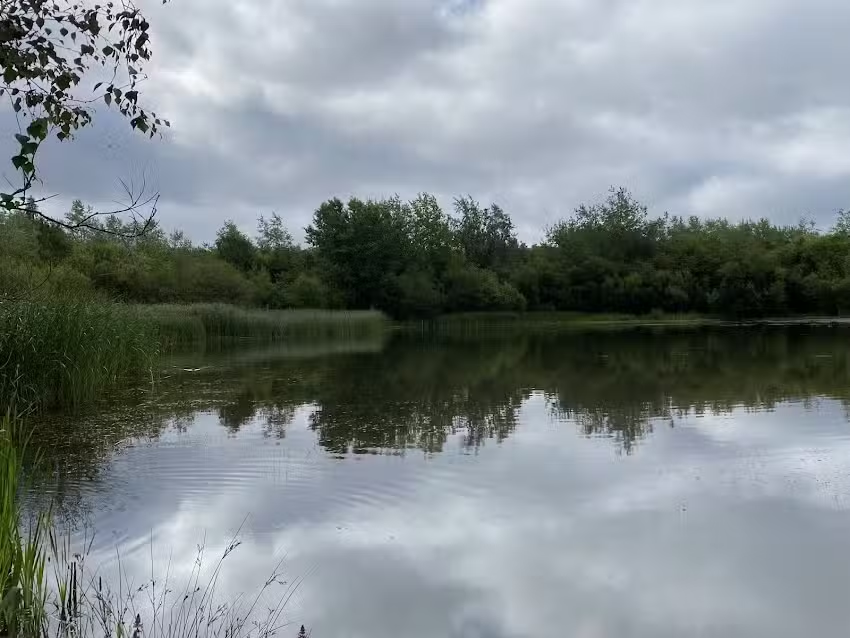
BackDiggle Flash in Bickershaw is a former colliery site transformed into a large water body within Bickershaw Country Park, drawing attention from walkers, wildlife enthusiasts and anglers who are curious about what it can offer as a quiet outdoor destination.
For anyone considering a visit with rod in hand, it is important to understand that Diggle Flash sits within a wider landscape where the main organised angling is controlled by local associations on nearby flashes, and the country park itself is primarily presented as a site for walking, cycling, horse riding and wildlife watching rather than a heavily promoted commercial fishery.
The surrounding Bickershaw Country Park covers around 250 hectares and includes three major water bodies: Diggle Flash to the north and Firs Tree Flash and Nevison’s Flash to the south, all linked by a network of ditches and wetland features designed for habitat creation and natural flood management. This broad mix of open water, reedbeds, grassland and woodland makes the area appealing to anglers who appreciate natural settings, even if formal facilities are limited compared to purpose-built commercial venues.
One of the main strengths of Diggle Flash and its neighbouring waters is the sense of space and tranquillity, which many visiting walkers describe positively. The surfaced and unsurfaced paths around the park allow easy access to views over the flashes, and several visitors comment that it is a pleasant, peaceful place for a stroll, which also benefits anglers who prefer quieter banks without crowds.
Wildlife is a strong feature here, and anyone fishing or walking the banks of Diggle Flash is likely to encounter a range of bird species, including willow tit, kingfisher, heron, jack snipe, buzzard, kestrel and sparrowhawk, along with roe deer and small mammals in the surrounding habitat. This rich ecology is a clear positive for those who value a more natural environment over manicured commercial pools, although it also means that conservation and access management take priority in many areas.
From an angling perspective, the wider Wigan flashes system includes waters such as Bickershaw Specimen Lake (Higher Hall Flash), controlled by local angling associations, where carp exceed 20lb and membership rules, night syndicates and welfare-focused regulations apply. While this specific specimen water is separate from Diggle Flash, it illustrates the general character of serious carp fishing in the area: membership-based access, clear rules and an emphasis on experienced anglers rather than casual day-ticket fishing.
Prospective visitors considering Diggle Flash as an angling target should therefore be aware that the setting is more akin to a semi-wild country park water than a dedicated commercial complex with a tackle shop, café and clearly pegged swims. There is no prominent public information indicating on-site bait sales, formal reception areas or extensive amenities that are common at highly developed commercial fisheries, so preparation and self-sufficiency are essential.
The positive side of this low-key approach is that anglers who value solitude will usually find quiet banks and unobtrusive surroundings, helped by the fact that the country park is laid out for multiple user groups such as walkers, cyclists and riders, which spreads visitor pressure. Reviews from people walking near Diggle Flash highlight it as a good and pleasant place for a walk, which indirectly suggests that the paths and viewpoints around the water are reasonably maintained and accessible.
For those focused on coarse fishing, the region as a whole is known for waters holding roach, perch, pike, bream, tench and carp, and nearby association-controlled flashes are promoted for their stocks of quality fish and, in some cases, strong tench sport. Anglers coming to Diggle Flash with realistic expectations of a natural, multi-species environment rather than an intensively stocked commercial pool may appreciate the challenge, though the absence of detailed public catch reports specifically naming Diggle Flash means that expectations around specimen sizes and stocking density must remain modest and flexible.
Because Bickershaw Country Park is managed with conservation in mind, there is a strong emphasis on wetland enhancement, reedbed development and flood alleviation, which shapes how access to the water’s edge is arranged. This is a positive for long-term habitat quality and fish welfare but may mean that some stretches of bank are less accessible or less comfortable for a full day’s session compared to platforms or purpose-built pegs at commercial venues.
Another element that potential visitors should consider is that organised angling on the larger flashes in the area is often linked to specific clubs rather than open day-ticket arrangements. This structure helps manage pressure on the water and protect specimen fish, but it can be limiting for casual anglers who prefer to turn up on the day, pay a fee and fish without prior membership commitments.
Diggle Flash also has a degree of local identity within the Wigan flashes network, with birders and regular visitors referring to different flashes by nicknames and long-established local terms. While this creates a strong community feel, it can be slightly confusing for newcomers trying to match map names, local names and club-controlled waters when planning a fishing trip.
Those interested in combining walking and fishing will likely find that Diggle Flash works best as part of a broader day out in Bickershaw Country Park rather than as a highly specialised single-focus destination. The 8 km of surfaced paths and additional unsurfaced routes allow you to move between viewpoints over different flashes, and for many visitors the appeal lies as much in time spent by the water, watching birds and enjoying the landscape, as in pure angling results.
In terms of strengths, Diggle Flash benefits from a spacious, open aspect, varied habitats and a generally quiet atmosphere that suits anglers who appreciate a slower pace and a natural backdrop. The presence of multiple large water bodies in close proximity, along with the involvement of local angling associations on nearby flashes, indicates that the wider area holds genuine potential for carp fishing and general coarse angling, even if Diggle Flash itself is not marketed as a high-profile specimen venue.
On the downside, visitors seeking a fully serviced commercial fisheries complex may find the lack of obvious on-site facilities such as parking right at the peg, dedicated toilets, food outlets or tackle shops less convenient. The focus on multi-use recreation and habitat management can also mean that some banks are shared with walkers and dog owners, which not every angler will enjoy, particularly those who prefer secluded, angler-only waters.
Information specifically targeted at anglers about Diggle Flash is relatively limited in the public domain, especially when compared with heavily promoted day-ticket venues that list stocking levels, match weights and regular catch reports. While this does not mean the fishing is poor, it does suggest that potential visitors should be prepared to treat their early sessions as exploratory, taking time to locate features, monitor bird activity and test different approaches for species such as bream, roach or pike in a natural setting.
For anglers used to modern commercial complexes, it is worth adjusting expectations about bankside comfort and infrastructure at Diggle Flash. Pegs are not advertised as carefully levelled, boarded platforms; instead, you are dealing with more traditional, sometimes uneven ground where banksticks and lightweight setups may be preferable to heavy, elaborate seat box systems.
On the other hand, this traditional feel and connection to a wider landscape of former colliery land and restored wetlands can be exactly what some anglers are looking for, especially those who enjoy combining specimen hunting with wildlife watching. Seeing a kingfisher flash past the swim or a buzzard circling overhead can make a slower day’s angling feel satisfying in a way that heavily stocked ponds beside a car park sometimes cannot match.
Because the broader flashes system includes waters reserved for longer-term association members, there is a culture locally of respecting rules, both written and unwritten, around access, fish care and behaviour. This generally benefits serious anglers who value quiet, orderly banks and good fish welfare, but visitors unfamiliar with the area should take time to check up-to-date access information, club arrangements and any restrictions before setting up for a session near Diggle Flash.
Diggle Flash offers a low-key, nature-rich water within Bickershaw Country Park that will appeal to anglers and walkers who value tranquillity, varied wildlife and traditional surroundings more than high-profile facilities or heavily advertised catch records. It sits within a wider network of flashes where local angling associations manage specimen lakes and carp waters, so for the right visitor—prepared to research access, bring their own equipment and embrace a natural environment—it can form part of a rewarding fishing experience in a distinctive landscape.