
Fishing College
BackFishing College in Lyme Regis is a specialist training centre dedicated to commercial sea fishing, aimed at people who want to work professionally at sea rather than simply enjoy a casual day with a rod on the shore. It focuses on structured qualifications, mandatory safety certificates and practical seamanship skills that are essential for anyone stepping aboard a working vessel in British waters.
Unlike many leisure-focused angling schools, this college is positioned firmly within the professional sector, with programmes designed around industry standards and regulatory requirements. Its reputation is closely tied to the commercial fishing courses it delivers, supporting both newcomers taking their first steps into the trade and experienced crew who need to update their certification.
Focus on professional fishing careers
Fishing College concentrates on preparing students for work on commercial boats, covering practical skills such as navigation, vessel stability, radio operation and emergency procedures. This makes it relevant for potential skippers, deckhands and others who intend to earn a living through commercial sea fishing rather than recreational angling.
The training centre is part of NEAT / SFITA Ltd, a wider organisation serving offshore industries along the south coast of England and in Wales. Through this structure, the college is able to offer recognised qualifications and coordinate courses in multiple coastal locations, giving aspiring fishers some flexibility about where they train.
Range of mandatory and advanced courses
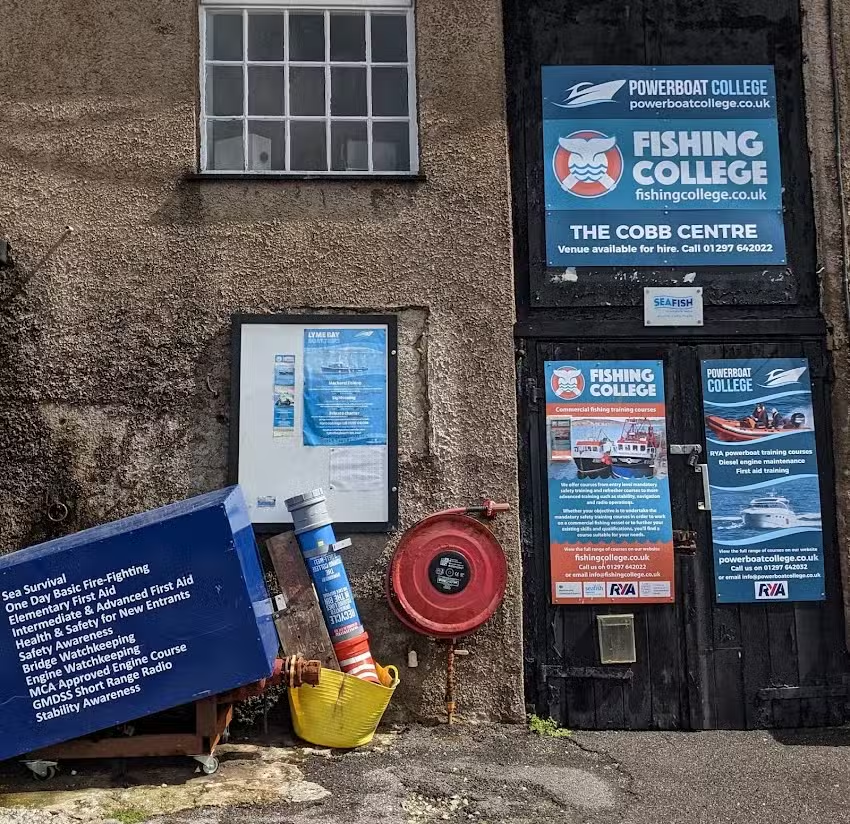
A core strength of Fishing College is its comprehensive offer of mandatory safety training required for anyone working in the UK fishing industry. New entrants can complete courses covering sea survival, fire fighting, first aid and health and safety, which are fundamental prerequisites for stepping aboard a commercial vessel.
Beyond those minimum standards, the college runs advanced modules in stability awareness, navigation and radio operations leading toward the Under 16.5m Skipper certificate. For someone progressing from deckhand to command responsibility, this structured path is a clear advantage and positions the centre as more than just a basic training provider.
Introduction to commercial fishing
One of the flagship programmes is the 15‑day Introduction to Commercial Fishing course, designed specifically for newcomers. It combines shore‑based seamanship—covering gear handling, catch care, rope work, net mending, vessel stability and navigation—with the key safety courses needed for work at sea.
Students are introduced to essential topics such as pollution control, responsible fishing, minimum landing sizes and catch reporting, reflecting the regulatory environment and sustainability expectations of modern fisheries. This broader approach helps potential crew understand not just how to fish, but how to operate within a controlled and environmentally conscious industry.
Support for finding work
While Fishing College does not guarantee jobs, it does assist candidates in finding berths on suitable fishing vessels so they can apply what they have learned in real working conditions. This support is valuable for newcomers who may have no prior connections in the sector and are unsure how to secure their first berth.
The college’s links with a small but active local fleet and with wider industry networks along the south coast help bridge the gap between classroom training and life on board. For many students, that combination of shore‑based learning and guided access to real vessels is a significant part of the appeal.
Reputation and learner feedback
Public reviews describe Fishing College as delivering excellent skills training, particularly around seafish qualifications required for professional work. Comments highlight professional instruction and well‑prepared support materials, suggesting that teaching is structured and grounded in practical experience rather than purely theoretical content.
Although the number of published reviews is relatively small, they are consistently positive and point to a high standard of delivery. For potential students, this indicates a specialist provider that focuses on quality for a focused audience rather than high‑volume, casual training.
Facilities and training environment
The college’s classrooms are located on (pplx://action/navigate/e6c450cebae74c21), right by the harbour, placing learners within a working marine environment while they study. This proximity to active fishing boats and real harbour operations makes the setting particularly relevant for those wanting to understand the day‑to‑day context of professional sea fishing.
In addition to its shore‑based facilities, the college has its own support vessel used to give students experience at sea under controlled conditions. This practical component complements the classroom work, allowing learners to apply rope work, safety drills and other skills in a realistic setting, which is crucial in fishing training aimed at genuine offshore work.
Strengths for prospective students
One clear advantage for new entrants is that some of the key courses, including introductions to commercial fishing and certain sea safety programmes, can be offered free of charge for eligible candidates. Students still need to cover travel, accommodation and subsistence, but the removal of tuition fees for particular programmes lowers the financial barrier to entering the industry.
Another strong point is the college’s alignment with recognised bodies such as the Maritime and Coastguard Agency, the Sea Fish Industry Authority and the Royal Yachting Association, since relevant courses carry their approval. For anyone considering a professional future in commercial fishing, this gives added reassurance that certificates gained here are formally recognised across the sector.
Flexibility of locations
Although based at The Cobb in Lyme Regis, Fishing College delivers courses at various ports along the south coast, including sites in Devon, Dorset, Hampshire, Sussex, Kent and locations in Wales. This itinerant model can be attractive to working fishers who need training closer to their home port and cannot easily be away for long periods.
It also means that the college has direct contact with multiple fleets and ports, which can broaden the experience of both instructors and students. For potential learners, this regional presence signals a training provider that understands the variety of conditions and practices across different fishing ports.
Limitations and points to consider
Fishing College is highly specialised, focusing on the commercial side of the industry rather than leisure angling or family‑friendly tuition. Anyone searching for relaxed sea fishing trips, coaching in shore fishing or introductory coarse fishing sessions for children may find that this centre does not match their expectations, since its programmes are built around professional qualifications and safety compliance.
The limited number of publicly visible reviews means there is less anecdotal feedback than some larger training brands, so potential students must rely heavily on the formal course descriptions and the college’s accreditation. In addition, while some programmes are free to eligible candidates, others carry standard commercial fees, and travel and accommodation costs for multi‑day courses can be significant, especially for those not based locally.
Demand and course availability
Because courses are scheduled in specific ports at set times, places can be limited, and prospective learners may need to wait for a suitable date and location. This structured timetable works well for organised candidates but may be less convenient for people seeking last‑minute or highly flexible training.
Furthermore, while assistance is offered in finding berths, there is no formal job‑placement guarantee, so securing ongoing employment still depends on individual effort, networking and performance. Candidates should view Fishing College as a strong starting platform for a career in commercial sea fishing, rather than a complete solution to entering the industry.
Who Fishing College suits best
Fishing College is well suited to school leavers and adults seeking a career change who are serious about working in the commercial fishing sector and want structured, accredited training. For these candidates, the combination of essential safety courses, seamanship training and access to a network of working vessels gives a clear and practical route into the industry.
It is also relevant for existing crew members needing to refresh mandatory certificates or progress to skipper level through advanced stability, navigation and radio courses. Those whose interest lies more in casual sea angling, holiday boat fishing or family fishing trips may find that other providers focused on recreational angling tuition are a better match to their expectations.
Overall, Fishing College offers focused, professionally recognised training in a working harbour setting, with a strong emphasis on safety, seamanship and regulatory compliance. For prospective clients whose goal is a sustainable career aboard commercial fishing vessels, it presents a realistic and structured pathway, though they should weigh course schedules, associated costs and the lack of guaranteed employment when making their decision.