
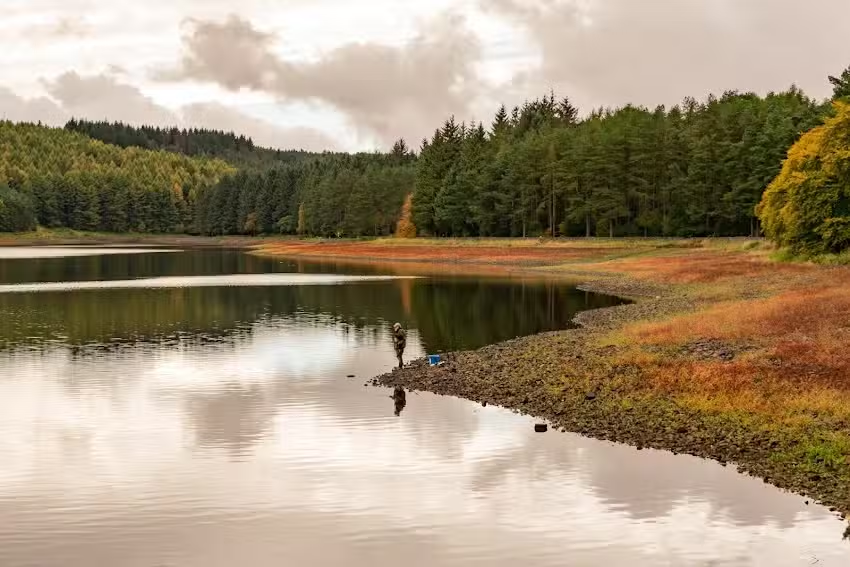
Fly Fishing Entwistle Reservoir
BackFly Fishing Entwistle Reservoir is a long-established fly-only fishery centred on trout angling, run in partnership with Entwistle Fly Fishers and the water owner, and aimed at anglers who value quiet banks, structured management and a traditional approach to stillwater sport. The setting is a mature upland reservoir with tree-lined shores, a clearly defined basin and easy walking access, which together create a calm environment for focused casting practice and relaxed day sessions. Members and visitors tend to emphasise that this is not a highly commercialised venue but a club water with its own character, expectations and rhythm, which will appeal to anglers looking for a more personal style of fly fishing rather than a heavily stocked commercial pool.
The reservoir itself extends to around ninety acres, providing a substantial body of water with plenty of room for bank anglers to spread out and find their preferred drifts. Stocking centres on hard-fighting rainbow trout, with wild or resident brown trout also present, giving anglers the chance of fish with very different behaviour and feeding patterns. This mix suits those who enjoy adapting tactics through the day, switching between trout fly fishing techniques such as washing-line rigs, nymphing and occasional dry fly fishing when conditions allow. For many visiting anglers, the scale of the water and the natural surroundings are as much a part of the day as the catch returns, particularly for those who value long casts and wind lanes over tight, pond-style venues.
Management of Fly Fishing Entwistle Reservoir is closely linked to Entwistle Fly Fishers, a club that has been active for many years and is currently working hard to attract and retain members. The club leases the water, organises stocking, sets and enforces fishery rules and promotes responsible behaviour around the banks. Anglers who are prepared to engage with a membership-based set-up will find a community of experienced trout anglers, many with decades of practice in stillwater fly fishing and river work elsewhere, who can offer informal advice on patterns, retrieves and safe wading. For newcomers or improving anglers, the sense of continuity and tradition around the fishery can be a genuine strength, even if it means accepting a slightly more formal structure than at pay-per-hour commercial fisheries.
Access to the water is primarily from the surrounding paths and tracks, which double as a popular walking route, including for families and dog walkers. Visitors regularly comment that the walk around the reservoir with dogs and family is a highlight in itself, and the circuit allows anglers to move easily between different banks to follow the wind or the light. The shared use of the area means that anglers must be conscious of back-casts and courteous towards other visitors, but it also gives the venue a sociable feel without turning it into a busy tourist attraction. For anglers who like to combine a few hours of trout fishing with a longer walk and photography, Entwistle offers a compact, manageable setting.
From a fishing perspective, the main draw is consistent stocking with quality rainbow trout supported by a base of native or long-established brown trout that respond well to imitative patterns. The water is deep in places, with shelves and drop-offs that reward careful observation of wind direction, surface scum lines and fly hatches. Bank anglers typically favour intermediate or sinking lines early and late in the season, switching to floating lines and long leaders in mild weather when fish move higher in the water column. Popular tactics at similar northern stillwaters include small buzzers, Diawl Bachs, damsel nymphs and mini-lures, which also work well here according to experienced visitors, particularly when combined with steady, controlled retrieves that keep flies in the strike zone.
One of the positive aspects highlighted by anglers is the balance between reasonable membership costs and the quality of the fishing. Entwistle Fly Fishers have a reputation for keeping fees accessible compared with some large reservoir syndicates, while still maintaining regular stockings and basic facilities. For local anglers willing to fish the water regularly across a season, this can make the reservoir a cost-effective base for their fly fishing for trout, especially when contrasted with day-only venues where each visit feels like a standalone expense. At the same time, the presence of day permits makes it possible for visiting anglers to sample the water without committing to a full membership, which is a clear advantage for those travelling from further afield or testing the venue for the first time.
Reviews from visitors paint a picture of a scenic and generally well-liked fishery, though they are often brief rather than detailed. Several anglers and walkers describe the place simply as beautiful, with wooded banks and open water that provide pleasing views in most conditions. Anglers who focus on the fishing emphasise that it is a "great place for fly fishing", with enjoyable sport for those who join the club and learn how the water fishes through the year. Shorter remarks such as "good day" reinforce the idea that many anglers leave content with their experience, even if they do not go into specifics about catch numbers or fish size in public comments.
On the other hand, the limited number and depth of online reviews can make it harder for a new visitor to form a detailed picture of average catch rates, stocking frequency or typical fish weights before they arrive. Unlike some heavily marketed commercial fisheries that publish weekly catch reports, detailed stocking logs or galleries of recent captures, Fly Fishing Entwistle Reservoir relies more on word of mouth, club communications and occasional social media posts for its angling updates. This lower level of public information may put off anglers who prefer transparent, data-rich reporting but appeals to those who enjoy a quieter, more traditional club environment with less online noise. Potential visitors may find it helpful to contact the club directly ahead of time to clarify current conditions, rule changes or recent stocking activity.
Because the reservoir is a shared recreational space rather than a fully enclosed fishing complex, anglers should also be prepared for some compromises. Paths can be busy at peak times, particularly weekends and bank holidays in fine weather, which may not suit those who want complete solitude along every bank. Casting room can occasionally be affected by vegetation and passing walkers, meaning that careful choice of stance and constant awareness of the surroundings are essential for safe fly casting with long rods and weighted flies. For anglers accustomed to purpose-built fisheries with manicured banks, platforms and clearly defined pegs, this more natural arrangement can feel less convenient, though many see it as part of the venue’s charm.
In terms of target species and tactics, the fishery is most strongly associated with rainbow trout fishing, but the presence of brown trout adds extra interest for more experienced anglers. Browns often patrol the margins and structures, responding to subtle presentations during low-light periods and less heavily fished stretches of bank. This encourages anglers to refine their watercraft, reading subtle rises, surface boils and bird activity to locate pods of feeding fish. Those who enjoy technical fly fishing for trout can treat the stocked rainbows as reliable sport while viewing the browns as bonus fish that reward patience, stealth and precise fly choice.
For anglers specialising in UK fly fishing, the reservoir represents a classic northern stillwater option: sizeable, scenic, stocked with trout and managed by a dedicated club rather than a large corporate operator. Being part of a traditional membership structure brings benefits such as informal coaching from experienced hands, a sense of belonging and occasional social or club events. However, it also demands that visitors respect local etiquette, closed areas and seasonal rules, for example wading restrictions or bank closures to protect bank nesting birds or sensitive ground. Anglers interested in regular access will want to familiarise themselves with current regulations and any catch-and-release expectations as these can evolve over time with stock management plans.
The broader online presence of Entwistle Fly Fishers shows a club conscious of its heritage yet aware that it needs new members to thrive. Posts mention the challenge of keeping an "old fly fishing club" going while attracting a fresh generation of anglers, which is a common theme across many traditional British angling clubs. For potential members, this can be seen positively, as it indicates an active effort to keep fees realistic, maintain stocking and ensure that the venue does not become an exclusive enclave. At the same time, limited digital marketing means that would-be visitors may need to undertake a little extra research or make direct contact to confirm membership options, day permit availability and any current initiatives around coaching or junior angling.
From the perspective of someone seeking a venue for trout fly fishing in the Bolton and Lancashire area, Fly Fishing Entwistle Reservoir offers a blend of strengths and trade-offs. On the positive side, anglers gain access to a good-sized water with regular trout stocking, natural surroundings, a longstanding club structure and the option to fish either as a member or on a day ticket basis. The environment suits those who enjoy stillwater trout fishing with a more traditional, club-led feel and who appreciate a scenic reservoir rather than a small, featureless pool. On the negative side, the scarcity of detailed public reporting, the shared use of the banks with walkers and the need to adapt to a less manicured environment may deter anglers who prefer fully commercial venues with extensive facilities and constant online updates.
Overall, Fly Fishing Entwistle Reservoir positions itself as a venue for anglers who prioritise atmosphere, club culture and authentic fly fishing over modern commercial gloss. Those who are willing to learn the water, work with the club’s structure and accept that conditions and stocking are not broadcast in minute detail are likely to find it a satisfying home or regular destination for their trout fishing. Potential visitors are best served by treating their first trip as both an angling session and a chance to understand how the banks fish under different winds and water levels, speaking with club members where possible to refine tactics. For anyone seeking a northern English reservoir that offers genuine fly fishing for trout in a setting that feels rooted in local angling tradition, this fishery provides a realistic, balanced option with clear strengths and a few practical limitations that should be weighed before committing to membership or regular travel.