
Godalming Angling Society
BackGodalming Angling Society is a long‑established coarse fishing club that attracts pleasure anglers, specimen hunters and families who want reliable access to well‑managed stillwaters and river stretches. With a history dating back to the late nineteenth century and a membership running into the thousands, it offers a structured alternative to casual day‑ticket venues while still remaining approachable for newcomers to club angling. The focus is very much on providing varied waters, solid facilities and a sense of community, even if some aspects of administration and accessibility have not always kept pace with modern expectations.
The Society’s reputation rests heavily on its portfolio of fisheries, particularly Marsh Farm and Johnsons Lake, which between them cater for both traditional coarse fishing and modern specimen tactics. Many anglers join specifically for access to quality coarse fishing lakes holding Crucian carp, tench, roach, rudd and perch, with the added draw of larger carp for those prepared to put in the time. Feedback from regulars often mentions peaceful surroundings and the satisfaction of working out these venues rather than simply turning up to guaranteed action, which will appeal to anglers who enjoy thinking their way into a catch.
Marsh Farm is one of the Society’s flagship complexes and is often highlighted by members as a favourite place to fish. Developed in the early 2000s, its three waters were initially stocked with prime fish from the neighbouring Johnsons Lake, and those fish have since grown on to reach impressive sizes. Anglers who enjoy targeting specimen Crucians and tench in particular see Marsh Farm as a serious destination, but the complex is equally suited to general coarse angling with mixed bags of silvers on offer for those using lighter tackle.
Within Marsh Farm, Richardson Lake and Harris Lake are widely regarded as strong all‑round fishing lakes. Richardson Lake, with over fifty swims, is designed to provide consistent sport with genuine specimen Crucians to around four pounds, tench reputed into high single figures, roach and rudd around the two‑pound mark and perch to roughly three pounds. For many members, this blend of quantity and quality feels ideal: there is the chance of a red‑letter day with larger fish, but also realistic prospects of bites on most visits, especially in warmer months when the fish patrol the margins and open water shelves.
Harris Lake is another key water for those seeking mixed carp fishing and traditional coarse action. It features several islands and a good number of swims, offering tench, roach, rudd, perch and genuine Crucian carp, with reported Crucians to around four pounds and tench to approximately ten pounds. Information from independent angling sites and the Society itself confirms that the fishery supports both day‑ticket access and members’ sessions, with 24‑hour availability for club members on some tickets. Anglers who favour method feeders, waggler fishing or light ledgering can all find a style that suits them here, although those expecting an easy venue may be surprised by how carefully the fish need to be approached.
For families and newer anglers, Hill Pond at Marsh Farm plays an important role. Designed originally as a coaching pond, it is used extensively for junior coaching and club activities, and has also attracted senior and match anglers who appreciate its reliable sport. Stocked with Crucians, perch, tench and a range of silver fish including rudd, roach and gudgeon, it offers a manageable setting where float fishing tactics shine and bites are more frequent. Parents looking to introduce children to fishing for beginners often find this pond less intimidating than larger, more technical waters, though it still demands sensible tackle and presentation to make the most of its potential.
A notable strength of Godalming Angling Society is that its waters are not limited to one style of fishing. Johnsons Lake, acquired in the late 1980s, is a substantial former trout water of over twenty acres that now functions as a mixed specimen venue. Here, members report Crucian carp over four pounds, tench running into double figures, roach and rudd exceeding two pounds and perch over four pounds, alongside mirror and common carp reputed to go beyond the thirty‑pound mark. For committed specimen anglers who enjoy long sessions, careful baiting and targeting individual swims, Johnsons offers a level of challenge and reward that compares favourably with many day‑ticket carp lakes in the wider region.
Beyond the stillwaters, the Society also controls stretches of river, particularly parts of the River Wey and associated navigation. These provide more traditional running‑water sport with species such as chub, barbel, bream, roach and occasional carp and pike, giving members a genuine choice between lake and river fishing under one membership. This variety is attractive to all‑round anglers who like to adjust their tactics seasonally, perhaps float fishing for roach in winter, targeting barbel and chub during summer evenings or switching back to the stillwaters for spring and autumn tench fishing and Crucian sessions.
Facilities at Marsh Farm are often singled out as a positive point, especially when compared with more basic club waters. The complex includes a substantial car park and permanent toilets that, according to both the Society and visitor comments, are heated and kept to a high standard, which can make a real difference during colder months and longer sessions. The on‑site Apollo Angling Centre is another asset, stocking a broad range of tackle and bait and providing hot and cold drinks and snacks, so anglers do not necessarily need to leave the venue if they forget an essential item or want a quick break. This level of support on site is relatively rare among club‑run coarse fisheries and contributes strongly to the overall experience.
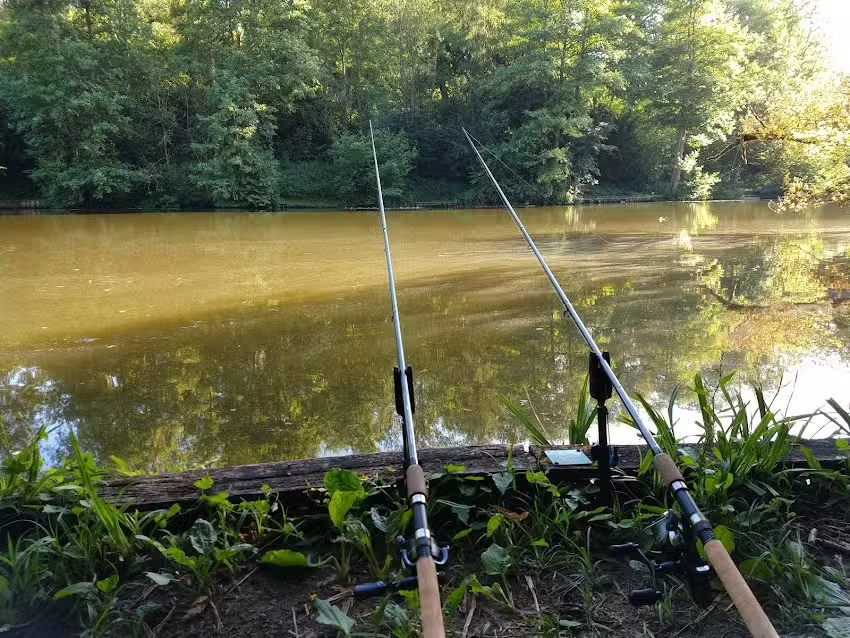
Member feedback about the atmosphere at Godalming Angling Society’s waters tends to be positive. Some anglers mention that fellow members and bailiffs are approachable and friendly, creating a sense of community and shared responsibility for fish welfare and bankside behaviour. Others highlight the calm, relaxing feel of venues such as Marsh Farm and Johnsons, noting that simply sitting by the water in the sun can be enjoyable even on slower days. For many potential members, knowing that a club’s regulars are welcoming can be just as important as the stocking list when deciding whether to commit to an annual fishing membership.
However, it is important to recognise that not every aspect of the club has always been up to date from an administrative point of view. Some long‑standing members have previously commented that renewing membership could feel cumbersome, involving forms, specific envelopes and traditional payment methods, which may not appeal to those used to fully online systems. More recently, the Society has introduced digital tools to streamline sign‑up and renewal, and reports suggest that automating these processes has significantly reduced administrative workload and made it easier for anglers to manage their membership details remotely. While this shift has clearly improved the experience for many, prospective members who dislike any kind of online process may still prefer to check what options exist for handling paperwork in person.
The overall standard of fishery management is widely regarded as high, with well‑maintained swims, sensible rules and ongoing attention to stock levels. Independent articles describe Marsh Farm in particular as a very well‑run fishery with excellent facilities, although they also caution that the fishing is not necessarily straightforward. Anglers thinking of these venues as easy "bagging" waters may find that the fish demand refined rigs, appropriate baits and careful feeding to get consistent results. For some, this technical element is a positive, turning each session into an engaging puzzle; others, especially very casual anglers, might prefer more heavily stocked commercial day ticket fisheries if fast action is their priority.
Accessibility is another factor that potential visitors may wish to consider. Selected venues, including Marsh Farm, are reported to have wheelchair‑friendly access points and facilities, which can make a big difference for less mobile anglers. At the same time, the size of some waters and the distance between car parks and swims can present challenges for those carrying a lot of gear or who have limited mobility. As with many traditional fishing clubs, the balance lies between preserving natural surroundings and providing fully paved, commercial‑style access; anglers should be prepared for some uneven ground and may want to plan their tackle and barrow use accordingly.
Another strength is the breadth of the membership base. Starting from just a couple of dozen anglers in the nineteenth century, the Society now counts well over a thousand members, ranging from juniors and families to dedicated specimen hunters and experienced all‑rounders. This diversity supports coaching initiatives on waters like Hill Pond and creates a stable foundation for ongoing fishery improvements and events. On the other hand, a large membership inevitably raises questions about pressure on popular waters at peak times, and those craving solitude may find weekends on the best‑known lakes busier than they would like, even if quieter swims and times can still be found with a bit of planning.
For prospective members, one of the most attractive aspects is that membership is not restricted by a waiting list for most categories, and applications are typically welcomed up to late March for the forthcoming season. The membership year usually runs from early July to the end of June, which is in line with many other UK angling clubs and makes it straightforward to plan renewals around the traditional coarse close season on rivers. Given the range of lakes and river stretches available under one card, many anglers view the overall value as competitive, particularly if they intend to fish regularly rather than rely on occasional day tickets elsewhere.
Feedback from individual anglers provides a useful sense of what to expect day to day. Some members speak warmly about how peaceful and relaxing they find venues like Marsh Farm and Johnsons, describing them as places they genuinely enjoy spending time even when the fish are not cooperating. Others focus on the quality of the fishing itself, pointing out that there are excellent fish to be caught if you are prepared to "put the work in" by learning the swims, watching the water and refining your approach. Occasional frustrations, such as earlier membership renewal processes feeling old‑fashioned, are mentioned, but these tend to be balanced by appreciation for the club’s efforts to modernise and maintain strong standards on the bank.
In practical terms, Godalming Angling Society suits anglers who want access to established fishing venues with a proven track record of producing quality Crucians, tench and other coarse species, rather than those seeking instant action at heavily stocked commercials. The waters reward thoughtful baiting, appropriate rigs and regular visits to build up knowledge, and the facilities at key sites make longer sessions more comfortable. At the same time, beginners and families are not excluded; coaching ponds and friendly bailiffs help ease newcomers into club life, while juniors can learn good habits from the outset. For anyone considering joining a structured coarse fishing club in this part of the country, the mix of history, water variety, improving administration and generally positive member feedback makes Godalming Angling Society a strong option worth serious consideration.