Hall Farm Fishery (BSDAS)
BackHall Farm Fishery (BSDAS) is a members-only coarse fishery managed by Bishop's Stortford & District Angling Society, offering anglers access to two distinct lakes that cater to a wide range of abilities and preferences. With a long-standing role as one of the club’s key venues, it provides consistent sport for pleasure anglers, juniors and match anglers who are looking for reliable day sessions rather than high-profile specimen hunting.
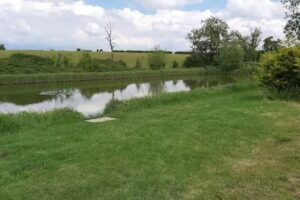
The fishery consists of a larger main lake and a smaller stock pond, each with its own character and typical methods that regulars come to appreciate over time. The small lake is approximately half an acre, fringed with weed and with depths of up to around six feet, making it a compact but lively water where bites are usually frequent and sessions can be busy from the first cast. This smaller water is used by the club as a stock pond and is particularly suited to less experienced anglers, youngsters or anyone who simply wants a relaxed day with plenty of action rather than chasing individual specimens.
On the larger lake, which runs to roughly one and a half acres, the layout feels more like a traditional club water, with around two dozen platformed pegs offering sensible spacing and safe footing. Depths reach around seven feet, giving scope for different approaches and allowing anglers to fish shallow, down the track or in deeper areas depending on conditions. Reports from club members indicate that the pegs are generally level and usable, although the grassed banks can become slippery in wet weather, something to keep in mind for anyone with limited mobility or carrying a lot of kit.
In terms of stocking, both lakes are known for mixed coarse fishing with good numbers of silver fish and smaller carp. Regular visitors describe “lots of small fish” in the stock pond, which creates a good training ground for anglers learning to feed accurately and handle regular bites. Roach, rudd, crucian carp, F1 carp and perch are all mentioned as typical species present, giving anglers plenty of variety in a single session. One recurring comment from anglers is the presence of some notably large perch alongside the usual run of silvers, which adds extra interest for those who prefer targeting predators on worms or prawns.
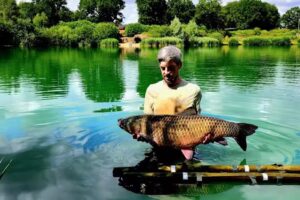
On the main lake, the stocking still leans towards mixed coarse fish rather than out-and-out carp fishing, although there are carp present among the shoals of skimmers, roach, crucians and F1s. Match-style approaches with pole or waggler tackle suit the venue well, and anglers who pay attention to feeding patterns tend to enjoy busy sessions with steady nets of fish. Video content and match reports reference regular midweek and Sunday matches, suggesting that the venue has been shaped with organised angling in mind and that many pegs are set up to be comfortable for longer sessions.
One of the strengths of Hall Farm Fishery is its appeal to club anglers who want predictable sport on a water that does not feel commercialised yet offers good access and clearly defined swims. With sixteen pegged swims on the small lake and around twenty-six platformed pegs on the larger water, there is enough capacity for members while still maintaining an atmosphere that feels relaxed rather than crowded. For juniors and newcomers to coarse fishing, the combination of regular bites, relatively modest casting distances and a variety of species makes this fishery a practical environment to build confidence.
Reviews from visitors are generally very positive, highlighting both the quality of the fishing and the overall comfort on the bank. Anglers often mention that Hall Farm is “well worth a mention” for a good day of fishing, with comfortable surroundings and a straightforward joining process that opens up access to other waters within the same club. Several comments emphasise that the fishery offers “great days fishing” with “plenty of different fish to catch”, which suggests that the stocking and maintenance regime is working well for those who value regular bites and mixed bags over record-breaking specimens.
There are, however, some practical considerations that prospective visitors should understand before setting their expectations. Hall Farm Fishery operates with club rules and a recognised close season, with no fishing allowed from early April through to the end of May. For anglers used to fully commercial day ticket venues that stay open all year, this can come as a surprise and may feel restrictive if they are looking for springtime sessions. In addition, fishing is limited to daylight hours, with no night fishing permitted, which means that anglers who enjoy overnight carp campaigns will need to look elsewhere or use Hall Farm strictly as a daytime venue.
Another point often raised relates to access and on-site facilities. While the fishery benefits from a gated entrance off the road and parking close to the lakes, there are no indications of café, tackle shop or extensive ancillary facilities on site. This keeps the venue feeling like a traditional club water, but it also means that anglers must arrive prepared with their own refreshments, bait and equipment. Those who appreciate quiet, uncomplicated venues tend to see this as a positive, whereas anglers who prefer full facilities may view it as a drawback compared with more commercial complexes.
The environmental setting of Hall Farm Fishery is frequently praised by members, who describe it as peaceful and well kept, with enough natural cover to make the fishing interesting without the lakes becoming choked or neglected. The weed-fringed margins on the small lake, for example, offer ideal habitat for silver fish and perch, but they also mean anglers need to balance lighter tackle with enough strength to steer fish away from snags. This can be particularly relevant when the occasional larger carp or perch shows up on what is otherwise a light silvers rig.
From a technical angling perspective, the fishery rewards a thoughtful approach rather than simply casting and waiting. On the small lake, scaled-down float or pole tactics, light feeding and a steady rhythm of bites are typical, making it a perfect water to hone skills and test different baits. On the larger lake, successful anglers often alternate between short pole lines, longer pole or waggler work and possibly a feeder to deeper areas, adjusting to how the fish respond throughout the day. The presence of regular club matches also indicates that fish are used to seeing bait and can respond well to positive feeding, especially in settled conditions.
Customer feedback rarely highlights major negatives, but the limited online information about detailed rules and recent stocking can be a minor frustration for anglers who like to research venues exhaustively beforehand. Most of the detailed guidance, including combinations for entrance gates and specific fishery rules, is understandably kept within the membership scheme and official club communications. For non-members or those new to the area, this means there is a small learning curve in understanding how Hall Farm fits within the wider Bishop's Stortford & District Angling Society water portfolio and what is expected of anglers on site.
For families and those introducing younger anglers to the sport, Hall Farm Fishery’s strengths are clear: safe, defined pegs, a stock pond packed with fish and a club structure that requires juniors to be accompanied by adults for safety. The rules also explicitly exclude dogs, which will suit some anglers who prefer a quieter bank without pets but may disappoint those who like to bring a dog along for company. Nonetheless, this policy reflects a focus on safety, fish welfare and the general tranquillity of the venue.
In the broader context of local coarse fishing, Hall Farm Fishery stands out as a solid club-controlled venue that offers a consistent alternative to busy day-ticket commercials. It suits anglers who enjoy structured, rule-based angling in a quiet countryside setting and who value regular sport from mixed species over chasing a single large carp. Those looking for fully serviced complexes might find the lack of on-site shop or café limiting, but for many club members the simplicity and focus on the fishing itself is precisely what makes Hall Farm attractive.
For potential members considering where to spend their time and membership fees, Hall Farm Fishery provides a good balance of reliable sport, peaceful surroundings and a club environment that encourages responsible angling. Anglers who enjoy refining their pole or waggler skills on mixed coarse fish, introducing juniors to fishing or taking part in regular club matches are likely to find plenty to appreciate. By contrast, anyone whose priority is all-night sessions, specimen-only fishing or a fully commercial set-up with extensive facilities may see some of these same characteristics as limitations rather than strengths.
When thinking of relevant search terms, Hall Farm Fishery appeals to those looking for traditional coarse fishing lakes, well-run day ticket fisheries operated through a club structure, and relaxed carp fishing venues where mixed bags are more common than record-breaking fish. It also attracts anglers searching for family-friendly fishing lakes where juniors can learn the basics in a supportive environment, and for local angling clubs that manage multiple waters with a focus on maintaining fish stocks and bank safety. Taken together, these factors make Hall Farm Fishery a realistic option for many anglers in the area who want straightforward access to well-managed waters with a proven track record for enjoyable sessions.