Helwith Bridge Fly Fishery
BackHelwith Bridge Fly Fishery is a dedicated stillwater venue for anglers who value deep, clear water and strong, energetic trout rather than a purely decorative setting. Nestled in a former slate quarry, it offers a distinctive, rugged backdrop and a compact 4.5‑acre lake that is designed with one purpose in mind: providing consistent, sporting action for fly anglers of different experience levels, from novices taking their first casts with a fly rod to regulars seeking hard‑fighting fish that test both tackle and technique.
The fishery is built around a spring‑fed lake reputed to be up to 30 feet deep, which means fish can hold at different levels and remain active throughout changing weather and water conditions. Anglers often comment that the trout here behave more like ‘submarines’, diving hard and running deep once hooked, which makes this a rewarding venue for those who enjoy playing powerful fish rather than simply stocking up on easy takes.
Regular visitors mention that the fishery is well looked after on a day‑to‑day basis, with Gerry and the small team offering practical advice on patterns, depths and methods that are working at the time. This on‑bank guidance can be especially valuable for newcomers to fly fishing, as a short chat at the car park or on the bank often translates into more confident casting and more consistent hook‑ups during the session.
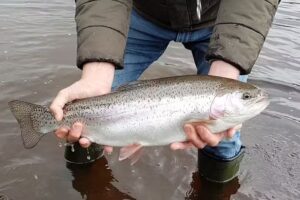
The core attraction for many is the quality of the stocking. Reports repeatedly highlight hard‑fighting rainbow trout around the three‑pound mark, with some anglers also landing larger fish that push towards five pounds or beyond. These fish are typically described as fit and healthy, and the combination of depth, cool spring water and regular restocking helps sustain their condition.
In addition to rainbows, the lake has become known for variety, with anglers talking about golden trout, blue trout and tiger trout featuring in more recent restocks. For visitors who enjoy the visual appeal of coloured fish as well as the challenge of hooking them, this mix adds an extra element of interest compared with venues that focus solely on standard rainbows.
The setting itself divides opinion in a way that is worth understanding before you visit. Some anglers are struck by the dramatic rock faces, slate edges and the sense of fishing in a steep‑sided bowl, praising the dramatic views and the sight of Pen‑y‑ghent in the distance on clear days. Others feel that the proximity of the car park to the water and the quarry heritage of the site take away from the traditional rural reservoir feel, though many of these same anglers still acknowledge the ‘rugged charm’ once they have spent time on the bank.
From a practical point of view, the banks are generally kept clean and accessible, and there is good car parking very close to the water, which benefits anglers who prefer not to carry heavy gear over long distances. Basic facilities such as toilets are available on site, making longer sessions more comfortable, especially for those travelling some distance or visiting as part of a group day.
The fishery operates on a catch‑and‑release model using fly only and barbless hooks, a policy that aims to protect fish welfare while still providing plenty of sport. This approach suits anglers who value the experience of repeated takes and multiple fish landed in a day rather than taking fish home, though it does mean those who prefer to keep a bag of fish may find the offer less aligned with their expectations.
Pricing is structured around flexible session lengths, with options for full‑day tickets, shorter five‑hour visits and evening sessions that run from late afternoon until closing. Groups benefit from tiered discounts, and the venue can comfortably accommodate up to around twenty anglers while still allowing space to cast. For clubs or organised events, the prospect of exclusive use for larger groups can be a notable plus when planning social days or tuition outings.
For those new to fly fishing, Helwith Bridge Fly Fishery is positioned as a supportive place to build skills. The fishery provides information aimed at beginners, and visiting anglers frequently comment that they learned more in a short session here than during longer, less focused instruction elsewhere. Casting tips, pattern suggestions and advice on reading the deep water are common themes, and there have been structured casting and fishing sessions where newcomers both improved their technique and managed multiple fish in a relatively short window.
On the water, the depth and clarity shape how anglers need to approach their day. The lake can be very deep close to the bank, with reports of 25 feet of water just a rod length out, which influences both fly choice and retrieve. Buzzers fished at depth, patterns like the Kate McLaren and other traditional wet flies, and a variety of dry flies have all produced fish here, depending on conditions and how high in the water column trout are feeding.
Anglers who take time to adjust tactics often find that fish can be taken both tight to the edges and out in open water. Feedback mentions success with a white lure or attractor pattern worked close to the bank for multiple fish, followed by switching to deeper presentations to tempt a better‑conditioned brown trout later in the day. This kind of adaptable fishing can be rewarding for those who enjoy experimenting with depth, retrieve speed and pattern choice rather than sticking with a single method.
Surface action is another positive feature when conditions suit. Several visitors report productive sessions fishing dry flies, with multiple fish taken on top and others lost during lively battles. Having a venue where fish are willing to rise confidently for dries as well as take subsurface buzzers is a strong selling point, especially for anglers who enjoy the visual excitement of watching a trout break the surface under a floating pattern.
The fishery also appears to maintain its stock levels regularly, with social media updates indicating fresh deliveries of rainbow, golden, blue and tiger trout. For returning customers, this steady restocking helps ensure there is always a good head of fish in the water, and it reduces the risk of arriving to find a water that feels over‑pressured or under‑stocked after a series of busy weekends.
Customer service is consistently mentioned as a strong point. Gerry and the team are described as welcoming, approachable and generous with information about what is working on any given day. Anglers appreciate being told which areas of the lake are producing, what depth fish are holding at and which patterns have been most productive, whether that is a small black buzzer, an attractor pattern or a more imitative fly.
However, as with any fishery, there are aspects that do not suit everyone. Some visiting anglers have noted that tickets are not the cheapest when compared with more basic stillwaters, especially for shorter sessions, and the cost may feel steep for those on a tight budget. Others have experienced days when conditions, such as wind or bright sun, made fishing difficult and fish seemed harder to locate, particularly in late summer when trout can be deeper and more selective.
The quarry layout, while dramatic, requires anglers to be mindful of safety and casting room. Steep banks, deep margins and craggy rock faces mean that care is needed when moving around the fishery, especially in wet weather when surfaces can be slippery. Although the car park’s closeness to the water is convenient, it also slightly reduces the sense of isolation some anglers associate with more remote upland lakes.
For potential visitors, it is helpful to view Helwith Bridge Fly Fishery as a specialist venue geared around quality sport, structured session times and a focus on catch‑and‑release with barbless hooks. Anglers who relish deep water tactics, the challenge of locating fish in a relatively small but very deep lake and the opportunity to target well‑conditioned rainbows and occasional coloured trout are likely to come away satisfied, particularly if they make use of local advice and remain flexible in how they fish.
Those who are completely new to stillwater fly fishing will find that the combination of accessible banks, clear water and on‑site guidance offers a manageable starting point, as long as they accept that this is genuine fly fishing rather than a put‑and‑take water where fish are guaranteed regardless of conditions. Persistence is often rewarded, with multiple anglers noting that early struggles gave way to memorable fish once they adapted their approach and followed local suggestions on flies and depth.
Experienced anglers who enjoy technical fishing may particularly appreciate sessions where fish are present but not easily fooled, requiring subtle presentations, careful fly choice and accurate casting under sometimes breezy conditions. When everything comes together, the fights are described as fierce, with fish using the depth and structure of the lake to their advantage, reinforcing the perception that the water holds strong, fit trout rather than sluggish stockies.
Overall, Helwith Bridge Fly Fishery presents a blend of strengths and trade‑offs that will appeal to anglers seeking characterful stillwater sport. The quarry setting, deep clear water, regular restocking and supportive management have combined to create a venue that many visitors are keen to revisit, while the need for thoughtful tactics, awareness of depth and willingness to adapt ensures that success feels earned. For those considering where to spend their next stillwater session, it stands out as a distinctive option with plenty of potential for memorable days on the bank.
Key aspects for visiting anglers
- Helwith Bridge Fly Fishery is a 4.5‑acre spring‑fed quarry lake offering deep, clear water and a focus on sporting trout.
- Stocking centres on strong, hard‑fighting rainbow trout, with additional varieties such as golden, blue and tiger trout appearing in restocks.
- The venue operates as fly only with barbless hooks and is geared towards catch‑and‑release fishing, prioritising fish welfare and repeated sport.
- Facilities include good car parking close to the water, maintained banks and on‑site toilets, making full‑day or group visits more comfortable.
- On‑bank advice and beginner‑friendly information help new and improving anglers develop confidence in casting, fly choice and depth control.
- Session‑based pricing and group discounts make it a practical choice for clubs and organised trips, particularly when exclusive use is arranged for larger parties.
- The quarry environment delivers dramatic scenery and a sense of rugged charm, though some anglers may prefer more traditional reservoir‑style settings.
- Conditions such as strong winds, bright weather or late‑summer depth changes can make the fishing more challenging, rewarding those who remain adaptable and patient.