Heron Lake
BackHeron Lake sits at the heart of Cotgrave Country Park and is managed as a members-only coarse fishing venue by Cotgrave Welfare Diamond Angling Club, giving it a different character from casual day-ticket waters in the area. Anglers who join the club gain access to a controlled, relatively peaceful environment where fishing pressure is regulated and general park users can still enjoy walking the paths around parts of the lake without disturbing those on the pegs. This dual role as both an angling water and a focal point within the wider park shapes much of what is positive and negative about the lake for potential visitors.
The fishing rights at Heron Lake are leased exclusively to the Cotgrave Welfare Diamond Angling Club, which means that casual visitors cannot simply turn up with a rod and start fishing. For committed anglers looking for a regular water, this members-only structure can be a strength, as it reduces overcrowding and helps maintain fish welfare, but for occasional visitors or holidaymakers it creates a barrier to access that may feel restrictive. Prospective members often need to seek out details on membership availability, prices and joining procedures, which are not always clearly visible on general park information boards and are instead directed through club contacts and online channels.
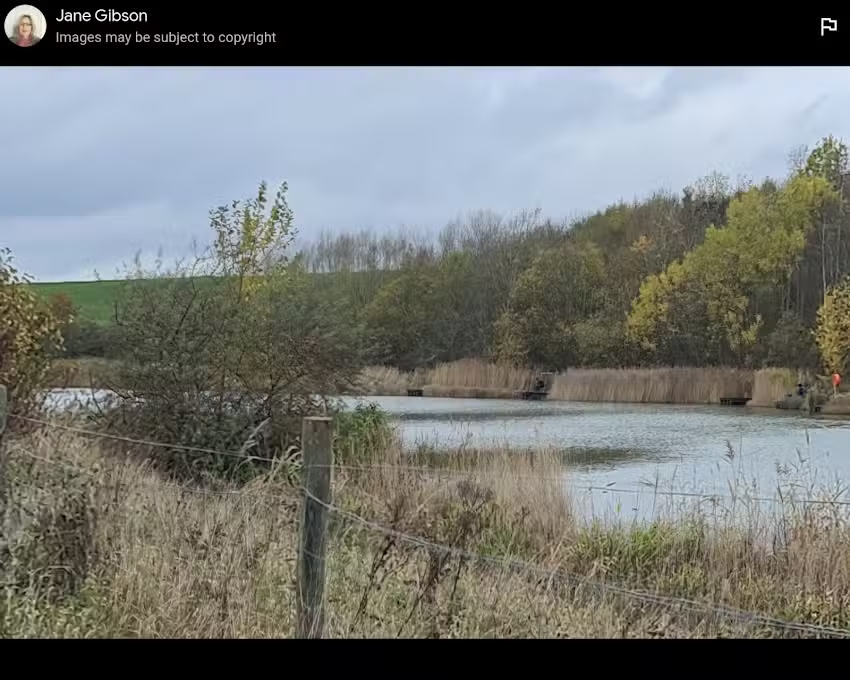
From a facilities perspective, Heron Lake benefits from its location within Cotgrave Country Park, where there are established paths, open spaces and a generally well-maintained environment. Walkers describe the area as relaxing, with pleasant routes around the water that remind visitors this is not just a fishing pond but part of a broader green space used by families, dog walkers and cyclists. Reviews from park users highlight the sense of calm and the appeal of strolling around the lake, which can be a plus for anglers who visit with non-fishing companions, as they have somewhere enjoyable to spend time while others are on the bank.
However, this shared use also brings some drawbacks for dedicated anglers. Public footpaths around parts of the shoreline mean that pegs sit relatively close to routes used by walkers and dog owners, which can occasionally lead to distractions, dogs near the water and the need for extra care when casting. The park management actively encourages owners to use a separate Dog Pool and asks them to keep animals away from the lake, but in any mixed-use park there is always a risk that not everyone follows the rules to the letter. For those who prize absolute seclusion above all else, this mix of visitors may be less appealing than more remote syndicate waters.
Fishing rules and fish care
Heron Lake operates under a detailed set of club rules designed to balance enjoyable sport with responsible management of the water and its stock. Membership is mandatory, and every member must hold a current Environment Agency rod licence, with the expectation that cards will be produced on request or anglers may be asked to leave. Only one rod is allowed per angler, barbless hooks must be used, and maximum line strength is limited to 8lb, which reinforces the focus on careful handling and fair play rather than heavy-duty hauling. These restrictions suit anglers who value ethical fishing and consistent standards, but may feel limiting to those used to big-pit tactics or multi-rod carp set-ups.
The club’s approach to fish care continues through its keepnet and bait regulations. Keepnets must be of a carp-friendly design, with at least two rings underwater at all times and a maximum of 60lb per net, which applies to both matches and pleasure sessions. Nets must be emptied every five hours, helping to reduce stress on fish during longer sessions. For match anglers and regular coarse fishermen this level of detail is reassuring, indicating a club that takes stock welfare seriously, but more casual anglers might see the rules as complex and feel they need to pay close attention to avoid unintentional breaches.
There are also clear boundaries on bait use that shape how anglers approach the water. Nuts and trout pellets are banned, bread cannot be used as hook bait or feed, and there are strict limits on the amount of luncheon or cat meat and groundbait that can be introduced. Boilies are restricted to a small hook-bait-only role, with no loose feeding allowed. Floating baits cannot be fed or fished, and braid is not permitted. For many coarse anglers targeting mixed species this encourages thoughtful presentation and prevents over-baiting, but dedicated specimen carp anglers who rely heavily on boilie and surface tactics may find these policies restrictive.
What anglers can expect
Heron Lake is managed as a coarse venue rather than a pure specimen carp fishery, and the rules around tackle and bait reflect this identity. Club waters of this type typically hold a mix of species such as carp, bream, tench, roach and perch, giving members varied sport across the seasons, though specific stocking lists are not heavily promoted publicly. The absence of night fishing means that sessions run from dawn until dusk, which suits day-anglers and match fishermen but rules out overnight campaigns for those chasing larger carp. This curfew also helps maintain a quieter environment for nearby residents and other park users and can reduce the chances of antisocial behaviour after dark.
The prohibition on removing fish from the lake underlines the club’s commitment to maintaining a healthy stock for members over the long term. Combined with the bait and keepnet rules, this approach helps prevent over-exploitation and keeps the fishery sustainable, which is a strong positive for anglers looking for a long-term home water. At the same time, the rules against unattended rods, the bar on fishing in conservation areas, and the emphasis on membership and licences mean that those seeking a very informal, “drop in and cast a line” experience may need to look elsewhere.
One recurrent theme seen in public comments is uncertainty from non-members about exactly how to gain access to Heron Lake. Questions about whether a licence is needed, how to obtain a permit, or whether day tickets exist show that general visitors do not always find the membership system straightforward. While these queries do not reflect the experiences of established members, they suggest that clearer communication could help potential new joiners understand what is required before they arrive with tackle in hand.
Strengths for coarse and carp anglers
For anglers willing to navigate the membership process, Heron Lake offers several strengths that compare well with many public-access waters. The members-only system limits pressure and contributes to a more orderly bankside environment, which can be especially attractive to those who value consistent behaviour and shared standards among fellow anglers. The detailed rules on line strength, hooks and bait help protect fish stocks and reduce damage, which is important for anyone who cares about the long-term health of a favourite venue.
The park setting also adds appeal. Anglers can combine a day on the bank with time spent walking, relaxing or spending time with family who may not fish, without needing to leave the site. For some, this multi-purpose environment makes Heron Lake a practical choice, particularly for those balancing fishing with other commitments. Easy access paths and a generally flat site mean that reaching many pegs is relatively straightforward, although specific levels of accessibility for each platform are not heavily advertised.
For prospective members focused on species such as carp, tench and bream, the rule set encourages refined tactics using moderate tackle and balanced rigs rather than heavy-duty approaches. Anglers who enjoy this style often appreciate the challenge and the more traditional coarse angling atmosphere found at club-controlled lakes. The absence of floating baits and the one-rod limit can make watercraft, careful feeding and accurate casting more important than sheer volume of gear, which some see as a positive.
Limitations and points to consider
Despite these positives, there are several aspects that potential visitors and members should weigh up carefully. Access is strictly controlled through membership, so casual day-ticket anglers looking for a spontaneous trip will not find Heron Lake suitable, and information regarding costs and waiting lists tends to be channelled through the club rather than public park signage. This can be frustrating for those who discover the lake during a walk and are interested in trying it for the first time.
The extensive rule set, while beneficial for fish welfare, can appear demanding to newcomers who may be used to more relaxed waters. Anglers with a strong focus on big carp tactics may find the 8lb maximum line strength, one-rod rule and bait restrictions limiting in terms of the rigs and methods they can employ. In addition, the ban on night fishing means that those who enjoy long, overnight sessions must look to other venues for that style of angling.
Because Heron Lake is integrated into a wider country park, there is ongoing interaction between anglers and general visitors. While many find the area peaceful, occasional issues can arise with dogs near the water or people unaware of angling etiquette, despite the presence of a dedicated Dog Pool elsewhere in the park. Those who seek complete privacy may view this as a compromise, even though it is part and parcel of fishing a public green space.
Position among Nottinghamshire fisheries
Within the local scene, Heron Lake occupies a niche as a managed, members-only coarse venue within a public park, contrasting with commercial day-ticket complexes and more secluded syndicate waters. Anglers comparing options will likely balance the structure and fish-care emphasis of Heron Lake against the flexibility of other fisheries that allow multiple rods, overnight sessions or looser bait rules. For some, the advantages of a regulated, club-run water close to home outweigh these limitations; for others, the restrictions may feel too tight.
There have also been publicised incidents of people attempting to fish at Heron Lake without the required licence or club membership, leading to enforcement action and warnings about potential fines. While this is clearly a negative for the individuals involved, it does show that both the authorities and the club treat compliance seriously, which can reassure rule-abiding anglers that standards are actively upheld. Anyone considering fishing here should be prepared to ensure their paperwork, membership and tackle all conform to the regulations before heading to the bank.
Who Heron Lake suits best
Heron Lake is likely to appeal most to anglers who appreciate structured, club-based coarse fishing, are comfortable with a comprehensive rule set and enjoy fishing as part of a broader day out at a country park. Those who prefer heavily stocked commercial venues with extended opening hours and minimal restrictions might find the environment here more traditional and regulated than they are used to. Prospective members who value fish welfare, order on the bank and the reassurance of clear standards are more likely to see the rules as a positive feature rather than an inconvenience.
For local anglers in particular, joining the club that controls Heron Lake can offer a consistent home water with a community of like-minded members and a clear framework for how the fishery is run. For occasional visitors or tourists who simply want a casual session, the members-only nature of the lake and the absence of simple day tickets make it less suitable. As with any venue, understanding the character of the water and the expectations set by its managers is the key to deciding whether it is the right choice for your fishing.
For anyone considering Heron Lake, the most sensible approach is to treat it as a structured club water within a public park: a venue with clear strengths in terms of order, fish care and setting, balanced by firm limitations on access, methods and session length. Anglers who are comfortable within that framework often find a rewarding long-term water, while those seeking maximum flexibility may prefer to look at alternative fisheries that better match their style.