Horton Angling Club
BackHorton Angling Club is a small, low‑key carp syndicate set in a quiet corner of Small Dole, offering a focused experience for anglers who value secure, well‑kept water and the chance of quality fish rather than crowded, commercial style venues.
The water here is described as a small syndicate with carp reaching the mid‑twenties, which will appeal to anglers who enjoy carp fishing on an intimate venue where each take feels hard‑earned. While it does not compete with famous big‑fish complexes boasting multiple forties and fifties, the stock is strong enough to keep regulars interested and to offer realistic chances for those targeting better‑than‑average fish on traditional English stillwaters.
Reviews emphasise that the fishing is brilliant, with a sense that the lake rewards thoughtful approach and watercraft rather than just turning up and casting anywhere. The comment that this is a place for “proper anglers” reflects a culture where members take presentation, rigs and fish care seriously, which is often exactly what experienced coarse anglers and specimen hunters are searching for in a syndicate. The atmosphere appears relaxed rather than competitive, with anglers sharing the banks respectfully and prioritising the welfare of the fish.
Security is mentioned as a strong point, with the venue considered safe and well looked after. For many people assessing a fishing lake or carp syndicate, this matters as much as the stock itself: leaving a car, bivvy and kit unattended overnight with confidence is essential, particularly when sessions may run for many hours. The reassurance of a secure site adds to the appeal for those considering joining a private club rather than opting for a busy day‑ticket water.
Horton Angling Club operates on a syndicate style basis rather than as an open day ticket carp fishing water, which is an important consideration for potential members. Access is limited, and that helps to reduce angling pressure and maintain a quieter environment on the banks, but it also means that places can be difficult to obtain and information for newcomers can feel sparse. One recent potential member reported difficulty finding clear contact details and was advised that local tackle shops are not currently handling membership, which may frustrate those trying to join.
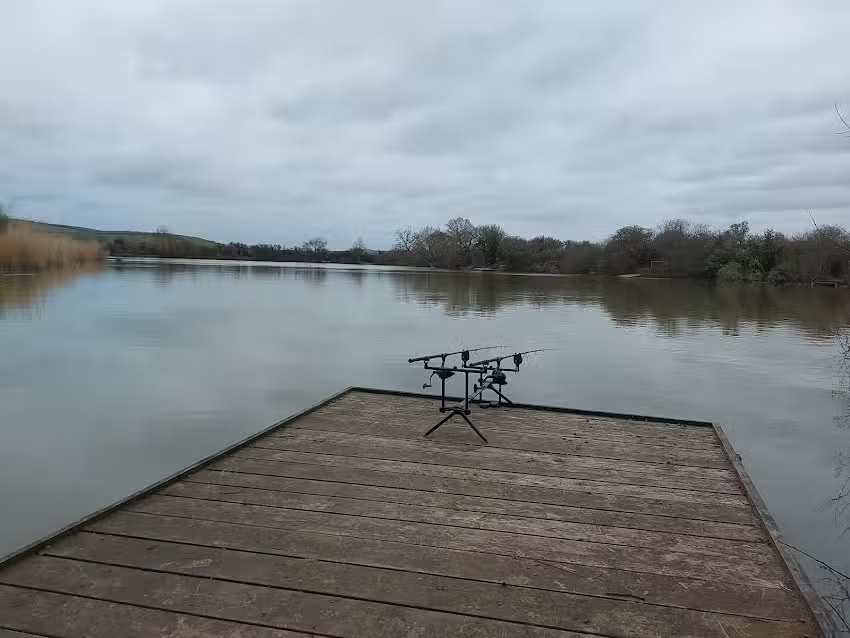
The setting itself is a key attraction. Although the club does not promote itself heavily online with glossy marketing, available images show a tree‑lined, sheltered water with a natural look that will appeal to anglers who value a peaceful backdrop to their sessions. Banks appear reasonably accessible, and the entrance is noted as wheelchair accessible, suggesting some thought has gone into making the site usable for a wider range of anglers, though detailed information on swim access for disabled anglers is not readily available.
From the perspective of fish size and expectations, anglers should approach Horton Angling Club as a modest‑sized carp fishery where mid‑twenty carp represent the upper end of the known stock rather than a water stacked with record‑chasing specimens. For many club‑level anglers, this is realistic and attractive: landing a strong, mid‑double or low‑twenty fish on balanced tackle in a quiet setting can be more satisfying than chasing a single, rarely‑caught giant on a pressured ticket. Those who are specifically targeting very large carp over 40 lb might see the club as a stepping stone rather than a final destination, in contrast to high‑profile complexes that market themselves on multiple known forties and fifties.
In terms of angling style, Horton Angling Club will suit those who enjoy classic UK carp fishing tactics: carefully placed bottom baits, pop‑ups over light baiting, and a focus on finding features rather than relying on heavy baiting campaigns. Although detailed rig and method information is not published by the club, similar small, lightly‑stocked syndicate waters in the region reward subtle, low‑impact approaches and a willingness to move if fish show elsewhere. Anglers accustomed to heavily stocked day tickets may find that blanks are more common here, but that successful sessions feel more meaningful.
Membership structure is not published in detail online, and this lack of transparent, centralised information is one of the weaker aspects from a potential customer’s point of view. Unlike some larger fishing clubs and societies in the Henfield area, which clearly outline waters, joining procedures and general rules on their own websites, Horton Angling Club appears to rely more on word‑of‑mouth and direct contact. For anglers who are comfortable networking locally and speaking to existing members, this may not be a problem, but those searching from further afield could find it difficult to plan ahead.
On the positive side, the small scale and low profile of the club mean the banks are unlikely to be overrun, a contrast to highly publicised carp lakes that can feel crowded during peak times. Members are more likely to find space to set up without being boxed in, and there is a stronger sense of continuity, with familiar faces and an established etiquette. This can be especially appealing for anglers who value a sense of community and continuity over anonymous, high‑turnover fisheries.
For visiting anglers used to larger club structures, it is worth noting that Horton Angling Club is distinct from the broader Henfield and District Angling Society, which offers river stretches on the Adur and several stillwaters in the wider area. Those river and stillwater options provide coarse fishing for species such as bream, tench, chub and roach, alongside carp and even some trout, while Horton Angling Club focuses on a single small lake with a core emphasis on carp. Potential members should therefore be clear about what they want from their ticket: a single, intimate carp‑driven venue, rather than a multi‑water portfolio.
Customer feedback, although limited in volume, skews strongly positive. Anglers comment on the quality of the fishing and the secure feel of the venue, and historic remarks about the stock support the idea that this is a capable carp water where mid‑twenty fish are present. There is, however, almost no detailed online commentary on fish stocking policies, restocking plans or formal catch reports, which can make it harder for data‑driven anglers to assess the venue fully before committing. This absence of detailed communication is typical of many small syndicates, but it remains a point that some potential members may see as a downside.
For those considering Horton Angling Club as their regular carp fishing syndicate, the balance of strengths and weaknesses is clear. On the strength side are the secure environment, peaceful setting, credible carp to mid‑twenty size, and a bank culture aimed at serious, considerate anglers. On the weaker side are limited public information, difficulty in obtaining up‑to‑date joining details, and the relatively modest upper fish size when compared with heavily publicised big‑fish venues.
Overall, Horton Angling Club is likely to appeal most to local or regional anglers seeking a reliable, syndicate‑style carp lake where they can build a long‑term relationship with the water and enjoy regular, unhurried sessions without excessive pressure. Anglers who prioritise colossal specimen fish and extensive facilities may look elsewhere, but those who value a compact, secure water with a core stock of respectable carp, fished in the company of like‑minded members, will find this club a serious option to consider among South East England’s many fishing venues.