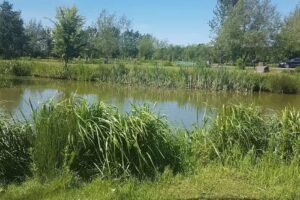
Hurst Angling
BackHurst Angling is a small, independently run angling venue that appeals to coarse and pleasure anglers who value a quiet, uncomplicated day by the water. Tucked away off Fern Lodge Drive, it feels more like a local, semi-private water than a commercial complex, and that character shapes both its strengths and its limitations. Regular visitors describe a straightforward place to fish rather than a polished leisure destination, so potential customers should approach it as a no‑fuss spot to wet a line rather than a fully serviced angling centre.
For anyone interested in coarse fishing, the most important question is always how the water actually fishes. Although there is not a huge volume of public information, the feedback that does exist suggests that catches can be rewarding when conditions are right and you take a thoughtful approach. Anglers who are prepared to experiment with their rigs and bait, and to move to locate the fish, tend to speak more positively about their sessions. This is not a heavily stocked commercial pool where fish all but jump onto the hook; instead, it suits those who enjoy working a swim, watching the water and adjusting their tactics.
Given this character, visitors are likely to bring a broad range of coarse tackle. A typical set‑up here might include a medium‑test‑curve rod, a reliable reel spooled with robust line, and a selection of end tackle to cover different situations. Many coarse anglers will arrive with fishing tackle that allows them to switch quickly between float and feeder approaches, carrying a variety of hook sizes, feeders and leads so they can respond to the mood of the fish. Those who prepare in this way are better placed to get the best from the venue, especially on days when bites are more tentative.
The venue naturally lends itself to using a range of fishing bait, and that is part of the appeal for anglers who like to experiment. While some commercial waters are dominated by pellets and boilies, quieter venues such as Hurst Angling often respond well to old‑fashioned favourites like sweetcorn, luncheon meat and bread, alongside modern pellets and wafters. This makes it a useful testing ground for refining bait presentation; anglers can see how fish respond over a full session rather than relying on quick, pressured bites. That said, because information is limited, newcomers may need a couple of trips to work out what produces consistent results.
Strong coarse venues also give anglers room to develop their approach to rigs and line management. Many visitors will bring a well‑stocked tackle box with multiple hooklength materials, swivels, stops and floats to tweak their presentation. On waters like this, small changes in shotting patterns, hooklength diameter or feeder size can make a noticeable difference, especially when fish have seen basic presentations many times. Anglers who enjoy the technical side of their hobby may therefore appreciate Hurst Angling as a place to refine the details of their set‑up in relatively peaceful surroundings.
Location and access are crucial practical considerations. Being set within a residential area off Fern Lodge Drive, the venue is easy enough to find for local anglers who are familiar with Ashton‑under‑Lyne. This can make it a convenient after‑work or weekend choice for those who do not want to travel far for their fishing. However, the same residential setting may mean that parking and access are more constrained than at larger commercial fisheries, and new visitors could find the entrance less obvious than a purpose‑built complex with prominent signage. Planning ahead, arriving in good time and being considerate of local residents are sensible steps.
Public feedback about Hurst Angling is limited but telling. Some anglers leave clearly positive impressions, indicating that they have enjoyed their time fishing there and would return. Others give more middling scores without leaving detailed comments, which implies that their experiences were acceptable but not exceptional. The absence of long, detailed reviews means potential visitors do not have a wealth of second‑hand knowledge about stock levels, average sizes or seasonal form, so expectations should be realistic. This is a small local water, not a heavily promoted destination fishery.
From a facilities perspective, information is also sparse, and that in itself is revealing. There is no strong public evidence of extensive on‑site amenities such as a café, tackle shop or clubhouse, and anglers who value those extras may find the set‑up basic. This simplicity will not worry everyone; many coarse anglers are quite content with a straightforward bank, their own chair and shelter, and a packed lunch. Yet for families, newcomers or those who need accessible toilets and clear peg structures, the lack of published details can be a drawback and may justify making an initial short visit to assess whether the facilities match personal needs.
Service and management appear to be low‑key rather than highly visible. Where anglers mention their experiences, they do not report major conflicts or persistent problems, which suggests that the venue is generally calm and orderly. On the other hand, there is little public discussion of active fishery management, events or coaching. Anglers who prefer venues with organised matches, stocked‑fish announcements or a strong social media presence will not find that here. Hurst Angling instead feels like a modest, quietly run water that relies on regulars who understand the place and simply turn up to fish.
This low‑profile character has both advantages and disadvantages for potential customers. On the plus side, quieter, more modest venues often mean less competition for pegs, a more relaxed atmosphere and fish that are less pressured than at high‑turnover commercials. Local anglers who enjoy a peaceful day with their favourite fishing rod and a simple set‑up could find exactly what they want. On the downside, sporadic information about stocking policy and limited written reviews make it harder to predict the quality of sport on any given day, and visitors who are used to very consistent catch rates at larger fisheries may be underwhelmed if conditions are challenging.
For beginners or returning anglers, Hurst Angling can offer a gentle re‑entry into the hobby if approached with the right expectations. A compact water with straightforward bank access allows new anglers to focus on basic skills such as plumbing the depth, feeding a swim accurately and playing fish with confidence. Bringing a sensible starter kit, including a versatile fishing reel, a landing net and an unhooking mat, will cover most situations and help embed good habits from the outset. Where novices may feel less catered for is in the lack of readily visible instruction or structured tuition; those who want coaching would be better arranging it independently and simply using the water as a practice venue.
Experienced coarse anglers may assess Hurst Angling differently. Many will treat it as a convenient local water where they can test new rigs, baits and approaches without the distractions of a busy commercial complex. Anglers who enjoy tracking how a venue changes through the seasons may appreciate the chance to build their own picture of stock behaviour, identifying better swims, productive weather conditions and feeding patterns over time. For these anglers, the absence of constant promotional noise and prescriptive methods can be a positive, leaving more room for personal experimentation and quiet satisfaction when a carefully thought‑out plan pays off.
It is also fair to acknowledge that some potential visitors will find the scarcity of detailed, independent information frustrating. Prospective customers increasingly compare venues online, looking for photos of notable catches, peg maps and clear statements about rules, accessibility and typical species. Hurst Angling’s low public profile means those comparisons are harder to make, and the fishery can appear less transparent than more heavily documented waters. For some, that uncertainty is part of the appeal; for others, it will be a reason to prioritise more widely reviewed venues in the area.
In practice, Hurst Angling suits anglers who value a quiet, local coarse water and are comfortable forming their own opinion over several visits. It is not trying to compete with large, feature‑packed fisheries, and it does not attempt to draw in customers with bold claims or heavily marketed packages. Instead, it offers a modest, accessible setting where a prepared angler with reliable fishing gear and realistic expectations can enjoy a steady day’s coarse fishing. Those who demand more structure, clearer information and comprehensive facilities may find it falls short, but for many local anglers simply looking for a peaceful place to cast a line, it remains a straightforward option worth considering.