J.A.J Munro
BackJ.A.J Munro is a small, traditional shop that has earned a quiet but loyal following over many years, particularly among locals and visiting anglers who appreciate a straightforward, no‑nonsense place to stock up before heading to the river. While the available information is limited and some details are dated, a picture emerges of a business that has survived in challenging times thanks to personal service, practical products and community roots rather than online hype.
The shop sits on High Street in Aberlour and has long been associated with friendly, down‑to‑earth service. Several customers highlight the warm welcome and personal attention they receive, pointing out that staff remember faces and are willing to give practical advice rather than just push a sale. Comments about a particular staff member by name suggest that regulars feel at ease and value the human side of shopping here, something that is increasingly rare as online retailers take over.
Although J.A.J Munro is not marketed as a specialist fishing superstore, it has traditionally been a useful stop‑off for anglers in Speyside looking for basic equipment, accessories and everyday items. Visitors coming to fish the nearby rivers often appreciate being able to walk into a physical shop, ask questions and pick up what they have forgotten. For anyone planning a session with a simple setup, this kind of traditional retailer can be enough to get started without the need for an enormous selection of technical gear.
One recurring theme in feedback is the contrast between a friendly, well‑stocked local shop and the pressure from online competition. At least one reviewer explicitly laments that the internet is making it harder for businesses like J.A.J Munro to survive, even though they still offer what many people say they want: personal service, immediate access to goods and the reassurance of talking to someone who knows the area. This tension is important for potential customers to understand; supporting a shop like this can mean accepting a more modest range in exchange for a human connection.
For anglers, especially those visiting the area, the shop’s strengths lie in convenience and local insight rather than in having every possible brand or specialist item. Someone who needs a replacement line, a basic reel or a few packets of hooks is likely to find practical, dependable options rather than the latest premium release. This can be an advantage for beginners who feel overwhelmed by choice; having a smaller, curated selection, together with guidance from staff, can make it easier to leave with a suitable setup rather than something bought on impulse online.
Where J.A.J Munro naturally falls behind is in the depth and breadth of its range compared with large dedicated fishing retailers and modern online platforms. Enthusiasts looking for cutting‑edge gear for highly specialised techniques will generally find far more choice on the internet or in big‑box stores. High‑end rods and reels, niche accessories and very specific brands may not be available here, so experienced anglers with detailed gear lists may still rely on online ordering for certain items.
Another limitation is the lack of an obvious, constantly updated online presence. In an era when many anglers research their equipment in advance, compare prices and check stock levels from their phone, the absence of a comprehensive website or online catalogue can make it harder for J.A.J Munro to compete. Potential customers planning a trip might struggle to know exactly what is available before arriving, which in turn pushes them back towards larger digital retailers that provide real‑time information, reviews and home delivery.
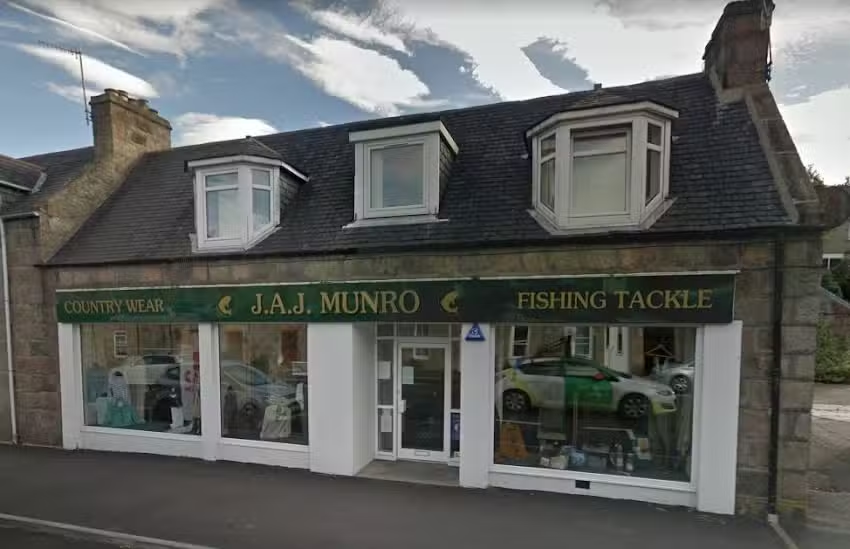
On the positive side, the photos associated with the shop show a tidy and traditional frontage, suggesting a business that takes pride in its appearance and in maintaining a welcoming environment. Although interior images are not widely shared, the general impression is of a practical, no‑frills space where items are easy to find and staff are close at hand to help. For visitors used to impersonal warehouse‑style stores, this more compact format can be refreshing and easier to navigate.
Customer comments, albeit few and somewhat old, consistently mention the friendly nature of the staff and the sense of being looked after. People speak of the shop as a place where they feel comfortable asking for help, and where the team are willing to point them towards what they really need rather than simply the most expensive option. This approach can be especially valuable for families introducing children to fishing for the first time, as it reduces the risk of buying gear that is inappropriate or unnecessarily complex.
However, the small number of public reviews and the fact that most of them date back several years make it hard to form a completely up‑to‑date impression of the business. Potential customers should bear in mind that product ranges, staff and stock levels may have changed. Anyone whose trip depends on finding specific equipment would be wise to treat online snippets as a general indication rather than a precise representation, and to be prepared with a backup plan, particularly for rare or highly technical items.
In terms of value, small independent shops like J.A.J Munro often cannot match the lowest prices advertised by large internet retailers, especially on big‑name brands and high‑volume items. That said, the total cost of a fishing outing is not just the sticker price on a rod or reel. Being able to get advice in person, avoid delivery delays and swap an item immediately if there is a problem can offset a small difference in price for many customers. For travellers who arrive without a complete kit, the ability to walk into a shop and walk out ready to fish can justify spending slightly more than the bare minimum advertised online.
For those interested in basic angling needs, the shop can be a useful complement to online purchasing. Many experienced anglers find that combining a core set of carefully chosen items bought on the internet with last‑minute essentials from a local shop gives them the best of both worlds. J.A.J Munro can fill that local role, offering snacks, simple gear and helpful pointers before heading out, while more specialised or high‑budget equipment is sourced elsewhere.
The reality for modern customers is a trade‑off between convenience, price and personal contact. J.A.J Munro offers the immediacy and human side: a physical counter, a person to talk to and products you can hold before you buy. In contrast, major online fishing retailers provide vast ranges, detailed technical specifications and constant promotions on gear, but no face‑to‑face support. Anglers who value conversation, local knowledge and a sense of supporting the community may prefer calling into a shop like this, while those focused purely on price or very specific brands will still lean towards larger digital platforms.
Overall, J.A.J Munro represents a type of independent retailer that is becoming less common, especially in smaller towns. Its strengths are the friendliness of its staff, the straightforward nature of its offer and the reassurance it provides to visitors who like to see and handle what they are buying. Its weaknesses are the limited online visibility, the modest volume of recent public feedback and the inevitable constraints on stock compared with dedicated fishing outlets and bigger e‑commerce players. For potential customers, particularly anglers passing through, it can be a practical and welcoming stop, provided expectations are set around the scale and scope of what a traditional local shop can reasonably offer today.