
Kyo Tarn
BackKyo Tarn is a small, unpretentious fishing water in Annfield Plain that attracts local anglers and cyclists looking for a quiet break rather than a high‑profile commercial venue. Set just off the C2C cycle path, it has become a regular stopping point for people tackling the steady climb from Beamish, who use the area around the tarn to rest, take in the view and, for those with tackle in the car or on the bike, fit in a short fishing lake session.
For anyone searching for a low‑key place to wet a line, Kyo Tarn offers a different experience to heavily marketed day‑ticket complexes. It feels more like a local landmark than a polished holiday destination, and that character will appeal to anglers who prefer a quieter bank and a more natural setting. However, this also means that expectations need to be managed: facilities are basic, information is limited and the overall feel is more rough‑and‑ready than purpose‑built coarse fishing venues.
Feedback from visitors suggests that the tarn divides opinion, which is important for potential customers to understand. Some people speak positively about pausing at Kyo Tarn, particularly those using route 7 of the C2C who value it as a resting spot after a steady climb, mentioning the good views from the nearby bridge and the sense of having reached a natural pause point on the trail. Others leave very brief or low ratings without comments, indicating that the place does not always live up to expectations for those looking for a more fully developed fishing venue with extensive services or carefully manicured surroundings.
In terms of setting, Kyo Tarn sits in former mining country where ponds, burns and man‑made tarns punctuate the landscape, many of them created or reshaped during the twentieth century. Nearby waters such as Greencroft Tarn and Quarzi Tarn, also situated by the C2C route, show how the area has evolved into a patchwork of small stillwaters popular with local anglers. Kyo Tarn fits into this network as a relatively modest water where the emphasis is less on elaborate infrastructure and more on straightforward bank access and open water. This makes it suitable for anglers who enjoy simple coarse angling sessions without the bustle of large commercial complexes.
One of the main strengths of Kyo Tarn is its accessibility. The location close to Kyo Lane and the cycle route means that parking and access are generally straightforward, with nearby stopping spots noted by users of motorhome and touring forums as handy places to pull in before heading on or down to local waters. While these comments often focus more on parking and general convenience than on detailed angling reports, they help confirm that the tarn and its surroundings are easy to reach for those travelling by car, van or bike. This ease of access is a key point for any angler weighing up where to spend a free afternoon or to add a quick session around other commitments.
Another plus point is that Kyo Tarn is effectively available around the clock, giving flexibility to those who prefer early starts or evening sessions. Information associated with the site describes it as open all week, day and night, which is a contrast with more tightly controlled commercial waters that limit entry to specific time slots. For anglers who work shifts or have limited free time, being able to turn up at unconventional hours is a practical advantage, especially in summer when light levels extend the usable fishing day well beyond standard business hours.
The character of the water itself will suit anglers who enjoy straightforward pleasure fishing rather than those chasing specimen records. While detailed stocking lists are not readily available, the tarn sits within a region where small stillwaters commonly hold mixed coarse species such as carp, roach, perch and bream, and many local anglers treat these ponds as relaxed venues for short sessions rather than destinations for high‑profile campaigns. That said, the lack of up‑to‑date, official information means that anyone looking for very specific target species or particular stocking levels may find Kyo Tarn less predictable than more heavily promoted carp fishing lakes.
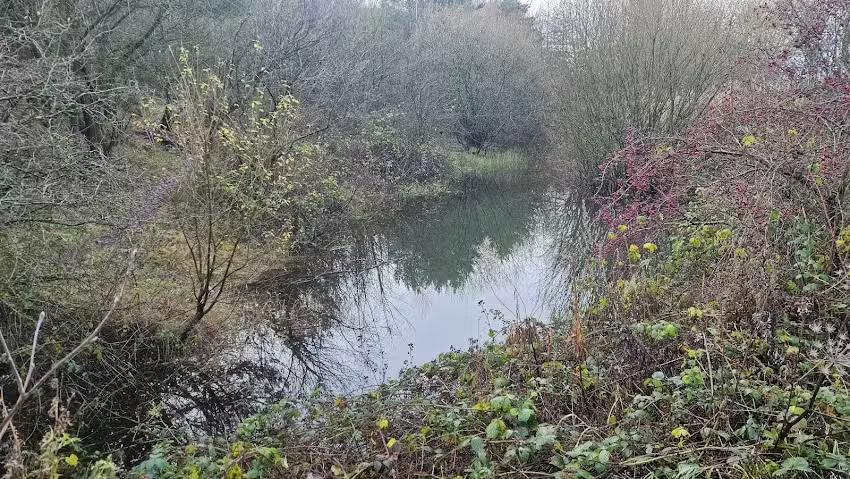
Visitor comments suggest that the tarn’s setting can be quite attractive when the weather is kind, with the water, surrounding greenery and views from the bridge adding to the overall experience. For anglers, this can make even a modest catch rate feel worthwhile, as time by the water offers a sense of calm away from busier roads and estates. Cyclists on the C2C path also mention the psychological boost of reaching this point after a climb, using the tarn and its bridge as a visual marker that they have put in a decent effort and earned a break.
However, potential visitors should also be aware of the downsides. Ratings vary from enthusiastic to very low, with some users offering five stars and others just one, and a noticeable number of reviews consist of a rating only, without explanation. This range hints at inconsistency in how the site is perceived, possibly reflecting changing conditions, seasonal weed growth, litter issues at certain times, or simply differing expectations between casual visitors and dedicated anglers. For a potential customer, this means Kyo Tarn cannot be assumed to deliver a uniformly polished experience; it is a more informal spot where conditions on the day will make a significant difference.
Another limitation is the lack of detailed, centralised information about permits, rules and on‑site support. While other tarns and day‑ticket fisheries in the wider region often publish clear guidance on ticket prices, session lengths and fish care expectations, Kyo Tarn sits at the quieter end of the spectrum where such information is much more difficult to confirm in advance. Anglers accustomed to well‑advertised day ticket fishing complexes may need to be more self‑reliant here, checking locally about permissions and being prepared for a more informal arrangement. This uncertainty may put off those who prefer fully structured venues with a visible bailiff presence and a lodge or shop on site.
The absence of formal facilities should also be considered. There is no indication of a dedicated tackle shop, café, toilet block or structured peg layout at Kyo Tarn, which contrasts with many modern commercial fisheries that prioritise comfort and convenience. For some anglers, particularly those planning longer sessions or bringing family members, the lack of such amenities can be a significant drawback. For others, especially those who prize peace and a sense of fishing in a less regimented environment, this simplicity will be part of the appeal, but it remains important to arrive prepared with everything needed for the session.
From a broader perspective, Kyo Tarn’s role in the local network of waters is worth noting for anyone planning regular angling in the area. Anglers may choose to use it for short, opportunistic trips, perhaps when already nearby or when other coarse fishing lakes are busier or fully booked. Combined with nearby tarns and ponds, it gives local residents and visiting anglers multiple options within a relatively small radius, allowing them to match the venue to their mood: a quieter, more basic setting at Kyo Tarn or a more fully featured commercial water elsewhere.
The modest overall rating and sparse written feedback highlight that Kyo Tarn is not a high‑profile destination. For directory users, this makes it especially important to weigh up what they want from a fishing trip. Those looking for a premium, feature‑packed carp lake with on‑site staff, defined pegs and a steady stream of reported catches may feel underwhelmed here. In contrast, anglers who prioritise a simple, accessible pond where they can spend a few quiet hours, perhaps combining a ride on the C2C route with a short fishing session, are more likely to appreciate what Kyo Tarn can offer.
In practical terms, anyone considering Kyo Tarn should plan their visit with self‑sufficiency in mind. Bringing all necessary tackle, bait, refreshments and suitable clothing is essential, as is being prepared for the weather and the possibility of limited shelter. Checking local angling forums and community groups can help build a more current picture of water clarity, weed levels, recent catches and any informal rules that regulars adhere to. This extra preparation will help potential customers decide whether Kyo Tarn is the right choice for their next outing or whether one of the better‑documented fishing ponds nearby would suit them better.
Overall, Kyo Tarn presents a mixed but honest proposition. It offers a convenient, accessible and generally peaceful place to fish or rest, particularly appealing to cyclists and local anglers who value a low‑key environment over polished facilities. At the same time, the variability in reviews, lack of detailed public information and minimal infrastructure mean that expectations should be realistic. As part of a wider landscape of small coarse fishing lakes in County Durham, Kyo Tarn can play a useful role for those who understand its strengths and limitations and are comfortable with a simple, no‑frills day by the water.