
Lake District Coast Aquarium, Maryport
BackLake District Coast Aquarium in Maryport presents itself as a compact but thoughtfully designed attraction that blends marine education, family entertainment and a relaxed coastal setting. It is not a large city aquarium with vast ocean tunnels, yet visitors repeatedly comment that there is more to see than they expected, with tanks that feel well cared for and clearly interpreted for both adults and children. Importantly for potential visitors, this is a venue that balances detailed information about local marine ecosystems with hands‑on activities, indoor exhibits and outdoor play, which makes it appealing for mixed‑age groups and families planning a full day out.
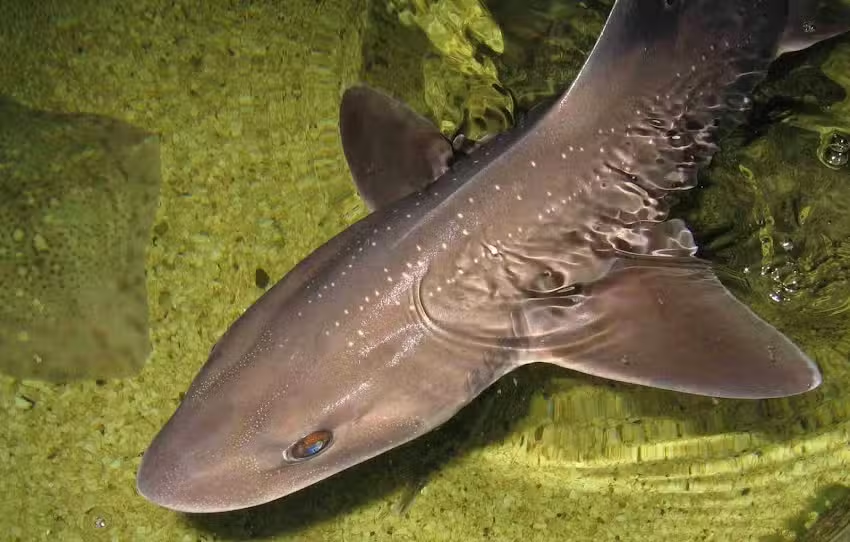
The core of the attraction lies in its extensive collection of themed tanks that focus primarily on species from the Cumbrian and wider UK coastline, supplemented by a modest tropical section. Rather than chasing spectacle with giant exotic displays, the aquarium concentrates on the fish and invertebrates realistically found in nearby waters, from sea bass and trout to rays, dogfish, conger eels and crustaceans such as lobsters, crabs and prawns. For visitors interested in angling or local fishing culture, this emphasis on indigenous marine life can be a strong point, as it builds a clear connection between what is in the tanks and what lives in the surrounding estuary, harbours and inshore fishing grounds.
Several displays aim to recreate natural habitats in a way that is visually engaging and informative. There are sections that mimic the Solway Estuary and Lake District streams, including a Trout Cascade and a Crashing Wave tank where species associated with turbulent coastal waters are displayed in conditions close to what they would experience in the wild. This approach is particularly useful for visitors who may know these environments from walking, boating or sea fishing, but have not seen what lies below the surface. Interpretive boards and labelled exhibits give context on tides, salt marshes and local marine geography, and some reviewers highlight that these displays are valuable even for older students or teachers seeking material relevant to geography and environmental science.
One of the more distinctive features for such a modest‑sized attraction is the Sea Lab and lobster hatchery, where the aquarium showcases its conservation work and breeding programme. Here, visitors can view lobsters at different stages of development, from tiny juveniles to more mature individuals, before they are eventually released into the Solway Firth to help boost wild populations. For families and anyone with an interest in sustainable seafood or the long‑term future of commercial fisheries, this area offers a concrete example of how research and small‑scale conservation can complement traditional fishing activity along the coast.
Educational elements are woven through the visit rather than confined to one corner. Regular talks and feeding demonstrations feature rays, sharks, cuttlefish and other key species, with staff on hand to answer questions and describe behaviour, habitats and feeding strategies. Reviews often single out the enthusiasm and knowledge of the aquarists, mentioning detailed explanations of jellyfish life cycles, cuttlefish intelligence and the ecological role of native species. This personal engagement tends to be a highlight for visitors who want more than just static displays, and it adds value for those who see the aquarium as part of a learning‑focused family holiday.
For younger children, the aquarium offers a series of activities that help keep their attention across multiple rooms. A quiz or activity sheet is typically available at the entrance, leading children to search for particular creatures in the tanks, with a small prize offered at the end for those who complete it. There is an education room with colouring sheets, marine‑themed storybooks and simple interactive elements, and some reviewers mention a small cinema or film area where short features about marine life or the local coast are shown. Together, these details mean the site functions as more than just a walk‑through gallery; it becomes a space where children can move between looking, reading, playing and watching, which tends to extend the length of a typical visit.
Beyond the main aquarium halls, Lake District Coast Aquarium includes a selection of outdoor attractions that distinguish it from many indoor only venues. Entry generally includes at least one round of crazy golf on a 14‑hole course that runs along two sides of the building, finishing near the dock for an atmospheric final hole. Visitors comment that the course may not be the most elaborate they have seen, but it is appreciated as an extra included activity that helps justify the admission price, particularly for families with children who enjoy some friendly competition between viewing the tanks. Additional features, such as model boats driven via coin‑operated controls and a sizeable adventure playground, provide further options for children to burn off energy outdoors when the weather permits.
Food and drink are available on site through the Harbourside Café, which can be accessed without entering the paid aquarium area, making it a flexible meeting spot as well as a convenient addition to a visit. The café offers a mixture of seafood dishes and more general options, alongside cakes and child‑friendly meals, and multiple reviewers praise its coffee and the overall quality given the setting. Some feedback over the years has suggested that food can be variable at busy times, with occasional comments noting that the catering does not always match the standard of the exhibits, so expectations should remain moderate rather than assuming a destination restaurant. However, as a functional and generally well‑reviewed facility, it serves the needs of families who want to make the aquarium a half‑day outing without having to leave the site for refreshments.
Accessibility and practical arrangements are reasonably strong for a visitor attraction of this scale. The aquarium is broadly pushchair friendly, with level or ramped access through the exhibit areas, and facilities include toilets, baby changing and disabled access provisions. The harbourside location allows for easy parking nearby, which visitors describe as straightforward and plentiful, and there is free Wi‑Fi for those who wish to stay connected or share their visit online. Wheelchair users benefit from an accessible entrance, though as with many older waterfront buildings, some tighter turns or busier areas at peak times may require a little patience.
From a value perspective, many visitors feel that the mix of aquarium access, talks and outdoor activities offers good return for the admission price, particularly since tickets typically allow re‑entry throughout the day. Families frequently note that they are able to spend several hours on site, leaving and coming back between the aquarium, mini golf and play area, which helps break up the day for children and adults alike. For those with a strong interest in angling, local marine ecology or coastal fishing traditions, the focus on UK species and the informative displays may add additional perceived value compared with attractions centred on purely tropical displays.
However, there are limitations that potential visitors should consider. The aquarium is relatively small compared with major city or national centres, and those expecting vast tanks, large sharks or highly theatrical exhibits may find it more modest than anticipated. At busy times, particularly during school holidays or very wet days when indoor attractions are in high demand, the exhibits and café can feel crowded, which may reduce the sense of calm some visitors seek from aquariums. A minority of reviews mention that certain elements, such as the mini golf course or some outdoor features, could benefit from cosmetic updates or brighter theming, although most acknowledge that these are still enjoyable given their inclusion in the ticket price.
In terms of content, the aquarium’s strength lies in breadth of species and educational emphasis rather than cutting‑edge technology or elaborate interactive screens. Visitors who prefer modern digital displays, large immersive tunnels or highly theatrical shows may find the presentation more traditional, focusing on well‑labelled tanks and staff‑led talks rather than multimedia spectacles. On the other hand, this approach is often welcomed by families and adults who value clear information, close‑up views and direct interaction with knowledgeable staff, particularly when learning about local marine life relevant to nearby fishing communities and coastal activities.
When weighing up the strengths and weaknesses, Lake District Coast Aquarium emerges as a solid choice for families, couples and small groups seeking a relaxed and informative attraction that can fit comfortably into a day by the harbour. Its commitment to showcasing native species, running a lobster hatchery and providing regular talks and feeding sessions makes it more than just a collection of tanks, while the included mini golf and outdoor play areas help broaden its appeal. Prospective visitors who arrive with realistic expectations of a mid‑sized regional aquarium, rather than a large city showcase, are likely to find a friendly atmosphere, engaging exhibits and enough variety to keep both keen marine enthusiasts and casual visitors content for several hours.