Mill Farm Trout Lakes
BackMill Farm Trout Lakes is a small stillwater fishery that aims to offer focused, high-quality sport for anglers who care about hard-fighting fish rather than sheer numbers alone. Regular visitors often highlight that this is a venue where technique and watercraft really matter, making it appealing to anyone who wants more than a casual cast-and-hope session. Instead of positioning itself as a general leisure site, it functions as a dedicated trout fishery where the main draw is the chance to tempt strong fish at close quarters and refine your approach on relatively intimate waters.
The fishery is set around two compact lakes that are stocked primarily with rainbow trout and a smaller population of browns, which gives a clear idea of the kind of sport anglers can expect. Guests report that the average stamp of fish is well above many commercial ponds, with multiple accounts of trout around 4 lb and upwards being caught on a typical visit. For many anglers, that size range is ideal: large enough to feel every head shake yet not so big that tackle needs to be brutally heavy, so a well-balanced outfit becomes central to the experience.
One of the most frequently praised aspects of Mill Farm Trout Lakes is the condition and behaviour of the fish. Anglers consistently describe them as full-finned, energetic and capable of long, powerful runs, including tail-walking and strong lunges close to the bank. This kind of response suggests regular stocking with quality fish that have not become overly sluggish or over-pressured. For those who value realistic sport over easy bagging, this is a significant positive and makes the venue stand out against some heavily stocked commercial waters where fish can feel lethargic.
The water clarity is another element that experienced visitors often remark upon. Even after spells of rain, the lakes are frequently described as clear enough for anglers to watch fish follow, refuse or take a fly just beneath the surface. This creates a very visual style of fishing and rewards careful presentation in a way that many find highly engaging. It also means that the choice of pattern, retrieve and depth has to be more considered, because the trout can inspect offerings in detail instead of taking on impulse in coloured water.
Although this is a trout venue rather than a general coarse fishery, potential customers will naturally compare it with other places they might visit when researching where to go for a day’s fishing. Online reviews repeatedly note that Mill Farm Trout Lakes can be challenging if you are not prepared to adjust tactics, which is a strength for some and a drawback for others. Those looking for straightforward fishing with constant action may find the venue less forgiving, while anglers who like to think through their approach tend to rate it highly and are more likely to return.
The owners and on-site team are frequently mentioned in comments as a major asset. Many anglers talk about a friendly reception on arrival, with offers of advice on fly patterns, retrieves and how to approach the water on the day. Rather than a detached ticket-sales operation, this is more like a hands-on, angler-focused management style that can make a real difference, especially to those visiting for the first time. For newer fly fishers or those unfamiliar with small stillwaters, this kind of guidance can be invaluable and helps justify the cost of a permit.
In terms of patterns and methods, reports from regulars suggest that a range of flies can work across the season, which will appeal to anglers who enjoy experimenting. Nymphs such as Pheasant Tail and Hare’s Ear variants in larger sizes have been particularly successful, especially when fished just a couple of feet down on a floating line. Anglers also mention a mix of attractor patterns – from bright tequila-style blobs and fabs to bloodworm imitations, blue flash damsels, cat’s whiskers and fry patterns – all producing fish when matched with the right retrieve and depth.
This emphasis on depth control is something that comes up again and again in anglers’ accounts of Mill Farm Trout Lakes. Rather than needing complicated leaders or specialist sinking lines, visitors often find that a simple floating line combined with changes in fly weighting and retrieve speed is enough to locate the feeding zone. Once that depth is dialled in, sport can be very consistent, with several anglers reporting sessions of well over a dozen fish hooked in a day, including both kept and released trout.
The ticket structure has historically been based around time-limited sessions and a defined take limit, with a common package involving a set number of hours and a small bag of fish to take home. Some anglers note that the price point can feel a touch on the high side compared to other waters, particularly for those who live very close by and fish frequently. However, the general feeling is that when fish quality, fighting ability and the overall experience are taken into account, many visitors still see the venue as good value, particularly if they make use of the advice and put some thought into their approach.
For catch-and-release enthusiasts, Mill Farm Trout Lakes includes an upper lake managed with a focus on releasing fish rather than filling a bag. Comments from regulars suggest that this water holds some notably larger trout, sometimes referred to as “monsters”, which adds a more aspirational element to a day out. Anglers inclined towards this style of fishing often recommend bringing plenty of barbless patterns, as the combination of strong fish and barbless hooks can lead to a few being lost in lively battles.
While the primary draw is fly fishing for trout, Mill Farm Trout Lakes sits on a wider piece of land that has also been used by visitors for short stays with caravans or camping-style stopovers. Cyclists passing through have spoken about quiet, neatly kept pitches, simple but functional facilities and a welcoming attitude from people on site. That said, the amenities are fairly basic, reflecting the fact that this is a fishery with some informal accommodation options, rather than a fully developed touring or holiday park with showers and a broad range of services.
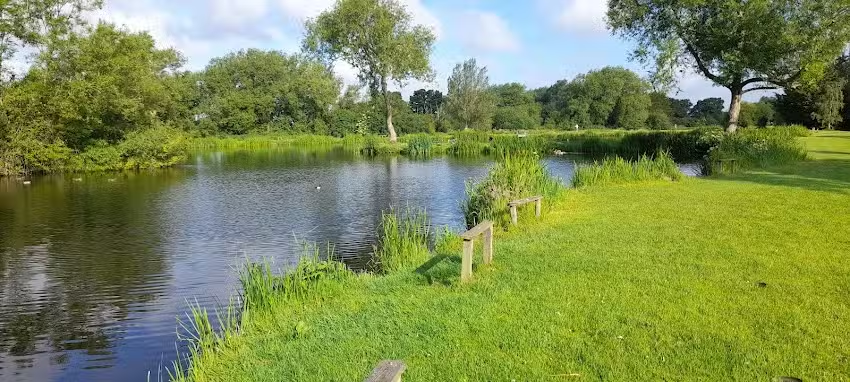
From the perspective of comfort and surroundings, many visitors describe the lakes as peaceful, tidy and well maintained. Banks are looked after, access around much of the water is reasonable, and the overall impression is that care is taken to keep things in good order. This is not a highly manicured, theme-park-style venue, but it does present as organised and purposeful, with fishing as the central focus. The atmosphere is often mentioned as relaxing, which can be just as important as catch rates for anglers looking to unwind.
Customer service is a recurring positive theme, with repeated mentions of owners and staff taking time to talk through conditions, suggested tactics and safety considerations. This more personal approach can help new visitors feel at ease and is particularly encouraging for those who might be returning to fly fishing after a break. It also means that anglers who are less experienced with small stillwaters are given a fair chance to catch, provided they are open to guidance and willing to adapt to what the water demands on the day.
On the other hand, there are some limitations that potential customers should keep in mind. The focus on trout fly fishing means that this is not a venue with a wide range of other angling options such as coarse or predator fishing. Those who primarily fish for carp, pike or mixed coarse species will not find a broad spread of opportunities here. Likewise, because the waters can be technical at times, beginners who expect instant results without much adjustment may find the learning curve steeper than at some heavily stocked commercial pools.
Facilities beyond the core fishing offer remain relatively modest. While visitors appreciate clean and quirky toilet arrangements and a quiet place to pitch up for a night, there is a clear difference between this site and a large-scale campsite with extensive infrastructure. For a short, fishing-centred visit this can be a positive, offering a more authentic, low-key feel. However, those who expect full holiday-park amenities may need to adjust expectations or treat the fishery as a day-ticket destination rather than a longer-stay base.
In terms of suitability, Mill Farm Trout Lakes tends to appeal most to anglers who want focused trout sport on compact waters, backed by helpful on-site advice and a relaxed, low-key setting. Fly fishers who enjoy fine-tuning their depth, experimenting with nymphs and attractor patterns, and working for each take are likely to find plenty to enjoy here. Those who prefer simpler, mixed-species venues may see the specialisation as a drawback, but for dedicated trout anglers, that same focus is a significant part of the fishery’s character.
Although Mill Farm Trout Lakes is not a shop for tackle in the way a traditional angling retailer would be, it still sits within the wider landscape of fisheries and angling businesses that attract people searching online for terms such as fishing lakes, trout fishery and fly fishing. Many visitors will research both day-ticket waters and retailers when planning their next trip, comparing venues that offer quality sport with suppliers of fishing rods, fishing reels, fishing tackle and fishing bait. In that context, Mill Farm Trout Lakes acts as the place where all that gear is put to use, providing real-world conditions where anglers can test set-ups refined through advice from specialist shops.
For anyone considering a visit, feedback suggests that coming prepared with a good selection of nymphs, attractors and fry patterns, along with a reliable floating line and an open mind about tactics, will greatly enhance the experience. Making the most of the advice offered on arrival, keeping an eye on water clarity and being ready to adjust depth and speed of retrieve are all key to getting the best from the lakes. With expectations set around quality of sport rather than guaranteed high numbers, anglers are more likely to appreciate what the fishery does well while understanding where its natural limitations lie.
Ultimately, Mill Farm Trout Lakes presents itself as a compact, trout-focused fishery that prioritises strong, healthy fish, a calm setting and helpful on-site support over volume, high-density stocking or an extensive list of non-angling facilities. That mix will not suit every type of angler, but for those looking for a place to refine their fly fishing, enjoy clear-water takes and battle fit trout within a friendly, low-key environment, it offers an experience that many people consider well worth the trip.