Saltire Sailing
BackSaltire Sailing operates from Largs Yacht Haven and focuses on practical sail training, adventure holidays and yacht services for people who want to gain real confidence at sea rather than simply tick a certificate box. The company positions itself between a traditional sailing school and a small adventure operator, combining formal RYA tuition with informal coaching, shared living on board and relaxed but safety-conscious skippering. For prospective customers this mix can feel reassuring, especially if you are new to sailing and want to progress from first steps to more demanding passages in a supportive environment.
A striking feature of Saltire Sailing is how much of the experience revolves around the skipper-instructor, Chris, whose teaching style is repeatedly described as enthusiastic, patient and good-humoured. Clients mention that he listens carefully to what people want from their time afloat, then adjusts the plan so each person gets a chance to practice what they need, whether that is basic helming, sail trim, or more advanced passage planning. This human element matters as much as the yacht itself; for many first-time crew, a calm instructor who explains things clearly can make the difference between feeling overwhelmed and finishing the week eager for the next step.
The core of the business is RYA sail training, delivered on the sheltered yet varied waters of the Firth of Clyde, with routes commonly taking in places such as Ardrossan, Inverkip and the Cumbrae islands. Courses like Competent Crew and Day Skipper are taught not just to the minimum standard, but with additional techniques and practical tips beyond the syllabus, according to several comments from past students. This approach benefits those who want to feel genuinely ready to take responsibility on a yacht, rather than passing an exam and still feeling unsure when conditions change.
Beyond formal training, Saltire Sailing promotes a range of adventure-style trips along the west coast of Scotland, including extended voyages such as an eight‑day St Kilda itinerary and other multi‑day coastal cruises. These trips appeal to sailors who have some basic skills and want to put them to use in more remote waters, under the guidance of a professional skipper. They can be attractive for people considering future yacht charter or ownership, as they provide a realistic sense of what longer passages and living aboard actually involve.
Another strand of the business is private charter, where a group can book the entire yacht with a skipper for several days and shape the pace and destinations to suit their own preferences. This is useful if you want a family holiday that also functions as informal training, or if a small group of friends wants to work on specific skills without strangers on board. Because the group composition is fixed, the skipper can tailor manoeuvres, night sailing or more challenging pilotage to the comfort level of the people on deck.
Saltire Sailing also offers own‑boat skippering and tuition, sending an instructor to join you on your vessel for focused coaching and support. For new owners who have just taken on a yacht and feel daunted by handling, docking and coastal passages, this service can help bridge the gap between theory and real‑world seamanship. Having an instructor on your own boat means you learn using your actual layout, electronics and sail plan, which can be more efficient than transferring skills from a school yacht.
On the maintenance side, the company promotes yacht engineering and care, aiming to keep vessels “ship shape” with technical work that complements the training side of the operation. For many sailors, mechanical reliability, rig checks and routine servicing are just as important as confidence in sail handling, and combining these elements under one provider can be convenient. It suggests that Saltire Sailing sees sailing not only as a leisure activity but as a complete package of vessel management, seamanship and ongoing support.
A consistent theme in client feedback is the emphasis on safety and clear communication. Customers refer to safety drills, structured briefings and repeated reminders on how to avoid common risks, which helps less experienced crew understand both what to do and why it matters. This is particularly important on RYA courses, where participants may range from complete beginners to those with prior powerboat or dinghy experience, and a strong safety culture allows mixed-ability crews to work together constructively.
Many people commenting on their time with Saltire Sailing highlight the atmosphere on board as relaxed but purposeful, with plenty of hands‑on practice. Rather than students standing back while the skipper does everything, people are encouraged to helm, handle lines, raise and reef sails, and manage mooring manoeuvres repeatedly until they feel comfortable. Living on the yacht for several days means there is time to build familiarity with the boat, bond with fellow crew and gradually take on more responsibility as confidence grows.
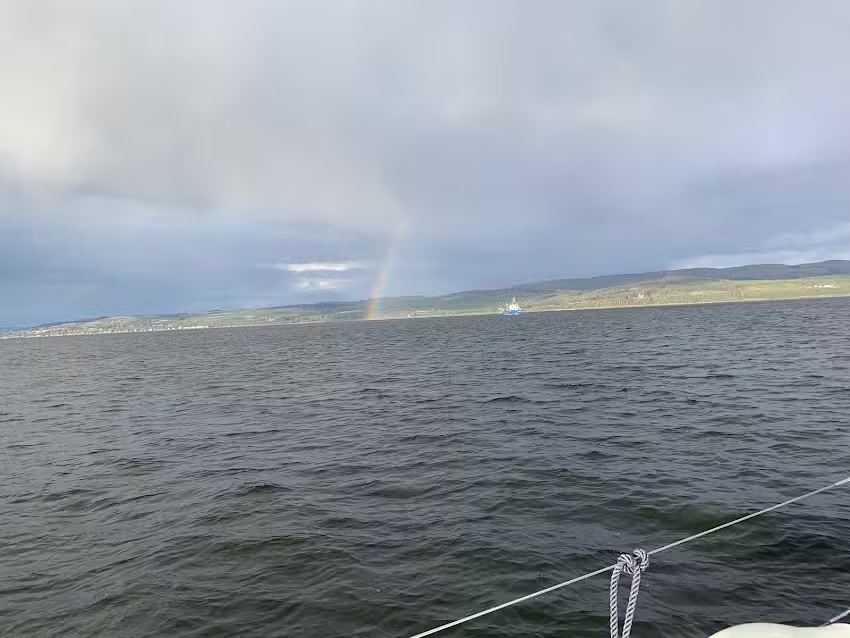
For those interested in sailing holidays, the itineraries from Largs offer a mix of sheltered waters and more exposed stretches, giving a realistic sense of how wind and tide change the feel of a passage. One of the attractions of the Clyde and the wider west coast is the variety of anchorages and harbours within a few hours’ sail, and Saltire Sailing makes use of this by varying routes according to weather and crew goals. Occasional wildlife encounters, such as dolphins around the bow or coastal scenery at sunrise, are often mentioned as memorable moments that add to the training experience.
However, prospective clients should also consider some practical limitations. As a small, focused operator, availability on the most popular courses and peak‑season adventure trips can be limited, requiring early booking and some flexibility with dates. The same close‑knit feel that many people enjoy means there is usually one principal skipper‑instructor, so if you prefer a larger school with multiple instructors and simultaneous courses, this setup may not match your expectations. Additionally, shared accommodation on board, with the need to muck in with cooking and cleaning, will suit those who enjoy a communal environment but may not appeal to travellers seeking more privacy.
Weather is another factor that inevitably shapes the experience. The Scottish west coast is known for rapid changes in conditions, which can be ideal for learning reefing decisions and heavy‑weather tactics but may feel demanding for absolute beginners who expect calm seas every day. Course plans are necessarily flexible, and while this adaptability can lead to valuable real‑world practice, it also means you cannot rely on visiting specific ports or islands on set dates. Those who arrive prepared for a mix of sunshine, rain and stronger winds are likely to get the most from the environment.
In comparison with larger sailing schools around Largs Yacht Haven, Saltire Sailing presents itself more as a bespoke, family‑run operation than a volume training provider. This comes through in the way trips are marketed as “your adventure, your way” and in the willingness to adapt routes and teaching focus around each crew. For some customers this highly personal approach is a clear advantage, while others may prefer the structure, multiple‑boat fleets and broader date options of bigger schools.
Online presence, including social media posts and shared images, reinforces the impression of a small team genuinely invested in their students’ progress. Short video clips and posts show manoeuvres under way, crew at the helm and scenic anchorages, giving potential clients a realistic sense of what a week aboard looks like. For anyone weighing up whether to commit to a sailing course or RYA training here, these glimpses can help assess whether the style and pace fit your expectations.
Prospective customers who value structured learning, clear explanations and a strong safety culture are likely to appreciate what Saltire Sailing offers. People looking mainly for luxury accommodation with minimal participation may find the hands‑on, shared‑effort approach less suited to their priorities. As with any provider, the most satisfied clients tend to be those whose expectations align with the reality: an active, practical and often weather‑dependent experience focused on building real seamanship rather than simply providing transport between picturesque harbours.
For anyone considering yacht charter, learn to sail holidays or progressing along the RYA pathway, Saltire Sailing stands out for combining accredited instruction with a personal, small‑team atmosphere. The strengths lie in engaged teaching, flexible itineraries and the chance to gain meaningful miles under guidance, while the trade‑offs are limited availability, close‑quarters living and the inherent unpredictability of Scottish coastal weather. Taking these factors into account will help potential clients decide whether this particular style of training and adventure sailing is the right fit for their next step afloat.