Straid Fishery
BackStraid Fishery presents itself as a dedicated trout venue where attention to fish care and a structured membership set-up define much of the customer experience. Anglers who visit typically highlight how seriously the team takes management of the lakes and the welfare of the stock, which is a core concern for anyone investing time and money in quality angling. For potential visitors looking for a consistent stillwater venue rather than a general tackle retailer, this fishery offers an environment focused on the fishing itself rather than on a large on-site shop or peripheral services.
One of the strengths most often mentioned by visitors is the way the fishery is run on a day‑to‑day basis. Management is frequently described as hands‑on and knowledgeable, with staff who understand the needs of regular trout anglers and who are visible around the lakes. The emphasis on keeping stock in good condition, enforcing sensible rules and maintaining order around the water all contribute to the perception of a professionally operated venue. For anglers accustomed to visiting heavily pressured waters, the reassurance that fish care is taken seriously can be a decisive factor when choosing where to spend a day.
Another positive point is the friendliness and approachability of the team. Several anglers remark that staff are easy to talk to, willing to help newcomers and happy to offer guidance on techniques and tactics suited to the venue. That atmosphere can be especially valuable for those who are moving beyond basic coarse fishing into dedicated trout angling, or for sea anglers and coarse anglers looking to broaden their experience in a controlled environment. A welcoming attitude makes it easier to ask questions about patterns, depths and retrieve styles that work on the day, and this is something potential visitors may appreciate.
For newcomers or families, one of the defining features of Straid Fishery is the availability of coaching on site. Some visitors arrange structured sessions with experienced instructors, which can transform an uncertain first outing into a confidence‑building day. Reports of lessons where complete beginners, including children, not only learn the fundamentals but also manage to land several fish suggest that tuition here is more than a token add‑on. A well‑organised lesson can cover safe casting, fish handling, etiquette around the water and basic fly selection, which helps new anglers progress far more quickly than they might on their own.
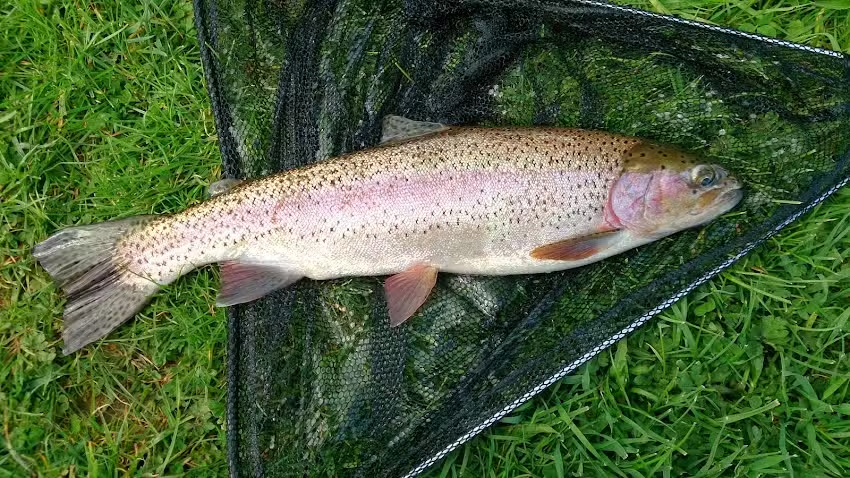
The presence of both rainbow trout and wild brown trout adds extra interest for more experienced anglers who value variety and a more natural feel to their fishing. Having mixed stocks means different approaches may be needed: rainbows can reward more mobile searching tactics, while wild browns often demand a more subtle presentation and careful observation of the water. Anglers who enjoy experimenting with different patterns and retrieves may find this variety appealing, particularly when conditions vary through the seasons. In that sense, Straid Fishery can serve as a useful regular venue for refining technique rather than just a one‑off visit.
From an access and security perspective, Straid Fishery operates a members‑only gate system that remains locked, with access codes provided to those who are registered. This model can be attractive for anglers who prefer a quieter, more controlled environment without the comings and goings often associated with open‑access waters. Knowing that entry is restricted can encourage a sense of community among regulars and may contribute to better behaviour around the lake, reduced litter and an overall safer experience for those bringing families or younger anglers.
However, the same security measures can be less convenient for occasional visitors, especially those travelling from further afield or trying the venue for the first time. Access codes and locked gates mean that clear communication with the fishery is essential, and any delay in meeting a member of staff at the gate can set a frustrating tone for the day. Prospective visitors would be wise to confirm arrangements well in advance and allow extra time so that any initial access issues do not cut into actual fishing time. For anglers used to arriving early or staying flexible with their hours, the need to coordinate entry is something to factor into their planning.
While many anglers speak highly of the condition of the water and the way the fishery is maintained, there are also comments indicating that weed management is not always at the same standard across all parts of the venue. On some visits, particularly when using boats on the larger lake, anglers have encountered dense weed growth that made navigation and effective fishing difficult. In extreme cases, attempting to return a boat to the jetty became a prolonged effort, with the propeller constantly fouled and no clear channels through the weed. Experiences like this can turn what should be a relaxed day on the water into a tiring and stressful exercise.
These reports do not appear to reflect every visit, and it is common for stillwaters to vary significantly depending on season, weather and how recently weed‑cutting has taken place. Nonetheless, such feedback suggests that Straid Fishery has periods when the larger water, and sometimes even the smaller lake, may feel overgrown for those relying on boat fishing. For shore anglers, heavy marginal weed can also limit the number of effective casting spots and make landing fish more awkward. Prospective visitors who prefer clearer open water might want to check on current conditions or focus on bank fishing where access is known to be better.
The contrast between positive feedback on fish welfare and critical remarks about heavy weed growth points to a venue that has strong fundamentals but faces ongoing challenges with maintenance on a larger scale. Managing weed effectively on a big water demands regular effort and resources, and the balance between preserving habitat and providing comfortable fishing is not always easy to strike. Anglers who value natural features and cover for fish may appreciate some weed, while those focused on comfortable boat fishing and uninterrupted drifts may find it more of a hindrance. Straid Fishery appears to sit somewhere between these expectations, and reactions depend heavily on what each visitor considers acceptable.
For potential customers, it is also important to understand what Straid Fishery is not. Unlike a full‑scale retail outlet, it does not function as a large in‑store supplier of rods, reels and accessories, so visitors expecting a broad tackle showroom may be disappointed. Instead, it operates primarily as a dedicated fishery, where anglers arrive with their own equipment or with gear arranged in advance through lessons or club arrangements. Those specifically searching for a fishing tackle shop experience with aisles of merchandise, extensive racks of rods and shelves of accessories would need to combine a visit here with separate trips to local tackle shops or bait shops in the wider region.
From the perspective of search‑minded anglers, Straid Fishery is likely to be of interest to those looking for a settled venue for trout fishing rather than a broad‑spectrum fishing shop. Anglers searching for terms such as fly fishing lake, trout fishery, fly fishing lessons or family fishing are more aligned with what this site offers. It caters especially well to individuals and families who want time on the water, instruction where needed and an emphasis on fish welfare rather than a purely commercial retail experience. Understanding this distinction helps set realistic expectations before arrival.
Because of this focus, visitors typically arrive with their own core kit: fishing rods, appropriate fishing reels, a selection of fishing lures or flies and the necessary terminal tackle. For those upgrading their equipment, online tackle shops and dedicated fishing gear suppliers will still play a role, but Straid Fishery becomes the place where that gear is put to the test in real stillwater conditions. Regulars may fine‑tune their set‑ups over successive visits, adjusting lines, leaders and patterns according to the behaviour of the stock and the time of year, using the fishery as a practical training ground.
The emphasis on structured angling also means that Straid Fishery can appeal to those who are transitioning from general coarse or sea angling into more specialised fly fishing. Coaching and a supportive atmosphere help bridge the gap between casual interest and more technical skills. With both rainbows and wild browns present, anglers can gradually progress from basic casting and retrieve to more refined presentations, learning how water temperature, light levels and insect activity influence fish behaviour. For many, that process is as valuable as the number of fish landed.
On the less positive side, some visitors have expressed disappointment that the site does not always appear as meticulously maintained as its reputation might suggest. Reports describing extensive weed, difficulty using boats and a general impression that parts of the water require more work reflect genuine concerns. While such critiques are often tempered by acknowledgment that the owner is personable and keen to help, the practical impact on the fishing day remains significant. Prospective customers should therefore view Straid Fishery as a venue with notable strengths but also with areas that may fluctuate in quality over time.
For those deciding whether to visit, the balance of feedback suggests that Straid Fishery is best suited to anglers who prioritise fish welfare, instruction opportunities and a semi‑private environment over perfectly manicured banks or guaranteed weed‑free boating. Families, beginners seeking coaching and regular trout anglers who value a club‑style atmosphere may find the venue a worthwhile long‑term option. On the other hand, anglers who place a premium on effortless boat use across a vast open lake or who expect a full fishing shop attached to the water may feel their needs are only partially met, particularly during periods of heavy weed growth.
Ultimately, Straid Fishery stands out as a dedicated trout venue with a strong focus on stock care, a supportive team and opportunities for structured learning, set against the backdrop of a large water that can be both a strength and a challenge. Its membership model, emphasis on security and mix of rainbow and wild brown trout will appeal to a particular type of angler who values a more contained, community‑orientated setting. For potential visitors prepared to confirm access arrangements and to check on current weed conditions, it offers the prospect of rewarding stillwater sessions and the chance to develop skills over time rather than just ticking off another commercial fishery.