
Sugar Mill Ponds
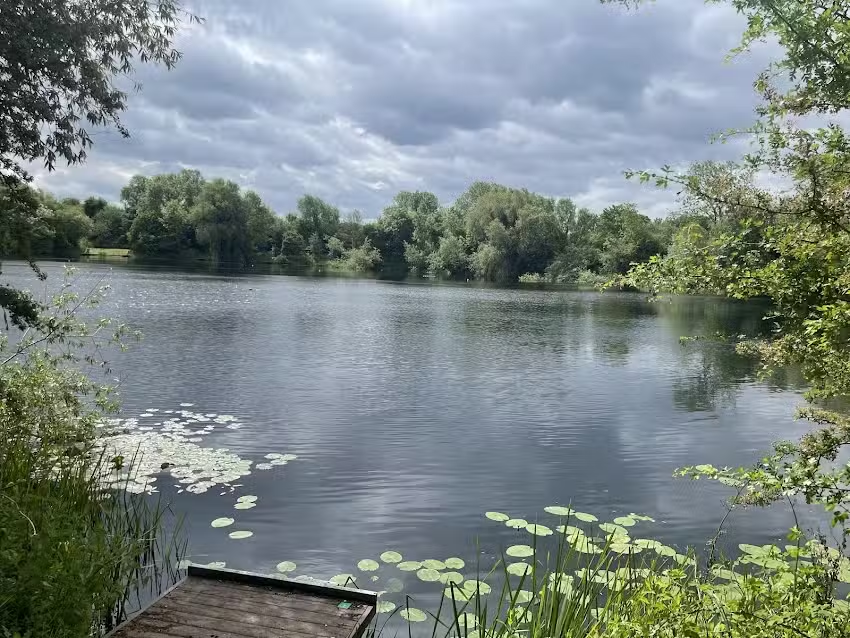
BackSugar Mill Ponds in Rawcliffe Bridge is a compact nature reserve and angling venue built around two sizeable ponds, reedbeds and open grassland, attracting walkers, families, birdwatchers and coarse anglers in roughly equal measure. From a visitor’s perspective it functions less as a conventional park and more as a low‑key fishing lakes and wildlife hub, supported by a local friends group and an angling club that work to keep paths, swims and habitats in good order.
The site was once a derelict industrial area but has been reshaped into an accessible space with well‑made paths circling the water, simple seating and clear views over the ponds, which makes it easy for newcomers to orientate themselves. For anyone thinking of bringing tackle, this layout means most of the available coarse fishing pegs are within a short, level walk of the car park, though seasoned anglers may find that the compact size limits the sense of getting properly “away from it all”.
One of the strongest points in favour of Sugar Mill Ponds is the balance between quiet recreation and active angling. Walkers frequently describe it as peaceful and tidy, with very little litter and a generally respectful atmosphere, while anglers note that there are purpose‑built fishing posts and a visible presence from the angling community. For a prospective visitor this means dog walkers, families and people arriving specifically for fishing venues are used to sharing the space, and conflicts between uses appear rare.
Setting, layout and first impressions
Approaching Sugar Mill Ponds can feel slightly tucked away, with some reviewers mentioning that the turning off the main road is easy to miss and that the entrance runs along a small lane before opening into limited parking. This relative seclusion does give a sense of privacy once on site, but it can be mildly frustrating for first‑time visitors who rely heavily on sat‑nav and expect clearer roadside signage. Once parked, however, the route onto the ponds is straightforward and the circular paths quickly become obvious.
The site itself is compact, and most people complete a circuit of the two ponds within 20 to 30 minutes at a steady pace, which many walkers describe as “short but sweet”. For anglers this compactness is a mixed blessing: access to swims is easy, and there is a feeling of a contained, manageable fishing pond environment, but anyone hoping for a long shoreline or multiple secluded bays might find the water a little limited compared to larger carp fishing complexes. The presence of an adjacent canal towpath adds extra length for walking and potentially more varied canal fishing nearby, which is a useful extension if the ponds themselves feel too small.
Benches around the water give simple spots to rest, watch wildlife or set down some kit, and visitors regularly comment that the area is in good order, with wooden seats free from graffiti and a noticeable absence of dog fouling. This suggests that local users and volunteers take pride in the space and that the environment for bank‑side angling is relatively clean and pleasant compared with more neglected day‑ticket waters.
Angling facilities and access
For potential customers interested primarily in fishing rather than walking, Sugar Mill Ponds offers purpose‑built fishing posts around the water and a clear angling presence, including organised matches and a structured relationship with the nearby canal. Visitors have referred to “fishing posts” and a strong showing of anglers on the bank, and local angling bodies mention controlled access from the ponds to the Aire & Calder Navigation, where new fishing stations are being installed on other stretches. This indicates that Sugar Mill Ponds functions not just as a casual fishing spot but as part of a wider network of managed coarse waters.
An important operational detail is the gated access to the canal path via the ponds, which is controlled by Sugar Mill Ponds Angling Club. The gate is locked outside set hours to reduce illegal night night fishing and vandalism, and this has been introduced specifically to protect the site, its infrastructure and its wildlife. For anglers this adds a feeling of security and shows that there is active management on site, but it also means that very early or late sessions are restricted and that those who prefer unregulated, round‑the‑clock coarse fishing lakes may find the rules more structured than they would like. Notices and contact numbers are provided on the gate for emergencies, which adds reassurance but also underlines that this is not a completely open access water.
Day tickets for local canal stretches are clearly available through village shops and on the bank, at modest prices, and this reinforces the image of a budget‑friendly environment for leisure rod fishing. While the ponds themselves are not heavily promoted as a commercial day ticket fishery in the way that some large complexes are, the overall package – maintained pegs, linked canal access and a strong local angling club – positions Sugar Mill Ponds as an accessible entry point for coarse anglers who value community oversight over highly competitive specimen waters.
Wildlife, environment and shared use
Sugar Mill Ponds markets itself as an “oasis of wildlife in a sea of intensive agriculture”, and visitor comments support that claim, mentioning ducks, geese and a variety of birds, as well as seasonal highlights such as water lilies. Birders and families remark on the enjoyment of spotting wildlife around the ponds and canal, making it an attractive choice for those who want to combine a short walk with a bit of casual nature watching, whether or not they are interested in fishing holidays or angling in a serious way.
The environmental uplift from the site’s industrial past is notable: under the Changing Places programme, the old clay pits and derelict land were turned into open water, reedbeds and fen habitat. This gives anglers and walkers a more varied landscape than a purely engineered commercial fishery and explains why reviews often emphasise tranquillity and natural feel rather than just the presence of pegs and platforms. The existence of a friends group, acknowledged on on‑site notices, appears to contribute to ongoing maintenance and habitat work, which is important for long‑term water quality and fish health as well as for visiting wildlife.
Shared use does, however, create a few practical compromises. Dog walkers praise the area as quiet and convenient, but some comments point out that the full loop can be completed in under half an hour, which may disappoint those looking for a long outing. For anglers, the presence of dogs and children can introduce occasional bank‑side disturbance, particularly around the more obvious pegs, though reviews suggest that most visitors behave responsibly, keeping dogs on leads and respecting the water’s edge. Prospective customers who prefer very secluded specimen carp or match fishing lakes with tightly controlled access will need to decide whether this more informal, community‑orientated setting suits their expectations.
Strengths for anglers and casual visitors
For coarse anglers who prefer relaxed, low‑pressure environments, Sugar Mill Ponds offers several positives. Access is straightforward from the parking area, the banks are generally level, and the presence of defined pegs and an active angling club reduces the likelihood of unregulated behaviour that sometimes affects more remote fishing lakes UK. The restricted gate system, combined with visible local pride and regular upkeep, tends to create a safe, orderly atmosphere on the bank during permitted hours.
Families and new anglers may appreciate the way the ponds sit between a nature reserve and an angling water. Kids can enjoy short circuits, wildlife spotting and pond dipping, while adults test the water for a few bites without committing to a full‑day trip at a big commercial coarse fishery. The canalside extension offers the option to mix pond bank fishing with a longer linear walk, which can suit mixed groups where only some members want to carry tackle, and others simply want a stroll and a picnic. For local residents in particular, this combination makes Sugar Mill Ponds a versatile, everyday leisure option rather than a once‑a‑year destination.
From the perspective of potential customers comparing different angling locations, the low‑key character and community stewardship stand out. Reviews consistently highlight the cleanliness, absence of vandalism and friendly interactions with other users, including photographers, dog walkers and fellow anglers. While not a heavily branded carp lake with on‑site tackle shops or café facilities, Sugar Mill Ponds offers a more understated, natural experience that may appeal to those who value simplicity and quiet surroundings over amenities.
Limitations, drawbacks and who it suits
Balanced against these strengths, there are some limitations that potential visitors should consider. The compact size of the site means that both the walk and the water can feel limited, particularly to those used to large reservoir‑style fishing waters or extensive nature reserves. Several walkers note that the circuit is relatively short, and some anglers may reach a similar conclusion about the variety of swims and water to go at, especially at busier times when the more attractive pegs are already taken.
Access, while straightforward once found, can be slightly confusing on the first visit due to modest signage and the narrow lane leading to the car park. This is a minor inconvenience rather than a major flaw, but it could be relevant for those hauling larger amounts of fishing tackle or planning to meet friends who are unfamiliar with the area. Additionally, the locked‑gate policy on canal access and the absence of open night coarse fishing sessions will not suit anglers who prefer long, flexible hours or who focus on after‑dark campaigns for larger fish.
Facilities on site are deliberately simple, with no mention of permanent toilets, café or tackle shop immediately adjacent to the ponds, and visitors should plan accordingly, especially when bringing children or staying for longer sessions. The focus here is clearly on informal recreation and community‑led angling rather than a full‑service day ticket carp fishery, which means that those seeking stocked‑every‑season, high‑density carp waters with on‑site retail and food will need to consider whether Sugar Mill Ponds aligns with their priorities. On the other hand, for budget‑conscious anglers, dog owners and local residents looking for a clean, friendly fishing lake with a strong wildlife element, the simplicity can be part of the appeal.
Overall, Sugar Mill Ponds presents itself as a modest but well‑cared‑for combination of nature reserve and angling water, shaped by community effort and ongoing management rather than commercial scale. Prospective visitors weighing up where to spend their next few hours with rod, reel or merely a pair of walking shoes will find a setting that offers tranquillity, tidy banks and a clear structure to protect wildlife and infrastructure, balanced by a small footprint, limited facilities and set access hours. For many, those trade‑offs will be acceptable, particularly if what they want is an easily reached, quietly run UK fishing venue with room for both people and nature to share the banks.