Take A Friend Fishing
BackTake A Friend Fishing is a national initiative that encourages anglers in the UK to share their passion for the sport by taking someone new or lapsed out on the bank, supported by time-limited free fishing opportunities and promotional campaigns. The organisation operates from an office base rather than a traditional tackle shop, so it functions more as a promotional and administrative hub than a retail outlet, which is important for potential visitors to understand. Its core role is to remove barriers for newcomers, offer clear information about how to get a temporary licence, and motivate experienced anglers to introduce friends and family to the water.
Unlike a conventional shop selling fishing rods, fishing reels or fishing tackle, Take A Friend Fishing focuses on awareness and participation. It typically works in partnership with national angling bodies and licence authorities, so that during specific campaigns people can obtain a short-term permit at no extra charge when accompanied by a licensed angler. This structure means that anglers do not come here to browse aisles of fishing lures, fishing bait or fishing gear, but rather to access online information, read campaign details, or handle administrative questions. For customers who are expecting a physical retail experience, this difference can be a drawback, but for those seeking a straightforward way to introduce someone to angling, it is exactly what they need.
For anyone curious about coarse, game or sea fishing but unsure where to start, the platform offers explanations of how to get involved, what paperwork is needed and what kind of waters are eligible during each campaign period. While Take A Friend Fishing is not a direct source of fishing equipment such as carp rods, spinning reels or feeder rods, its content often signposts newcomers towards venues, clubs and resources where they can find guidance. This emphasis on lowering the first barrier is particularly valuable in a hobby that can appear technical and rule‑heavy to beginners. At the same time, experienced anglers benefit from having a clear, official framework when they decide to take a guest along.
A significant strength of Take A Friend Fishing is the simplicity of its central message: use your own enthusiasm to introduce someone else to angling. Campaigns are usually structured around key periods of the year, for example school holidays or bank holiday weekends, when people have more free time to visit lakes, rivers or canals. During these windows, a registered angler can invite a guest who receives a time‑limited permission at no additional licence cost, subject to terms and conditions. This arrangement can make a first outing far more affordable, especially for families who might otherwise hesitate to pay multiple licence fees before knowing whether the pastime suits them.
The initiative also tends to highlight responsible angling behaviour, including care for fish, respect for other water users and proper litter disposal. Newcomers who participate via Take A Friend Fishing often experience their first session under the supervision of someone with at least basic knowledge of local byelaws and club rules. This creates a more positive introduction than turning up alone with a newly purchased fishing rod and a bag of fishing bait and hoping for the best. It also fits well with broader efforts in the UK angling community to promote environmental awareness and fish welfare.
On the other hand, people researching Take A Friend Fishing sometimes find the information about campaign dates and eligibility a little time‑sensitive. Because offers are tied to specific periods, outside those windows the initiative may not currently be active, which can lead to confusion if someone encounters an older article or social media post. Potential participants need to read the most recent details carefully to confirm whether a promotion is live, and which dates and waters are covered. For users who like a year‑round, open‑ended scheme, this time‑limited nature is a limitation.
Another limitation is the lack of direct, face‑to‑face service at a counter, which some anglers still value highly. There is no shop floor where staff can physically show the difference between a light spinning rod and a heavy beachcaster, or compare various fishing lines, hooks and terminal tackle. Those who want personal advice on choosing their first set‑up still need to visit a local tackle shop or use an online retailer. Take A Friend Fishing instead assumes that the experienced friend will provide that practical guidance: suggesting suitable fishing tackle, advising on safe casting and explaining why a certain rod length or casting weight matters on a chosen venue.
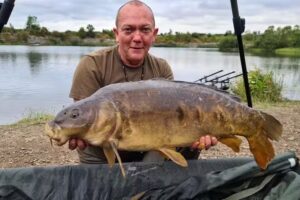
Many anglers responding to the initiative appreciate its focus on accessibility. They point out that persuading a friend to wake up early, invest in fishing gear and buy a licence becomes easier when the guest permit is free for a day or a weekend. For carp anglers, lure anglers and coarse anglers alike, this can be a chance to share memorable sessions and perhaps create a new long‑term fishing partner. For families, it often becomes an opportunity for parents to take children out to a local lake with minimal red tape. These positive experiences underpin the reputation of the scheme as a friendly and inclusive way into angling.
At the same time, some potential users highlight that the initiative does not cover everything. It does not replace the need to understand local club rules, obtain day tickets where required, or comply with closed seasons and catch limits. It also does not provide physical items such as landing nets, unhooking mats or fishing poles, which remain the responsibility of the host angler or the guest. People who expect a full package – licence, equipment, tuition and venue booking – may find that Take A Friend Fishing solves only the administrative part of the puzzle. As a result, it is most effective when used by someone already engaged in the sport who is happy to organise the rest.
In terms of information quality, the organisation’s communications tend to be clear, concise and aimed at both regular anglers and newcomers. The language avoids jargon where possible and explains key steps in simple terms, which can be reassuring for someone unfamiliar with the idea of rod licences or catch‑and‑release rules. There is, however, less in the way of technical content about specialist areas such as carp fishing, fly fishing or sea fishing, as the site is not designed to be a technical manual. Anglers interested in fine details of rigs, bait preparation or advanced techniques will still need to rely on books, forums, clubs or dedicated tackle retailers.
One aspect that stands out is how strongly the initiative depends on community goodwill. Its success relies on thousands of individual anglers deciding that they want to share bank space, tackle and time with someone who may never have held a rod before. This community‑driven model has clear advantages: it keeps costs low and allows beginners to experience real‑world angling instead of a staged demonstration. However, it also means the quality of each experience can vary depending on the host’s knowledge, choice of venue and patience. Someone who is taken to a well‑stocked water with simple float tactics and basic coarse fishing tackle is likely to have a much more enjoyable day than a guest taken to a very challenging, low‑stock venue with highly technical methods.
From a potential customer’s point of view, Take A Friend Fishing is most attractive if you either already know an angler prepared to host you or you are an angler keen to introduce someone else. It is not intended as a standalone service for people with no contacts in angling who simply want to buy a session. Those users might be better served by commercial fisheries offering day‑ticket tuition or by angling coaches who provide equipment and instruction. For the specific role of making it easier and cheaper for an angler to invite a guest, however, this initiative does what it sets out to do.
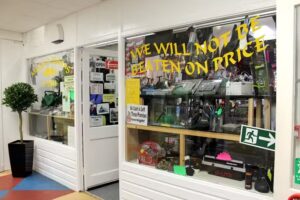
Because Take A Friend Fishing is primarily an online and campaign‑based operation, the physical office address is more of an administrative location than a destination for walk‑in visitors. Anglers are expected to use the website to obtain information, register when necessary and check current dates. Someone turning up in person expecting a shop full of fishing tackle, bait and fishing accessories would likely be disappointed. Understanding this distinction is essential before deciding how this business fits your own needs as an angler or as a newcomer.
Overall, Take A Friend Fishing offers a focused service: encouraging participation in angling by creating short windows where newcomers can try the sport under a friend’s supervision without additional licence cost. It does not aim to compete with traditional tackle shops or online retailers offering fishing rods, reels, lures and fishing accessories, and it does not replace the guidance of a professional coach. For people who are already in the angling community and want to share their hobby, it can be a practical tool. For those seeking equipment, in‑depth tuition or a full commercial experience, it should be seen as one piece of the wider angling landscape rather than a comprehensive solution.