
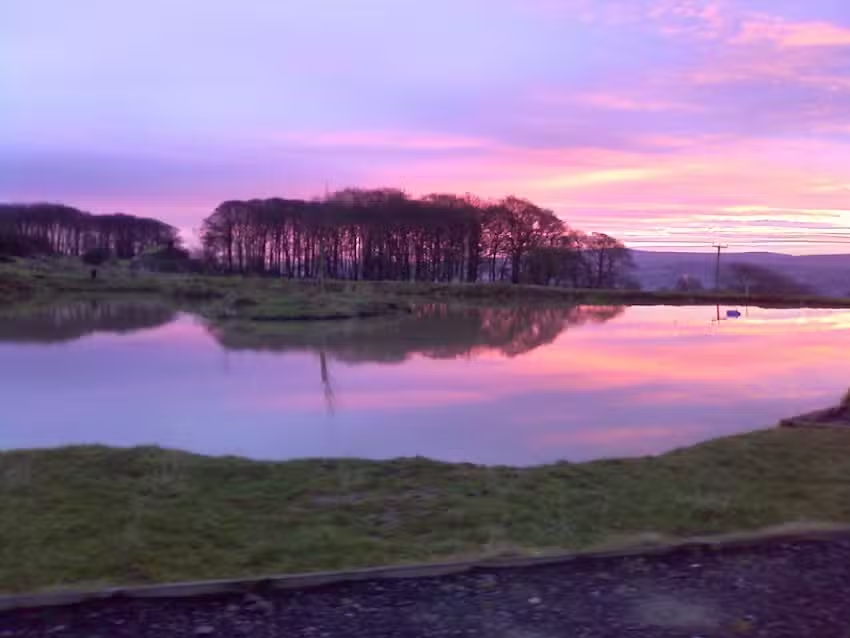
The Rising Fishery
BackThe Rising Fishery is a small, independent coarse and trout venue that aims to give anglers a straightforward day of fishing without unnecessary fuss. Set around intimate waters rather than vast reservoirs, it tends to appeal to those who enjoy working a peg carefully, watching for subtle takes and valuing a quiet, no‑nonsense angling session. Regulars describe it as a place where you can focus on your casting and presentation, rather than battling crowds or complicated rules, and that makes it attractive to anyone who wants to refine technique as much as chase a heavy bag.
From a facilities perspective, The Rising Fishery combines fishing lakes with a modest café on site. The café is basic, with a limited range of snacks and drinks rather than a full menu, and this is worth bearing in mind for visitors planning a long session. Some visitors have arrived expecting a more fully stocked tackle or refreshment set‑up and found only a few items available, so it is sensible to bring your own food and core tackle essentials. The upside is that this more stripped‑back approach keeps the focus firmly on the water, and anglers who like a simple, functional base rather than a commercial complex may see this as a strength.
The trout lake is often mentioned as the standout feature, especially by those who focus on fly fishing. Anglers report that the trout water is relatively deep, with comments noting depths of around 18 feet straight down in places, so successful fishing often means working from the bottom upwards rather than assuming a shallow, cruising layer. That depth allows a range of techniques: sinking lines, intermediate lines and weighted patterns can all come into play, and those who understand how to count down their flies and search the full water column often fare best. For anyone keen to practise stillwater tactics with a fly rod, this layout offers a useful training ground.
Positive feedback highlights that the trout stock, when recently topped up, provides lively sport. Several anglers mention taking multiple rainbow trout in a session, with typical fish around the 2 lb mark, giving satisfying sport on light fly fishing tackle without becoming unmanageable for newcomers. For many visiting fly anglers, a day here can be about honing accurate casting, experimenting with different retrieves and understanding how trout respond in a deeper, compact lake. When the water is fishing well, it can suit both more experienced rods and those returning to the sport after a break, offering confidence‑boosting action and a chance to rebuild skills.
There is, however, a more critical side to the feedback, and potential visitors should take it into account. Some recent visitors report sessions on the fly pond where they saw no visible signs of fish: no movement, no rises and no takes over several hours, despite paying for day tickets at a level they felt did not match the experience. These anglers felt that stocking levels were low at the time of their visit and would have appreciated more upfront communication about the current state of the water. For customers planning a dedicated trip focused on fly fishing for stocked trout, this variability can be frustrating, especially if they are travelling specifically for that water.
Maintenance of the banks and paths around the fly pond also emerges as a key theme in visitor opinions. Some families and beginners have found the banks noticeably overgrown, both at the water’s edge and behind the angling positions, which can make casting with a fly fishing rod more difficult. Overhanging bushes and vegetation snagging back casts have led to lost flies and a sense of restricted access to certain pegs. For seasoned anglers used to tight, natural venues this may not be a major issue, but for those bringing children or people new to fly fishing, it can add an unwelcome layer of difficulty at exactly the stage when they need space and simplicity.
Water quality on the fly pond is another mixed point. Some visitors describe the water as brown or cloudy, with no ability to see fish or any obvious signs of life, which has contributed to the impression that the pond was not fishing well at the time of their visit. While coloured water does not always mean poor fishing, it can reduce confidence, especially for beginners who rely on visual cues and expect clearer conditions on a small stillwater. When this is combined with a lack of bankside tidying, it can leave first‑time visitors feeling the venue needs more regular upkeep to justify day ticket prices.
The on‑site café, while useful as a shelter and social hub, receives mixed comments. On the one hand, it offers a place to sit down, get a drink and warm up between casts, which is welcome on colder days. On the other, some visitors have been disappointed to find only a very limited selection available, with reports of just a couple of packets of crisps on offer and no substantial food later in the day. There are also occasional remarks suggesting that the atmosphere in the café depends heavily on what the owner is doing at the time, with some anglers feeling they were intruding if they arrived during a moment when other tasks were underway.
Customer service at The Rising Fishery is generally described in two very different ways, and this contrast is important for prospective visitors. Some anglers note that the welcome on arrival is friendly and straightforward, with helpful staff who are happy to explain ticket options, suggest areas to try and chat about how the water has been fishing. For these visitors, the personal touch and informal feel are part of the appeal, creating a relaxed environment where questions about techniques, such as which trout flies or which coarse fishing rigs to try, feel easy to ask.
Others, however, recount experiences where they felt the owner or staff were distracted or less engaged, particularly in the café. A few visitors say they did not receive much advice about the current state of the fly pond, especially regarding stocking levels or recent catches, which led to disappointment once they realised the water was quiet. From a potential customer’s perspective, this inconsistency means expectations should be set carefully: when staff are available and communicative, the visit can feel personal and welcoming, but there is also a risk of a less interactive experience on busier or less convenient days.
For families and newcomers, The Rising Fishery presents both opportunities and challenges. On the positive side, a small, self‑contained venue can feel less intimidating than a large commercial complex, and children may enjoy the sense of being close to the action rather than spread out along a huge reservoir bank. Parents who are already comfortable with coarse fishing or fly fishing may find it a suitable place to introduce youngsters to casting, fish care and basic watercraft, provided they choose a day when the banks are manageable and the water is reasonably productive.
However, some families who chose The Rising Fishery specifically for a first fishing trip have reported leaving disappointed. Overgrown paths, coloured water and a lack of visible fish movement meant that their children had little practical success to keep them engaged, and losing flies to bankside vegetation added to the frustration. When combined with a perception that day ticket prices were relatively high for the experience received, these visitors concluded that the venue did not meet their expectations as a starter location. Prospective family visitors should therefore weigh up these factors and perhaps contact the fishery in advance to understand current conditions.
For dedicated fly anglers, the key question is whether the trout lake is currently well stocked and maintained. When recent stocking has taken place and the banks have been tidied, feedback suggests that the water can produce a satisfying day of action on rainbow trout, using a variety of patterns from lures to more imitative flies. The depth profile rewards anglers who are comfortable counting down sink‑rate, adjusting retrieves and changing lines to match where the fish are holding. In that sense, it can be a useful test of skill and a change from shallow, crystal‑clear fisheries where fish are constantly visible.
Conversely, if the fishery is in a period between stockings or maintenance cycles, the experience can feel markedly different. Anglers have noted that a lack of visible activity, combined with the deep, coloured water, can make it difficult to judge whether their tactics are at fault or whether there are simply fewer fish present than expected. Without clear bankside notices or up‑to‑date communication about stocking dates and current performance, this uncertainty can undermine confidence in the value of a day ticket. Serious fly anglers who track their venues carefully may therefore prefer to time visits based on recent word‑of‑mouth or direct contact, rather than turning up on spec.
Coarse anglers considering The Rising Fishery will value some of the same characteristics. The compact nature of the water encourages thoughtful, targeted fishing rather than casting blindly into a vast expanse. Those who enjoy working with float fishing or ledgering tactics can benefit from the quiet banks and the chance to concentrate without the bustle of a larger commercial complex. When fish stocks are healthy, this setting can reward patience and careful baiting, particularly for those who like to refine presentation and test different rigs over the course of a session.
At the same time, the reported issues with overgrown banks and unclear water conditions can affect coarse anglers too. Pegs that are obstructed by vegetation restrict casting options and can make landing fish more awkward, particularly if you are using longer match rods or more delicate set‑ups. For anglers who place a high priority on manicured swims, even platforms and consistently maintained access, this could be a downside. As with the trout lake, the overall impression is that the experience can be highly dependent on the timing of the visit and how recently maintenance has been carried out.
One consistent strength across many accounts is that The Rising Fishery offers a quieter, more personal atmosphere than highly commercial venues. Anglers who dislike crowds, loud banks or heavily pressured pegs often find it refreshing to fish somewhere that feels more low‑key. This can be particularly appealing for those practising new techniques, such as switching from spinning to fly fishing, or teaching a family member how to handle a rod and reel without feeling watched by a long line of neighbours. The setting encourages a slower pace, with time to work on timing, strike detection and fish care.
On balance, The Rising Fishery stands as a venue with clear strengths and equally clear areas for improvement. Its deep trout lake and compact layout can offer rewarding sport for anglers who understand how to adapt to the conditions, and at its best it provides enjoyable sessions with hard‑fighting rainbows and a relaxed, informal atmosphere. At the same time, concerns about inconsistent stocking, overgrown banks, variable water clarity and limited café provision mean that potential visitors should set realistic expectations and plan ahead. For those who value a simple, small‑scale fishery and are prepared to check on current conditions before travelling, it remains a viable option; for anglers who prioritise highly manicured banks, consistently clear water and extensive on‑site facilities, it may feel less suited to their needs.