
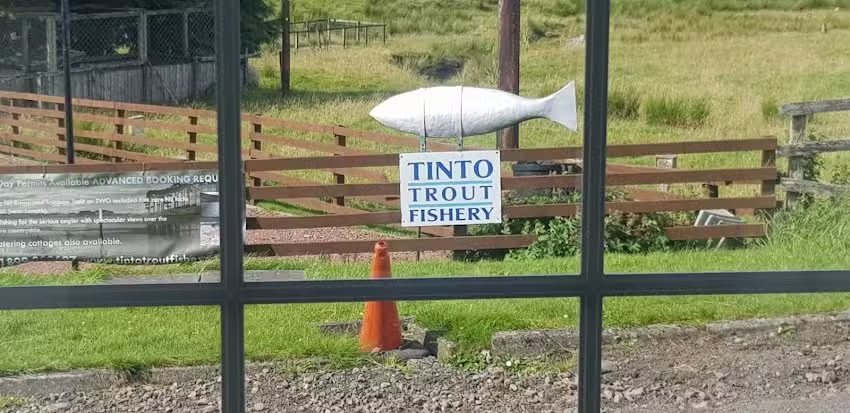
Tinto Trout Fishery
BackTinto Trout Fishery is a small, characterful venue that attracts anglers who value challenging sport, thoughtful fishery management and a peaceful hillside setting rather than high‑volume, easy catching. Situated beside Tinto Hill and laid out around two intimate hill lochs, it offers a style of fishing that feels close to natural water, with clear depths, weedbeds and wild banks shaping how you approach each session as much as the weather does.
The fishery centres on Loch Lyoch, the main stocked water, supported by a more remote upper loch where wild brown trout are the prize. Both waters are fly‑only and run on a catch‑and‑release basis, which has helped build a reputation for fit, powerful fish rather than quick‑turnover stockies. Regular visitors talk about trout that run hard, strip line and stay in good condition, so those looking for a more sporting alternative to heavily stocked commercial venues often see this as a compelling option.
For anglers searching online, Tinto is often mentioned in the same breath as other Scottish trout fisheries, but its character is different from many larger day‑ticket waters. The main loch is stocked with quality rainbow and blue trout alongside a resident head of browns, giving a mix of species and sizes to target throughout the season. The upper loch is reserved for truly wild browns and has a more remote, stalking‑style feel, appealing to those who like a more traditional, low‑impact outing rather than a heavily manicured park‑style venue.
Conditions on Loch Lyoch can be highly variable, which is part of the appeal for many. The water has clear visibility, a shelved shoreline and banks fringed with Scots pine, reeds and marginal plants. On some days the surface can be alive with rising fish, while on others you will be working hard to tempt trout holding deeper or cruising the weed edges. This variability makes the fishery better suited to anglers who enjoy reading the water and adjusting tactics, rather than those looking for guaranteed numbers every visit.
The layout of the main loch generally gives good room for casting, with grazed grass margins and a reasonably accessible bank around much of the perimeter. Some stretches are steeper and demand careful footwork, especially when the wind pushes in. Wading is permitted on the main water, and the shallow, firm bottom at the top end makes this a practical option for reaching fish that are feeding just beyond standard bank range. In contrast, the deeper edges near the dam wall and pine‑lined bank offer more of a drop‑off, suiting intermediate or sinking lines when trout are lying off the shelves.
On the upper loch, wading is not allowed, and that restriction shapes a very different style of fishing. Here the focus is on moving quietly along the banks, watching for subtle rises, tail patterns and surface disturbances from nervous wild browns. The loch holds fish of noticeable size for such a small upland water, but they are wary and unforgiving of clumsy presentation. Many anglers single this water out as the highlight of a visit, but it rewards patience, accurate casting and careful fly choice more than sheer persistence.
The fishery’s rules are aimed squarely at maintaining a sporting experience and protecting the quality of the stock. Tinto operates as a fly‑fishing‑only venue with strictly catch‑and‑release tickets, so barbless or de‑barbed hooks and sensible fish handling are expected. This approach tends to suit anglers who prioritise sport over taking fish home. Those seeking a put‑and‑take bag might find the model less attractive, but for many river and loch regulars, the chance to fish for hard‑fighting trout in a controlled yet natural‑feeling environment is exactly what they are looking for.
One of the consistent strengths mentioned by visitors is the condition and fighting qualities of the trout. Anglers frequently describe fish that fight well above their weight and stay lively right through to the net. Full fins, solid shoulders and strong lunges are common themes in feedback. Even when the fishing is demanding, many leave feeling that a single well‑earned trout here can be more satisfying than several easy fish elsewhere, which is an important consideration for those comparing different fly fishing lakes.
The facilities at Tinto are modest but thoughtfully put together for a small upland fishery. A simple bothy provides shelter, toilet facilities, a place to make tea or coffee and comfortable seating around a large table, along with a log burner that makes a big difference on colder or windier days. It is not a venue with a full‑service café, tackle shop or constant staff presence, and that pared‑back approach fits its more club‑style personality. Those expecting a fully commercial complex with extensive amenities may be underwhelmed, but many anglers value the quiet, low‑key atmosphere.
Because the fishery is essentially family‑run, it does not operate like a large, permanently staffed complex. Most regulars are season‑ticket holders who know the water and its rhythms well, and visiting anglers are generally expected to arrange their sessions in advance. Turning up without booking is discouraged and, according to the fishery’s own communications, may result in being turned away. For organised anglers who are used to planning trips, this is a minor adjustment, but for spontaneous visitors it can be a clear downside.
Access information is readily available and, once booked, anglers typically find it straightforward to get to the car park and water. The setting on the slope of Tinto Hill does mean that the fishery is exposed to the elements, and that has a direct impact on the experience. On breezy days, finding sheltered banks or more comfortable casting angles becomes an essential part of the session. Some visitors talk about arriving to strong winds that limited the number of fishable spots, yet still having productive days because the trout remained active despite the conditions.
From a technical perspective, Tinto tends to reward anglers who come prepared with a flexible approach. The clear, well‑structured main loch lends itself to a range of methods: small nymphs and buzzers on long leaders when fish are sipping, traditional wets swung across the wind lanes, or lures and streamers on sink‑tip or intermediate lines when fish drop deeper. Those who bring appropriately balanced fly fishing tackle, such as 9 to 10‑foot rods around #5 or #6, generally find they can cover most situations, while lighter, precise outfits work particularly well on the upper wild loch.
Fly choice is often dictated by prevailing conditions and natural food, with buzzers, small caddis patterns, damsels and olive imitations all having their place. Anglers who take the time to watch the water, match the hatch and adjust leader length usually do better than those who rely on a single favourite pattern. The crystal clarity can make trout cautious, so fine tippets and careful presentations are often required. This technical element will appeal to experienced anglers, but might increase the learning curve for those newer to stillwater fly fishing.
When considering Tinto alongside other Scottish trout fisheries, it is important to recognise that this is not a high‑stocking, numbers‑driven water. There are occasional reports from visitors who feel that fish have been scarce at times, or who question the regularity of stocking. A small hill fishery with a strong catch‑and‑release ethos will naturally fish differently from venues where large numbers of newly stocked fish are introduced very frequently. Prospective visitors who measure value purely by fish landed per hour might find Tinto less consistent, especially during tougher weather or when trout are feeding selectively.
On the other hand, many anglers who have fished Tinto over several seasons describe it as a venue that delivers a richer experience over time. Learning how the lochs respond to wind direction, light levels and air temperature, understanding where trout hold during different periods of the year, and building up a confidence box of flies specific to the water can make a real difference. That repeat‑visit appeal is a strong point for local and regional anglers who want more from a fishery than a single easy visit.
Value for money is another aspect that anglers consider when choosing between different fly fishing venues. Tinto traditionally offers half‑day or full‑day sessions on a catch‑and‑release basis at prices in line with other quality Scottish stillwaters. While you are not paying for extensive catering or on‑site retail, you are investing in access to two interesting, distinct lochs, a stock of strong fish and a setting that feels more like a semi‑wild water than a heavily landscaped urban pond. For many, that balance of price and character is a key reason they return.
The atmosphere around the fishery is generally described as relaxed and friendly. Newcomers who have arranged a visit in advance often comment on a warm welcome and genuine interest in how their day is going. The absence of a constant staff presence on the bank means there is less direct supervision than at some commercial fisheries, but it also creates a quieter environment where anglers can focus on their fishing and the surroundings without feeling rushed or crowded.
Prospective visitors should weigh the strengths and limitations carefully. On the positive side, Tinto offers scenic, intimate waters; well‑regarded fish quality; a strong catch‑and‑release ethic; and the rare opportunity to combine stocked rainbows and blues with wild browns in the same session. The setting, simple but comfortable bothy and generally welcoming attitude add to its appeal. On the negative side, reliance on advance booking, the absence of extensive on‑site services, exposure to weather and the sometimes demanding nature of the fishing may not suit everyone.
For anglers who enjoy a degree of challenge, value watercraft and presentation, and appreciate a quieter, more traditional feel, Tinto Trout Fishery can be a very satisfying choice. Those whose priorities are high catch rates, last‑minute arrivals, full hospitality and constant bank assistance might be better served by larger commercial trout fisheries with different operating models. Approached with realistic expectations and the right kit, Tinto offers a distinctive stillwater experience that many consider worth the effort.
Ultimately, Tinto Trout Fishery stands out as a venue where the emphasis is firmly on the quality of the fishing rather than the quantity of the extras. For potential customers deciding where to spend their time and money, it is worth considering whether a day of thoughtful, sometimes testing fishing for strong trout in a hillside setting aligns with what they want from a trip. For those who answer yes, this fishery is likely to provide memorable sessions and a reason to return.