
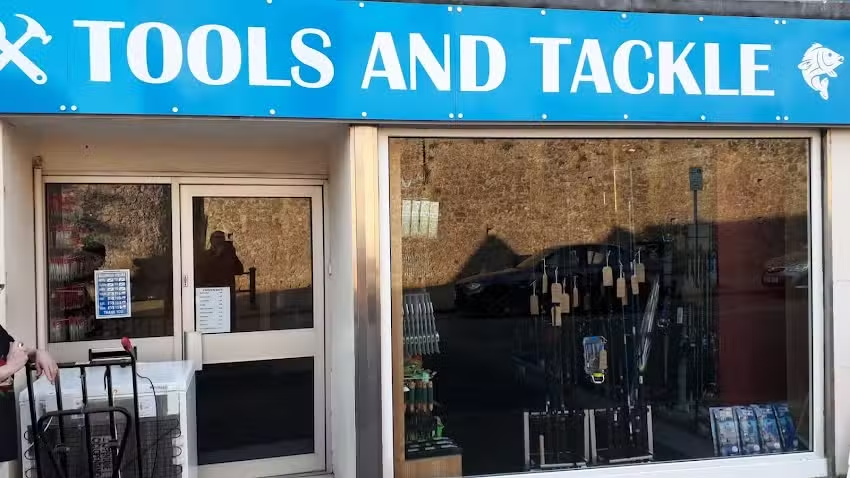
Tools and Tackle
BackTools and Tackle has built its reputation as a small, specialist outlet for anglers and DIY enthusiasts, combining a compact footprint with a surprisingly broad range of equipment. Although it has recently ceased trading and the premises now stand empty, many visitors still remember it as a reliable place to pick up essential fishing tackle and everyday tools in one stop. For potential customers looking back on what the shop offered, it provides a useful reference point for what to expect from a dedicated, independent angling retailer.
Inside, the focus was firmly on practical gear rather than glossy display, which appealed to customers who wanted straightforward, functional equipment. Shelves were typically stocked with everyday hardware alongside a focused selection of fishing rods, reels and terminal tackle suitable for coastal and light inshore use. This mix meant that holidaymakers and local anglers could pick up a screwdriver, a packet of screws and a pack of hooks or fishing line in the same visit, saving time and making last‑minute preparations for a session by the water much easier.
For sea anglers, the range of sea fishing tackle was a key draw. Customers commented on finding value‑for‑money end‑of‑line bargains and discounted gear that allowed them to upgrade or add to their kit without stretching their budget. Typical stock included basic beach and pier rods, compact fixed‑spool reels, assorted weights and pre‑tied rigs, giving visiting anglers just enough choice to get set up for local conditions without the confusion that sometimes comes with vast superstores. This focus on practicality over sheer volume of options suited anglers who wanted to get out on the water quickly.
The store’s approach to pricing was another positive point frequently mentioned. Shoppers often felt they were getting solid value across both hardware and fishing gear, with competitive prices on everyday items and occasional standout offers on branded tackle. While it was not positioned as a high‑end specialist in niche disciplines such as advanced carp fishing or technical fly fishing, it did cater well for casual and intermediate anglers who needed reliable bait accessories, basic rigs and terminal components at reasonable prices.
Customer service was arguably the strongest element of Tools and Tackle. Reviews consistently highlighted friendly, approachable staff who took the time to talk through options, share local knowledge and offer practical advice on where and how to fish nearby. One angler described spending time chatting about local lakes and methods before buying a handful of discounted items, while others mentioned the team’s willingness to recommend suitable fishing lures, floats or hooks based on target species and experience level. This kind of informal, experience‑based support is often what distinguishes a small independent shop from larger chains.
Beyond angling, the staff were also praised for going beyond the standard expectations of a hardware store. One notable example involved a visitor seeking a cutter to deal with a broken orthodontic brace while on holiday; the member of staff not only supplied the tool but also helped carry out the cut and refused payment. Acts like this underline a customer‑centred approach that prioritised practical help over short‑term sales, leaving a strong impression on families and occasional visitors who might not otherwise have engaged with an angling retailer.
The accessible layout also contributed to a generally positive customer experience. The entrance was suitable for those with reduced mobility, and the interior, while compact, was organised enough for most visitors to find what they needed with minimal difficulty. For anglers carrying bulky fishing rods or bags, this practicality made a difference, allowing them to browse racks of terminal tackle, accessories and small tools without feeling crowded. The shop’s modest size did mean that stock levels were limited, but for many customers the benefit of easy navigation outweighed the lack of warehouse‑style selection.
However, the very scale that made the store approachable also brought several limitations. Compared with larger, purpose‑built fishing tackle shops, the range of specialised equipment was modest. Anglers looking for premium beachcasters, high‑capacity big‑pit reels, specialist carp rigs or an extensive wall of branded sea lures would have found only a basic spread of options. For highly focused disciplines such as competition match fishing, advanced spinning or dedicated carpfishing, customers often needed to turn to larger regional retailers or online specialist stores to complete their setups.
Product depth in some categories was also restricted by the size of the premises. While the essentials were usually available – simple ledger rigs, lead weights, swivels, floats and general‑purpose monofilament line – there was less scope for carrying multiple variations in breaking strain, pattern or brand. Anglers who enjoy fine‑tuning their rigs with specific specialist components might have felt constrained, particularly if they were accustomed to browsing an extensive wall of terminal tackle in bigger outlets. This could be frustrating for those who value very detailed control over their equipment.
The closure of the shop is perhaps the clearest drawback for potential customers now. Regular visitors who relied on picking up fresh accessories or emergency replacements before a session no longer have that physical point of contact. Those who appreciated face‑to‑face advice must now rely on other independent retailers or online fishing tackle shops, which can be less personal and slower when a last‑minute piece of kit is needed. It also means that any loyalty built up with the staff and their knowledge of returning customers’ preferences can no longer be leveraged.
From the point of view of today’s angler assessing what the business represented, Tools and Tackle shows both the strengths and weaknesses of a small, mixed‑focus shop that combines hardware with angling equipment. On the positive side, shoppers benefited from a convenient central location, approachable staff, and a core range of fishing tackle that covered the essentials for local sea and light coarse fishing. The atmosphere was informal and welcoming, with a clear willingness to help newcomers and visiting anglers get started with practical, budget‑friendly gear.
On the less positive side, the narrow footprint inevitably limited the breadth of stock. Serious specialists in areas such as high‑end carp fishing tackle, finely tuned match fishing tackle, or advanced fly fishing gear would have found themselves needing to supplement their purchases elsewhere. Anglers with very specific brand preferences or technical requirements, such as particular reel drag systems or rod actions, might not have found the exact models they were seeking. In addition, once the closure occurred, even the previously available core range and in‑person advice disappeared, reinforcing the fact that reliance on a single small outlet can leave a gap when circumstances change.
For potential customers looking for similar services today, the experience of Tools and Tackle highlights what to look for in an independent angling and hardware shop: a balanced selection of essential fishing gear, knowledgeable staff ready to share local tips, fair pricing and an environment where practical help is valued as highly as product range. While this particular business is no longer trading, its mix of approachable service and accessible fishing tackle continues to serve as a useful benchmark when assessing other retailers in the same segment.