Walton Hall Fly Fishery
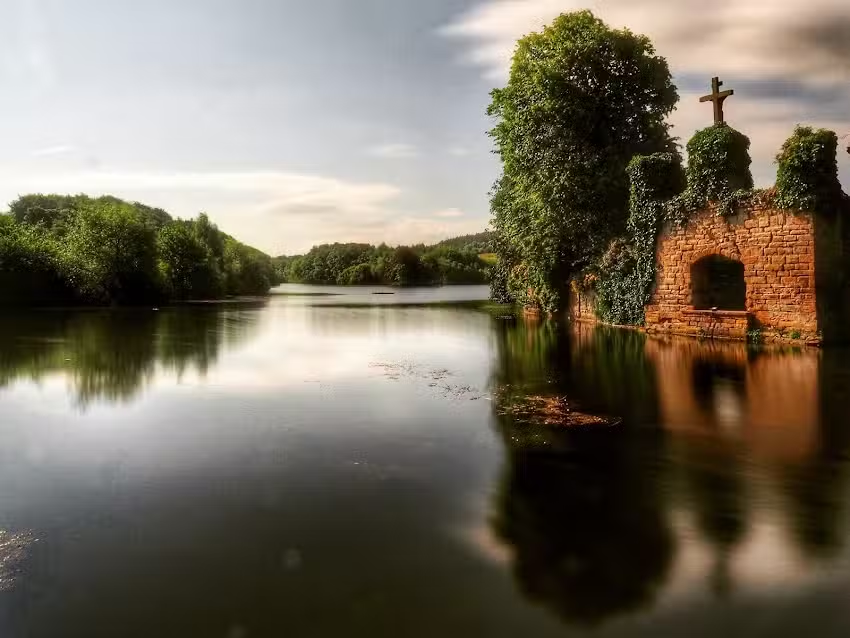
BackWalton Hall Fly Fishery presents itself as a distinctive stillwater venue for anglers who appreciate characterful surroundings as much as the fishing itself. Set within the historic Walton Hall estate, the fishery centres on a mature lake that has long been associated with pike and trout, attracting those who enjoy the challenge of targeting quality fish rather than simply chasing high numbers. Feedback over the years suggests that this is a place where a well-planned session, the right approach and realistic expectations can be rewarded with memorable captures, but it is also a venue where inconsistency in access and information has, at times, frustrated visiting anglers.
For anyone focused on freshwater sport, the core appeal lies in the lake’s reputation for larger predators and game fish. Anglers who have fished here talk about "big pike big trout" in a way that hints at a water capable of producing serious specimens for those prepared to put in the time and effort. This is not a commercial-style water stacked with stock fish; it is better suited to anglers who already have a grounding in fly techniques and predator tactics, and who are comfortable adapting to a more naturalistic venue. As such, it can be particularly attractive for those who already own dedicated predator rods, fishing reels and robust fishing line set-ups, and who want to put their gear to work on a water with genuine potential.
One of the strengths often highlighted is the setting and atmosphere around the hall and lake. The fishery shares the grounds with a hotel and former hospital building, giving the site a distinctive character that many visitors remember fondly. Some guests refer to perfect experiences on the broader estate, mentioning welcoming staff and enjoyable food, which adds context for anglers thinking of combining a session on the water with a short break or a meal. While these comments relate mainly to the wider complex rather than to the fishery management itself, they help paint a picture of a place that can offer more than just a day with a rod and a net.
From a practical perspective, the fishery appears to be managed at a relatively low-key level, which has both advantages and drawbacks. On the positive side, this often means a quieter bank, fewer crowds and the chance to approach the water in a more relaxed, traditional way: moving between pegs, reading the water, adjusting retrieves and fly patterns to match conditions. Anglers bringing their own fly rods, fishing lures and carefully chosen fishing tackle can enjoy the feel of a more old-school venue that has not been heavily commercialised. This gives Walton Hall Fly Fishery a niche appeal compared with strongly marketed waters that focus on volume over character.
However, quieter management also means that information is not always as up to date or as reliable as today’s anglers might expect. One of the clearest criticisms from past visitors has been turning up to find the gates firmly shut despite online details suggesting the fishery should be operating, and attempts to reach someone by phone going unanswered. For anglers travelling any distance, this kind of experience represents a serious inconvenience and can understandably leave a negative impression. In an age where many fisheries keep their social media or websites updated daily with water conditions, stocking information and opening arrangements, Walton Hall Fly Fishery would benefit from more consistent communication.
The pattern of online comments suggests a mixed but generally positive perception of the wider site, with praise for hospitality and atmosphere contrasting with isolated complaints about access and clarity. Systems for booking, checking availability or confirming current opening status are not always obvious to first-time visitors. Prospective anglers therefore need to take a more proactive approach: rather than relying solely on older online references, it is sensible to check the most recent information, make direct contact in advance where possible and treat any unverified details with caution. For those who value certainty above all else, this may be a drawback; for others who are more flexible, it is part of the trade-off for fishing a more traditional venue.
In terms of the actual fishing, Walton Hall Fly Fishery is best approached as a water where thoughtful tactics matter. Fly anglers targeting trout will want to arrive with a well-stocked selection of patterns and be prepared to adapt presentations through the day. Intermediate and sinking lines may be useful alongside floating lines, and experimenting with retrieves can be crucial, particularly if the fish are holding deep or are pressured by weather changes. For predator anglers, robust traces, strong hooks and reliable fishing line are essential, and care should be taken to handle pike responsibly with appropriate mats and tools. Those equipped with quality fishing rods, balanced fishing reels and carefully chosen fishing gear are likely to get the most out of the venue.
Accessibility and the link to the adjacent hotel can work in the fishery’s favour. The proximity to a larger hospitality business may make it easier for some visitors to combine angling with a social or family occasion, and the estate backdrop can be appealing for non-angling companions. For travelling anglers, this flexibility can be useful, turning what might otherwise be a simple day ticket visit into part of a short stay with accommodation, dining and other facilities available nearby. That said, it is important to remember that the standards of service reported for the hotel and restaurant do not automatically translate directly to the running of the fishery itself, which appears to operate with a degree of independence.
Customer feedback over several years presents Walton Hall Fly Fishery as a place of contrasts. On one hand, some visitors speak highly of their time on the estate, describing it as perfect and fabulous, with warm welcomes and enjoyable experiences. On the other hand, there are accounts of anglers who feel let down because they were unable to gain access to the water despite relying on published information, or who struggled to get a clear answer when seeking details by phone. For potential customers, this mix of opinions indicates that while there is real potential for a satisfying session, success begins with careful planning and clear expectations.
From the perspective of someone searching for venues in the wider area, Walton Hall Fly Fishery sits within a broader landscape of commercial and club waters that may offer more regular updates and structured day ticket systems. Anglers who prioritise convenience, stocked numbers and regularly published catch reports might consider comparing the fishery with other local options before deciding where to spend their time and tackle budget. By contrast, those who value a historic setting, the possibility of larger fish and a more understated atmosphere may be more inclined to accept the extra effort involved in confirming access and current arrangements.
For less experienced anglers, especially those new to fly fishing or predator tactics, Walton Hall Fly Fishery could still be an attractive objective, but it is not necessarily the easiest starting point. Beginners may find greater reassurance at waters where tuition is clearly advertised, where tackle hire is available and where fishery rules and stocking policies are prominent online. At Walton Hall, the lack of detailed public information about stocking cycles, ticket structures and on-site support means that first-timers should be particularly diligent in gathering up-to-date details beforehand. Bringing one’s own essential kit – from fishing rods and fishing reels to landing nets and appropriate clothing – is advisable, as is ensuring familiarity with safety and fish-handling best practice.
In terms of value, the experience here is less about fast action and more about the satisfaction of unlocking a slightly more enigmatic water. Anglers who enjoy reading bankside features, tailoring their tactics to conditions and putting high-quality fishing tackle to the test may appreciate the challenge presented by a mature estate lake. The presence of both trout and pike adds variety, allowing regulars to shift focus across seasons, moving between lighter fly set-ups and heavier predator outfits as water temperatures and fish behaviour change. For some, this blend of history, scenery and potential reward justifies the extra work required to plan a visit effectively.
At the same time, the fishery would clearly benefit from greater clarity around its day-to-day operation. Anglers today often expect real-time updates, clear signage and responsive communication channels, and when these are lacking it can overshadow the positive aspects of a venue. The isolated but striking complaint about finding the gates closed after relying on online details is a reminder that even one disappointing experience can colour perceptions for years. Prospective visitors therefore do well to treat older online references as background rather than guarantees, and to confirm current arrangements with the most recent sources available.
Overall, Walton Hall Fly Fishery comes across as a characterful option for anglers who appreciate traditional estate waters and are willing to make the extra effort required to ensure their trip runs smoothly. It offers the possibility of quality pike and trout fishing in a distinctive setting, particularly for those equipped with reliable fishing rods, fishing reels, strong fishing line and well-chosen fishing lures. At the same time, it is important to acknowledge the mixed nature of feedback, especially regarding access and communication. For potential customers weighing up where to spend their next session, Walton Hall Fly Fishery may be best viewed as a venue with genuine appeal and potential, provided that arrangements are carefully checked in advance and expectations are aligned with the more traditional, low-profile way in which the fishery appears to be run.