West Country Fly Fishing
BackWest Country Fly Fishing is a small, highly specialised service focused on introducing anglers to the art and practice of fly fishing in Devon, with particular emphasis on tuition and guided days on local rivers and stillwaters. Rather than being a traditional retail tackle shop, it operates as a dedicated coaching and guiding business, led by an experienced instructor who provides one‑to‑one and small‑group sessions for a range of abilities, from complete beginners to more seasoned anglers looking to refine their technique. This makes it particularly relevant for anyone searching for trusted fly fishing lessons or a personalised fly fishing guide in the West Country.
The business is based at Moor Park, Cheriton Bishop, near Exeter, and uses a range of local venues, including rivers and lakes that offer varied conditions and species. Anglers can typically expect to target trout and other game species on carefully chosen beats that suit their skill level and objectives. The set‑up is intentionally low‑volume and personal, which allows the guide to spend time focusing on casting, presentation and watercraft rather than moving customers quickly through a crowded commercial fishery. For people searching for a calmer alternative to packed day‑ticket waters, this more measured approach to fly fishing trips can be a significant advantage.
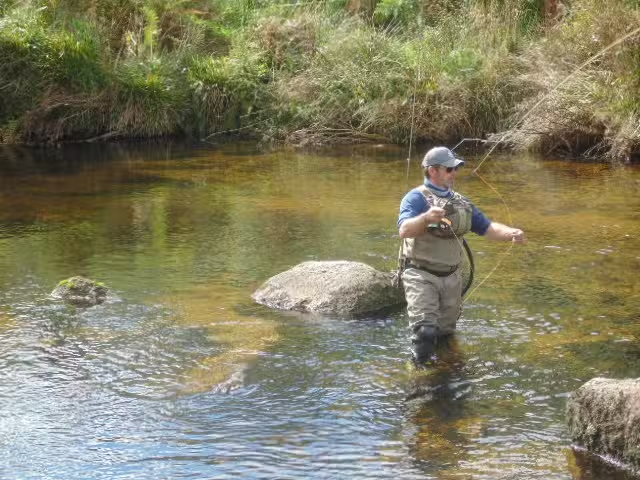
A key strength of West Country Fly Fishing is the emphasis on technical instruction. Sessions are designed not only to put guests onto fish, but to build confidence in fundamentals such as overhead casting, roll casting, line control and reading the water. The guide’s willingness to share knowledge comes through strongly in customer feedback, where visitors describe a patient and friendly teaching style that helps demystify casting and tackle choice. For newcomers who may feel intimidated picking up a fly rod for the first time, this focus on teaching rather than just guiding is especially valuable.
Equipment is another area where the service adds value. While anglers are welcome to bring their own kit, the guide can provide appropriate rods, reels, lines and leaders, along with a carefully chosen selection of flies suited to local conditions. This is particularly helpful for visitors who do not yet own a full set of fly fishing gear or who are travelling light. Being able to turn up with minimal equipment and still enjoy a productive day on the water makes the experience more accessible and reduces the barrier to entry for those curious about the sport.
Local water knowledge is a recurring positive theme. Guests mention that the guide clearly knows the venues well, including where fish are likely to hold at different times of year, how water levels and clarity affect fish behaviour, and which patterns and techniques are most effective. In practical terms, this can mean more time with a fly in front of fish and less time guessing where to cast. For anglers used to figuring out unfamiliar rivers on their own, having a knowledgeable guide who can shorten the learning curve is a clear benefit and one of the main reasons people look for a specialist in river fly fishing.
The atmosphere on guided days is often described as relaxed and enjoyable rather than pressured. Rather than focusing solely on numbers of fish landed, the guide encourages clients to appreciate the overall experience: correct casting, improving presentation, and understanding fish behaviour. This suits those who see a day’s fishing as a chance to unwind and learn. That said, the balance may feel different to highly competitive anglers whose main priority is maximising catch rates; they might prefer a more intensive approach where the emphasis is squarely on results rather than instruction.
In terms of customer experience, reviews highlight a combination of friendliness and professionalism. Visitors frequently comment that they feel at ease from the outset, which is important when someone is adjusting casting technique or learning new skills under observation. The guide is often described as approachable and willing to adapt the day to individual needs, whether that means spending extra time on basics or introducing more advanced topics like fishing dries, nymphing or dealing with tricky wind conditions. This adaptability is particularly relevant to people comparing options for fly fishing tuition in the region.
Another positive aspect is the flexibility in how days are structured. Clients can typically arrange half‑day or full‑day sessions, and the exact content can vary from pure instruction on casting to a more general guided day focused on catching fish. This mix makes West Country Fly Fishing suitable both for someone who wants a thorough introduction to fly fishing and for an angler who already fishes but wishes to improve a specific element of their technique. For families or small groups, the ability to tailor the pace and difficulty is helpful, although very large groups may find the business less suited to their needs compared with centres designed to handle higher volumes.
There are, however, some limitations that potential customers should consider. As a small, guide‑led operation rather than a full retail outlet, it does not function as a walk‑in shop where anglers can browse aisles of fishing tackle, compare brands or stock up on a wide variety of lures, lines and accessories. Those looking specifically for a store to buy fishing rods, reels, fishing line and clothing off the shelf may find the retail aspect limited or non‑existent, and would need to use online retailers or larger bricks‑and‑mortar shops alongside the guiding service.
Another limitation is that availability can be constrained, particularly in peak season when demand for guided fly fishing days is highest. Because the experience is focused on personalised sessions, there is a natural cap on how many bookings can be accommodated. Prospective clients may need to arrange dates well in advance, especially if they are visiting the area for a short period or have fixed travel plans. Short‑notice bookings may be harder to secure, which could be a drawback for those who prefer spontaneous trips.
Weather and river conditions also play a significant role in the overall experience. Like most small guiding operations that rely on natural waters, West Country Fly Fishing is subject to fluctuations in river levels, clarity and seasonal changes. Heavy rain, prolonged low flows or sudden cold snaps can make fishing more challenging, regardless of the guide’s efforts. While this is part of the reality of any genuine trout fishing or salmon fishing experience on natural venues, some customers unused to these variables may find it disappointing if conditions limit the day’s success.
Pricing sits in line with what is typical for specialist guiding and tuition in the UK. Clients often comment that they perceive good value given the level of personal attention, instruction and access to local knowledge. However, the cost of a guided day will naturally be higher than simply purchasing a day ticket for a fishery and going alone. Anglers on a tight budget who are mainly interested in inexpensive access to water might prefer a basic day‑ticket option, while those who see the fee as an investment in improving skills or making the most of limited free time are more likely to appreciate the value proposition.
Communication and organisation are generally strong. Prospective guests can expect clear information about what to bring, what is included (such as tackle provision), and how the day is likely to run. The guide is typically responsive to questions before the booking, which helps first‑time clients feel reassured. That said, because the business is relatively small and hands‑on, response times may occasionally be slower during very busy fishing periods when the guide is out on the water all day. Clients who prefer instant replies at all times might find this a minor inconvenience.
West Country Fly Fishing is particularly suitable for several types of angler. Complete beginners benefit from structured introduction days that cover safety, casting basics, simple knots and the essentials of handling fish. Intermediates can focus on refining casting, improving accuracy and learning more advanced techniques such as upstream nymphing or dry‑fly presentation. More experienced anglers, including those who already own high‑quality fly reels and specialist fly lines, can use the service to gain insight into specific West Country waters or to target a particular species with local patterns and methods.
For travelling anglers, an additional advantage is not having to research multiple venues and access arrangements themselves. The guide’s familiarity with permits, local rules and safe access points helps reduce administrative effort and the risk of inadvertently fishing in unsuitable or restricted areas. This can be especially useful for overseas visitors or those new to the area, who might otherwise spend considerable time trying to identify the right stretches of river or appropriate tickets. In this context, West Country Fly Fishing functions as a practical, time‑saving option for anyone wanting an organised fly fishing holiday component to their trip.
On the other hand, independent anglers who enjoy exploring new waters entirely on their own may find less appeal in a guided format, preferring instead to buy their own fishing tackle and work things out without assistance. For these individuals, the strength of West Country Fly Fishing – close, hands‑on guidance – may feel less essential. The service is best seen as complementary: ideal for skill development, local insight and a structured introduction, rather than a replacement for self‑guided angling for those who value complete independence.
Safety and etiquette are handled with care. Instruction also covers wading safety, handling hooks and lines, and best practice for catching and releasing fish. This is particularly reassuring for new anglers and families who may be unsure about how to manage risks associated with moving water and sharp hooks. A focus on respectful angling behaviour, including careful treatment of fish and consideration for other water users, aligns with modern expectations of responsible game fishing.
Overall, West Country Fly Fishing offers a focused, tuition‑led experience rather than a conventional tackle retail outlet. Its main strengths lie in friendly, knowledgeable instruction, well‑chosen local venues and an approachable style that suits beginners and improvers, alongside visiting anglers seeking local insight. Limitations include the absence of a comprehensive physical fishing shop for browsing equipment, restricted capacity during busy times, and the inevitable dependence on weather and river conditions. For potential customers weighing up their options, it stands out as a good fit for those who value patient teaching, tailored sessions and the chance to develop their skills in authentic surroundings, while those seeking a large, fully stocked tackle retailer or purely budget‑focused fishing may prefer other types of provider.