
Wilden Lakes
BackWilden Lakes operates as a private coarse fishery that appeals mainly to anglers who value quiet, uncluttered water over heavily commercialised venues. The lake is run as a members’ water rather than a public day-ticket complex, which immediately gives it a different character from many highly promoted fisheries. Visitors who gain access through the relevant club ticket often highlight how relaxed the atmosphere feels, with very little through‑traffic or non‑angling activity around the banks. This makes it an option for those who want to focus on their session without the bustle that can accompany busier commercial pools.
As a club-controlled venue, Wilden Lakes is essentially a local fishing lake rather than a full retail operation, but it still matters to anglers comparing it with better-known commercial fisheries and online tackle outlets. Many modern coarse anglers assemble their kit from specialist fishing tackle retailers, whether online or in physical shops, and then seek out quieter club waters to use that gear. In that sense, the lake sits in the same decision process as any other venue a potential visitor might weigh up when planning where to use their fishing rod and reel setup, carp rigs, or match fishing gear. The fishery provides the setting; anglers bring their equipment, expectations and experience.
Feedback from anglers emphasises that Wilden Lakes is well stocked for a club water, which is one of its clearest strengths. Local members describe the fishing as consistently productive, with enough bites to keep both experienced coarse anglers and improving club members interested across a full session. While detailed stocking lists are not public, comments indicate that the water carries a healthy head of coarse fish, supporting float fishing, feeder tactics and modern carp approaches. For many club anglers, that balance between stock levels and tranquillity is more attractive than the crowded conditions sometimes found at heavily promoted commercial coarse fishing complexes.
The private nature of the venue also brings practical benefits. Anglers point out that, because access is restricted to members or those holding the correct ticket, they avoid being disturbed by dog walkers, casual visitors or large groups of non‑anglers moving around the banks. On a practical level, this reduces bankside noise and movement, which can be important when targeting more cautious fish. It also helps those who fish with multiple fishing rods or delicate quiver‑tip setups, as there is less risk of lines being stepped over or swims being disturbed. For people who view a fishing trip as a chance to disconnect and concentrate, this more controlled environment is a major positive.
However, the same privacy that creates calm conditions also limits accessibility for anyone who is not already linked to the controlling club. Prospective visitors need to find out which club manages the water, understand how to obtain the right ticket, and comply with club rules rather than simply turning up and paying on the bank. Anglers who are used to booking a peg at a commercial day ticket fishery or buying access online might find this extra step less convenient. It is also less straightforward for newcomers or occasional anglers who expect to be able to arrive with a fishing pole, fishing reel and a small selection of tackle and begin straight away.
From a facilities standpoint, Wilden Lakes feels more like a traditional farm or estate water than a purpose‑built commercial fishing lake with a shop, café and rental tackle. Anglers should arrive self‑sufficient, with everything from bait to terminal tackle organised in advance. Those planning a session here typically source their fishing tackle shop needs from elsewhere, picking up carp fishing rigs, fishing bait and other essentials from larger regional or online suppliers before heading to the lake. For some, that simplicity is a positive, cutting out distractions. For others, the absence of on‑site refreshments, toilets or tackle sales may be a drawback, especially on longer sessions or for less experienced anglers.
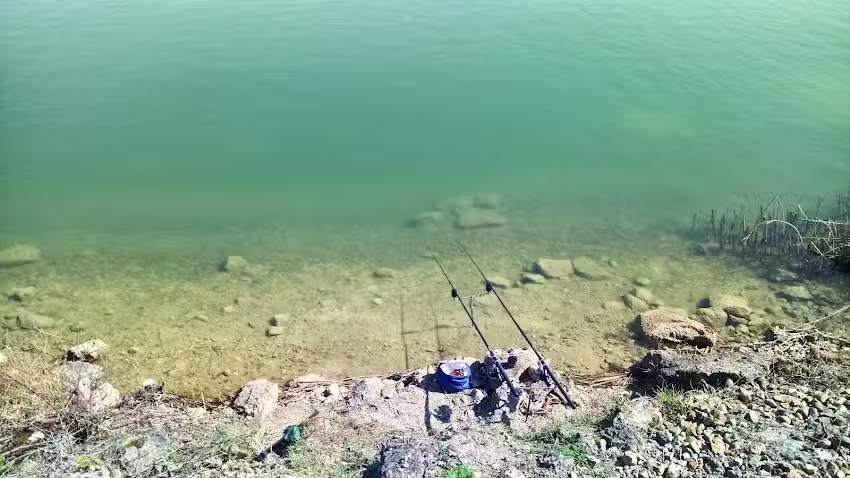
Reviews and informal comments highlight that the water can become weedy, particularly in warmer months or during periods of low rainfall. Weed growth is a natural feature of many stillwaters and can actually benefit fish stocks, providing cover and food, but it does demand more thought from anglers. Those targeting carp or tench may need to adapt their fishing line strength, lead arrangements and hooklengths to cope with the vegetation, while float anglers might need to spend more time plumbing the depth and clearing a line for their fishing float. For some, the challenge of working around the weed adds interest; for others, it can feel like an obstacle that makes things harder than on more manicured commercial waters.
The banks themselves are another talking point. Anglers reference relatively steep margins in places, partly influenced by local agricultural irrigation which can drop water levels and expose more bank. Steep banks mean that setting up a seatbox, chair, multiple carp rods on buzz bars or a specialist feeder fishing platform requires more care. For fit and experienced coarse anglers, this may simply be another factor to manage: using banksticks carefully, selecting lighter fishing gear or finding the safest peg. For anyone with limited mobility, or those carrying heavy barrows of tackle, the slope can be a significant disadvantage, especially in wet conditions when the ground is muddy and slippery.
On the water itself, anglers report generally good sport when conditions are right. Short comments such as “good fishing” may sound simple, but they reflect consistent catch reports over multiple seasons. Sessions focused on traditional coarse methods, such as straight lead or method feeder work with groundbait and pellets, seem to produce steady bites. Float anglers using classic wagglers or pole rigs also find opportunities around the margins and near features. For many local club members, the lake provides an everyday venue where their investment in quality fishing tackle – from match fishing rods to modern carp fishing rods and bite alarms – is rewarded with regular action rather than rare red‑letter days.
The atmosphere at Wilden Lakes suits anglers who value a slower pace. Without a shop, café or large car park attracting non‑anglers, the bankside environment stays relatively quiet. Conversations tend to be between anglers who already share a club connection, which can be positive for those looking to pick up tips on rigs, bait and presentation. Experienced members are often willing to discuss which fishing bait works best in different conditions or how to approach weedier areas of the lake. That said, the same closed feel may make the venue seem less welcoming to completely new anglers, who might feel more comfortable learning on a commercial complex with visible staff and on‑site fishing tackle support.
Safety and comfort are important considerations for any potential visitor. Steep, occasionally soft banks mean that good footwear and sensible positioning of tackle are essential. Anglers who fish with children or older relatives should assess pegs carefully before settling in. Setting up carpfishing pods or seatboxes on uneven ground demands patience and sometimes a lighter, more compact coarse fishing setup. For some, this preparation is just part of a serious angling approach; for others, it may be a reason to choose an alternative fishery with level, boarded platforms and clearly defined pegs.
Because Wilden Lakes functions primarily as a members’ water, rules and etiquette are likely to reflect club priorities rather than commercial turnover. Anglers can generally expect standard coarse-fishery regulations: barbless or micro‑barbed hooks in line with club policy, appropriate use of landing nets and unhooking mats for larger fish, and respect for other anglers’ space. While this can feel stricter than some casual day-ticket waters, many anglers appreciate the focus on fish welfare and a tidy environment. Those investing in quality angling equipment – from padded unhooking mats to strong landing nets – will find these items are not only welcome but likely required.
In terms of overall experience, Wilden Lakes will suit coarse anglers who prefer a quieter, more traditional setting and are comfortable taking responsibility for every aspect of their trip, from tackle and bait to bankside safety. The combination of good stocking for a club lake, limited disturbance from non‑anglers and a peaceful atmosphere makes it attractive for thoughtful sessions spent refining rigs and presentations. At the same time, prospective visitors should be realistic about the trade‑offs: access is controlled, facilities are minimal, the banks can be steep, and the weed requires a more tactical approach than highly groomed commercial lakes. For anglers who are happy to plan ahead, stock up on reliable coarse fishing tackle, and accept a few physical challenges around the banks, Wilden Lakes offers a rewarding and quietly satisfying venue.