Willington Lake
BackWillington Lake is a members-only coarse and carp fishery managed by Shefford and District Angling Association, offering a quiet, club-run alternative to busy commercial venues for anglers who value space, wildlife and a slower pace of fishing.
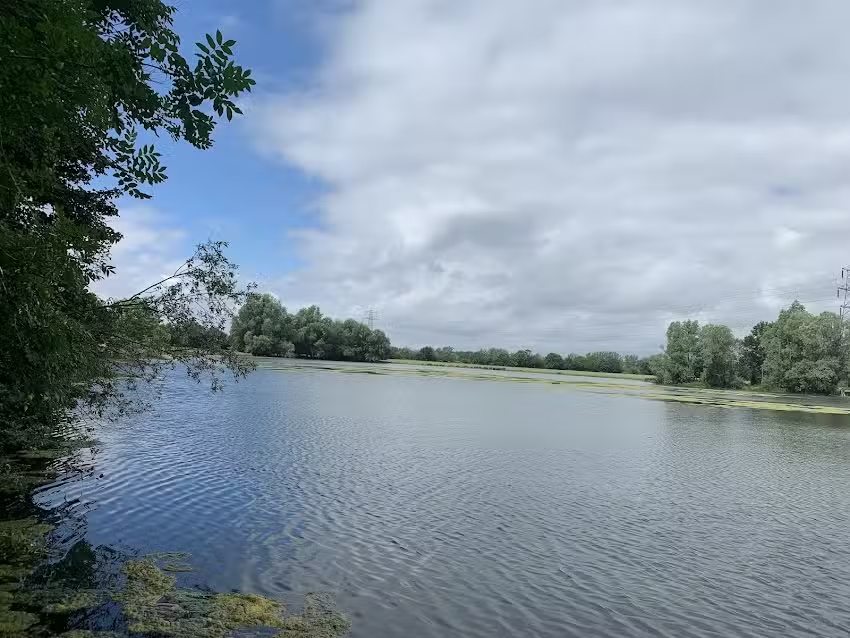
This former gravel pit covers around twelve acres and has been developed over several decades into a mixed fishery, with depths in places dropping to around fourteen feet and extensive weed growth that provides natural cover and food for fish. For many visitors, the first impression is how peaceful and secluded it feels, with no public rights of way running through the site, so anglers are not sharing the banks with dog walkers or casual visitors. Several reviewers describe it as a beautiful, relaxing place to sit behind the rods, even on days when the fish prove elusive. That sense of calm is one of the main reasons local club anglers keep returning.
From a specimen-hunting perspective, Willington Lake is known primarily for its carp, which have reached impressive sizes, with reports of fish to over thirty pounds and historic captures even higher. Over a long period the club has introduced batches of good-quality young carp, allowing them to grow on in a rich, natural environment rather than relying on heavily stocked, heavily pressured fish. This makes the water attractive to anglers looking for a more traditional style of carp fishing rather than instant action on a crowded day-ticket complex. However, the same factors that create that appeal also mean that results can be inconsistent; anglers need to accept that blank sessions are a realistic possibility, as one visitor openly acknowledged after an enjoyable but fishless day.
Fish stocks and angling potential
Willington Lake is not just about large carp; it is maintained as a mixed fishery, with a variety of coarse species benefitting from the clear water and rich weed beds. Although the official information focuses strongly on carp, club anglers often value such waters for their tench, bream and silver fish, which thrive in gravel pits with abundant natural food. The venue therefore suits both dedicated specimen carp anglers and those who enjoy more general coarse fishing with float or feeder tactics, particularly in the warmer months when natural activity is at its peak.
The structure of the lake, with varying depths, bars and softer silty areas, rewards anglers who take time to map out their swims and adjust their approach. Those used to heavily stocked commercial pools may find Willington more technical, needing to adjust rigs, baiting strategies and even line lay to cope with weed and clear water. One reviewer commented that, having now seen the lake for the first time, they would change their method next time in order to finally focus on the catching part of fishing. For club members who enjoy this learning curve, that challenge is a positive feature; for casual or inexperienced anglers hoping for guaranteed action, it can be a drawback.
Membership and access
A key point for potential visitors is that Willington Lake is run as a private club water, not a standard day-ticket venue. Anglers need to join Shefford and District Angling Association to fish there, and this membership structure shapes both the atmosphere and expectations on the bank. Several reviewers highlight the venue as well cared for and clearly under the stewardship of an active angling club, which tends to mean sensible rules, regular maintenance and long-term fishery planning rather than short-term commercial pressures.
For prospective members, this model has both advantages and disadvantages. On the positive side, club membership usually limits angling pressure, reducing the risk of overcrowding and protecting fish welfare. It also tends to foster a sense of community among regulars, with shared knowledge about productive swims, seasonal patterns and preferred methods for the water. On the negative side, those who simply want occasional access to a fishing lake without committing to a club may find the requirement to join an obstacle, particularly if they live further away or only fish a handful of times a year. In addition, popular club waters can develop informal pecking orders around prime pegs and peak times, something newcomers should be prepared for.
Facilities, banks and general environment
Willington Lake forms part of a wider countryside estate that has been shaped by gravel extraction and conservation projects, and the fishery is situated within a designated County Wildlife Site that attracts a variety of birds and mammals. This gives sessions a more natural feel than many purpose-built commercial fisheries, with birdlife, changing light and seasonal vegetation forming a constant backdrop to the fishing. Anglers who appreciate nature often see this as a major plus, especially when combined with the relative lack of public footfall around the banks.
In practical terms, the banks and access tracks are maintained by the club, with ongoing work noted in association news and updates. As with many gravel pit venues, conditions can vary with the weather; strong winds, heavy rain or seasonal weed growth sometimes lead to temporary restrictions or maintenance closures to keep paths safe and swims accessible. Club updates emphasise the need for members to take care around banks when rivers are high or ground is muddy, and similar caution is sensible when approaching or leaving pegs at Willington. Those expecting manicured platforms and extensive on-site infrastructure may find the facilities more modest, but that simplicity aligns with the venue’s character as a traditional club water.
Atmosphere and typical day on the bank
One of the most frequently mentioned positives in personal accounts is how relaxing a day at Willington Lake can be. Anglers describe the place as an idyll they had not even known existed locally, underlining how tucked away and sheltered it feels from surrounding roads and settlements. The absence of constant traffic noise and public paths encourages a slower rhythm: setting up carefully, talking quietly with neighbouring members and watching water and wildlife as much as the rod tips.
For a typical member’s session, much of the enjoyment comes from this slower pace rather than relentless catching. An angler might arrive early to choose a peg, spend time plumbing the depth and feeling the bottom with a lead, and then build a swim steadily with accurate baiting. On some days the reward may be a powerful run from a big carp or a stream of bites from smaller coarse fish, but on others the reward is simply a peaceful, uninterrupted day outdoors. That balance of potential specimen rewards and realistic risk of blanks is important for anyone considering joining.
Strengths for different types of anglers
- Carp anglers looking for a more natural, club-run water with fish capable of topping thirty pounds will find Willington Lake an appealing proposition.
- Coarse anglers who enjoy targeting tench, bream and silvers in a mature coarse fishing environment can benefit from the lake’s mixed fishery status and varied depths.
- Members who appreciate quiet banks, wildlife and a slower pace of angling are likely to value the lack of public access and limited angling pressure.
- Anglers wanting an easily accessible, heavily stocked day ticket fishery with a high probability of constant action may find the venue less suited to their expectations.
Rules, management and fish care
As with most club waters, Shefford and District Angling Association sets rules at Willington Lake designed to safeguard fish welfare, maintain bank safety and preserve the tranquil character members value. While exact rule lists are not detailed in public summaries, club fisheries typically require appropriate unhooking mats, barbless or micro-barbed hooks where specified, suitable landing nets and responsible use of carp rods and bite alarms to prevent fish being left unattended. Such standards are generally welcomed by serious anglers who recognise that large carp and specimen coarse fish need careful handling.
The club’s long-term approach to stocking and habitat management is evident in the way the lake has been transformed since the 1980s, when SDAA took on what was essentially a raw, unfished pit and gradually developed it into a productive fishery. Ongoing stocking of quality young carp over many years, rather than a one-off introduction, suggests a plan to keep the venue producing target fish for future generations of members. This approach does, however, mean that periods of weed management, bank work or temporary closures are inevitable, and prospective members should expect occasional disruption in exchange for a better-managed water in the long run.
Drawbacks and limitations
Despite its attractions, Willington Lake will not suit every angler, and it is important to recognise the less favourable aspects alongside the positives. The private, members-only structure means that casual visitors cannot simply arrive with a rod licence and buy a ticket on the bank; those who prefer spontaneous, infrequent trips may find a more open fishing lake or commercial complex more convenient. Membership fees, club rules and potential waiting lists can also deter anglers who just want occasional sessions without extra commitments.
From a fishing standpoint, the very features that make the water more natural and interesting also raise the difficulty level. Clear water, extensive weed and larger, more wary fish combine to make bites harder to come by than on heavily stocked commercial coarse fishing lakes. Anglers who are inexperienced, or who are used to simple pole or method-feeder tactics on stock ponds, may find the learning curve steep and can experience blank sessions even when conditions appear favourable, as some visitors have acknowledged. This is not necessarily a negative for dedicated tacticians, but it is a realistic consideration for those assessing whether the venue fits their style and expectations.
Facilities are another area where opinions may differ. While club members often prioritise the quality of the fishing and the peace of the surroundings over on-site amenities, anglers who value tackle shops, cafés, toilets near every peg or clearly engineered platforms may judge the infrastructure at Willington as basic compared with larger commercial fisheries. Weather-related access issues, such as muddy tracks or overhanging branches in high winds, occasionally require extra care or short-term restrictions. For some, this is simply part of fishing a more natural venue; for others, it may be inconvenient.
Who Willington Lake suits best
Taking all of these points together, Willington Lake is best suited to anglers who want a quietly run, club-controlled fishing lake with genuine specimen potential and a strong sense of seclusion, and who are willing to invest time and thought into their sessions. Those who enjoy refining rigs and baiting strategies for clear, weedy gravel pits, watching the water carefully and accepting that some trips will end without a fish are likely to appreciate what the venue offers. The mix of larger carp and other coarse species means it can remain interesting through the seasons, with scope for different methods and targets.
On the other hand, anyone primarily looking for convenient, high-volume carp fishing lakes on a simple day-ticket basis, with guaranteed bites and extensive facilities, may find other local commercial venues more aligned with their priorities. Willington Lake trades that sort of predictability for a more traditional club atmosphere, greater tranquillity and the long-term satisfaction of getting to know a complex gravel pit over many sessions. For prospective members of Shefford and District Angling Association who value these qualities, it stands out as a notable option within the local angling landscape.