Willow Lakes Suffolk
BackWillow Lakes Suffolk operates as a dedicated fly-fishing venue set within private farmland, offering an intimate experience focused on stocked trout rather than general coarse angling or holiday accommodation.
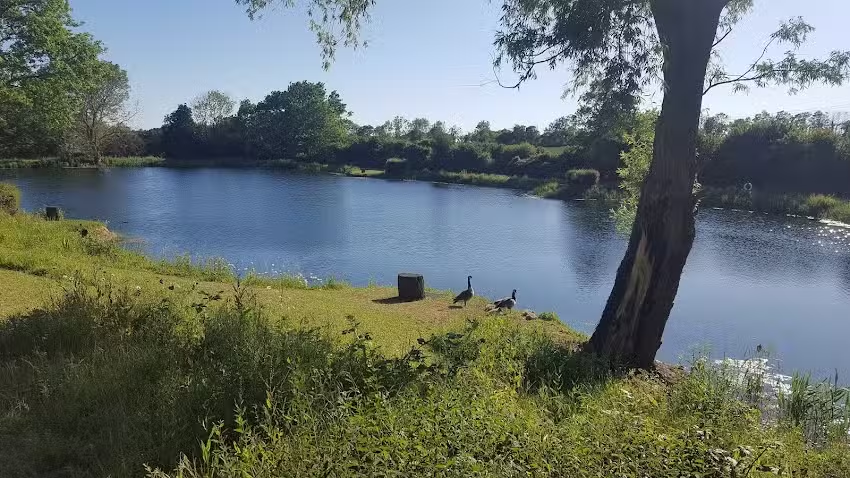
The fishery is built around two purpose-dug lakes of roughly 1.1 and 2.2 acres, each designed with deep margins close to the bank so anglers can access productive water without needing to cast extreme distances.
Stocking has traditionally focused on rainbow trout with a smaller number of brown trout, with fish commonly running to a healthy weight and recorded specimens reaching around nine pounds for rainbows and five pounds for browns, which appeals to anglers looking for quality rather than sheer numbers.
Regular visitors have described the trout as hard-fighting and in good condition, noting that even average-sized fish put a noticeable bend in the rod and reward careful presentation and sensible tippet choice.
Unlike many mixed venues, Willow Lakes has been run as a fly-only trout fishery with no bait or spinning, which gives anglers a focused environment where surface activity, hatches and fly selection genuinely matter to the outcome of the day.
The management has historically operated a straightforward ticket structure with a fixed limit on the number of trout that can be taken, and no catch-and-release, meaning every fish landed and kept must be chosen carefully and handled responsibly while on the bank.
For many visiting anglers, the limited-bag system has encouraged thoughtful fishing rather than simply working through large numbers, and has tended to attract those who value a measured day’s sport over constant action.
Feedback from those who learned to cast and present a fly here suggests that Willow Lakes has been particularly friendly for newcomers, with several accounts of complete beginners landing multiple trout within their first session thanks to both stocking levels and guidance from the resident team.
Tuition has often been highlighted as a strong point, with patient instruction for those unfamiliar with overhead casts, line control or playing fish on lighter tackle, and that personal coaching has helped position the venue as a welcoming place for those taking their first steps into fly fishing.
On the practical side, the site includes a small lodge that serves as a central hub, providing shelter, complimentary hot drinks and space to regroup between sessions on the water.
The lodge is complemented by a dedicated gutting and preparation area where anglers can clean trout before travelling home, a detail that many appreciate as it keeps the process straightforward and avoids mess in vehicles or accommodation.
Toilet facilities on site are frequently described as exceptionally clean, with some visitors remarking that the standards rival or exceed those of commercial accommodation, which can be a deciding factor for families or those spending the whole day at the lakes.
The general appearance of the site reflects ongoing care and maintenance, with banks kept tidy, access clearly defined and infrastructure looked after, which helps underpin a feeling of safety and comfort during longer sessions.
In terms of atmosphere, anglers often comment on the quiet, peaceful character of the setting, noting that the lakes feel secluded and sheltered from strong winds, allowing focus on presentation and line control rather than simply battling the elements.
That sense of calm has made Willow Lakes a popular choice for those wanting a more contemplative day on the bank, where the experience of watching rises and working out effective patterns is as important as taking fish for the table.
Conditions on the water are rarely effortless; several visitors mention challenging days where wind direction, light levels or insect activity required persistence and tactical changes, which can be appealing to experienced fly anglers who enjoy solving a changing puzzle rather than relying on heavily stocked, easy fishing.
At its best, the fishery has offered consistent sport across both lakes, with anglers reporting limits taken on patterns such as buzzers, emergers and dries when hatches align and fish are feeding actively in the upper layers.
This makes the venue particularly interesting for those who enjoy matching the hatch, experimenting with subtle imitations and fine-tuning retrieves to trigger takes from pressured trout.
When surface activity dies down, the depth and profile of the lakes allow for intermediate and sinking-line work, giving scope for anglers to cover different parts of the water column and search out fish that have dropped deeper during brighter periods.
Practical access is straightforward, with the lakes reached via the surrounding farm, and day tickets historically collected nearby before making the short journey to the water, which keeps vehicle movements away from the immediate bank side.
The overall layout of the fishery gives enough room for anglers to find their own space without feeling crowded, and some visitors have even enjoyed sessions with a whole lake to themselves, adding to the sense of exclusivity.
For those interested in a more social experience, the lodge and bank spaces provide natural points for conversation, fly pattern comparisons and informal advice, with regulars often willing to share what has worked for them on recent visits.
One of the most significant recent developments, however, is that Willow Lakes has been reported as closed to day-ticket anglers as a conventional public fishery, with information suggesting that the venue may transition into, or already be operating as, a syndicate arrangement rather than remaining a standard pay-per-day water.
This change has prompted disappointment among anglers who had fished the lakes for many years and regarded them as a dependable local option, particularly those who appreciated the combination of well-managed water, strong trout and the intimate scale of the site.
Prospective visitors should therefore be aware that the long-standing model of simply turning up with tackle and purchasing a day ticket is unlikely to apply in the same way, and that access may be restricted or subject to invitation or membership if a syndicate structure is adopted fully.
From the perspective of regulars, a syndicate could bring benefits such as tighter control over angling pressure, more tailored stocking strategies and a stable group of committed members, but it inevitably reduces spontaneity and may place the fishery out of reach for casual or occasional trout anglers.
There have also been recent comments from long-time patrons who arrived expecting the usual open fishery only to find it apparently closed, which underlines the importance of checking its current operating status before planning a journey, especially for those travelling some distance.
This uncertainty around access is currently the most notable drawback for potential new visitors, as it complicates straightforward planning and makes it harder to treat Willow Lakes as a default choice for a last-minute fishing day.
From a customer-service standpoint, historic reports emphasise friendly and approachable management, with anglers mentioning that nothing seemed too much trouble and that those running the lakes took pride in offering guidance, facilities and a genuine welcome.
Such attitudes have helped distinguish the venue from more anonymous commercial stillwaters, creating a relationship where regular visitors felt recognised and supported in their development as fly anglers.
For beginners considering where to learn, Willow Lakes has often been suggested as a strong option precisely because of this mix of accessible water, manageable size and supportive on-site presence, making it less intimidating than very large reservoirs or heavily pressured urban venues.
More experienced anglers, on the other hand, have valued the chance to refine presentation techniques in a controlled environment where fish behaviour is strongly linked to conditions and where patterns like buzzers, emergers and dry flies can be tested under realistic but manageable pressure.
In the broader context of specialist trout venues, Willow Lakes sits within a category of smaller, stocked stillwaters that prioritise clarity of purpose over multi-discipline fishing, and this singular focus on fly fishing has appealed to those who want a venue aligned with their particular style of angling.
However, the absence of catch-and-release options may be seen as a disadvantage by anglers who prefer to return the majority of their fish, either for ethical reasons or because they simply do not want to keep a full bag every time they visit a trout water.
This policy has historically ensured a steady turnover of stock and helped maintain good growth rates and condition, but it does limit the flexibility of how each session unfolds, especially for anglers who achieve their bag early in the day and would otherwise enjoy continuing with released fish.
From a value perspective, the structured limit and quality of fish have often been considered fair, particularly when combined with the standard of facilities and the general upkeep of the site, although individual perceptions naturally vary depending on catch results and expectations.
For those primarily interested in premium stillwater fly fishing experiences, the controlled environment, careful stocking and strong fish performance have been notable advantages that set Willow Lakes apart from more general-purpose waters where trout are an add-on rather than the core focus.
Given the recent reports of closure and potential transition to a syndicate model, the fishery currently occupies a more uncertain position in the local trout fishing landscape than in previous years, with prospective visitors needing to confirm availability and any membership requirements in advance.
In terms of strengths, the venue offers thoughtfully designed lakes, quality trout, well-kept facilities and a calm, sheltered setting that many anglers find ideal for honing their skills and enjoying a focused day with the fly rod.
Weak points for today’s potential customer include limited clarity around public access, the lack of catch-and-release options, and the possibility that spontaneous day-ticket visits may no longer be supported in the way they once were.
For anyone seeking a carefully managed, small-scale trout fishery with a track record of well-conditioned rainbows and browns, Willow Lakes has demonstrated strong qualities, but it is now essential to verify how, and to whom, the fishery is currently open before making it a central part of any angling plans.
Key points for potential visitors
- Two purpose-built lakes dedicated to fly fishing, with deep margins and sheltered banks that suit both beginners and experienced anglers.
- Stocking historically focused on rainbow and brown trout of good average weight, with some larger specimens providing memorable sport.
- Fly-only rules and a fixed bag limit encourage thoughtful trout fishing rather than high-volume catch-and-release sessions.
- On-site lodge, hot drinks, gutting facilities and very clean toilets contribute to a comfortable day at the lakes.
- Calm, peaceful setting that many anglers value for its quiet character and focus on the water rather than distractions.
- Helpful, approachable management and a history of patient guidance for those newer to casting and stillwater techniques.
- Recent reports indicate closure as a standard day-ticket fishery, with a possible move towards a syndicate model, so checking present arrangements is crucial.
- No catch-and-release policy may not suit anglers who prefer to return most of their fish or to continue fishing after filling a bag.
Overall, Willow Lakes Suffolk presents a picture of a carefully tended small stillwater venue that has offered dedicated fly fishing for stocked trout in a tidy, quiet location, with the main question for today’s angler being how access is now structured and whether opportunities remain for non-members to enjoy time on the bank.