Wishing Tree Reservoir
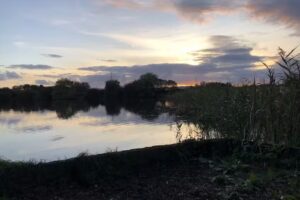
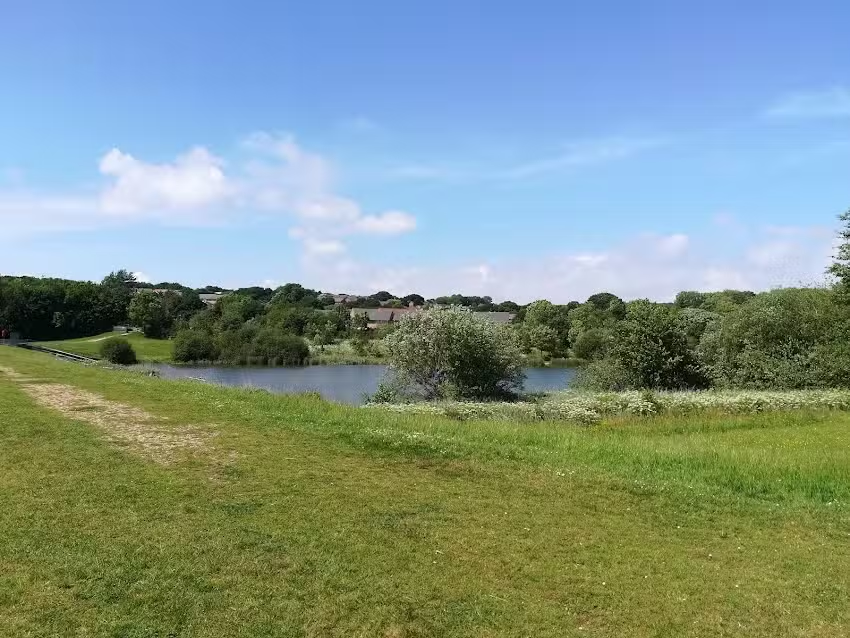
BackWishing Tree Reservoir in St Leonards is a compact but productive coarse fishery that appeals to anglers looking for relaxed sessions and steady sport rather than extreme specimen hunting. Surrounded by mixed woodland and open banks, it combines easy access with a setting that feels relatively sheltered from traffic once you are down on the pegs. Regular visitors tend to highlight the calm atmosphere around the water, with several describing it as peaceful and well suited to unhurried days on the bank, even when the ground can be a little muddy after rain.
This is primarily a carp fishing venue, and that is reflected in both stocking and catch reports. The reservoir is often described as egg‑shaped and roughly 4 to 6 acres, holding large numbers of common carp that commonly run between low single figures and low doubles, with a scattering of fish over the 20 lb mark for anglers willing to put in the time. There are also other coarse species present, including bream to around 6 lb, roach and rudd into the pound and a half bracket, plus perch, eels and the occasional pike. Some sources mention at least one catfish having been landed in the past, which adds a touch of unpredictability for those who enjoy varied coarse fishing.
Feedback from anglers suggests that catch rates can be impressive on the right day. One visitor fishing multiple sessions with his son reported more than thirty carp over a four‑day period, topped by a mirror carp over 20 lb that long‑time locals had rarely seen, which speaks both to stock density and the occasional surprise lurking in the water. The fact that many of these fish were described as clean and well‑conditioned commons indicates that the fishery is capable of producing consistent action alongside the odd memorable specimen. For new visitors, this positions the reservoir as a practical choice if you want regular bites from carp rather than chasing a handful of very large fish.
Depths are generally modest, in the region of 2 to 5 feet, which shapes how the venue fishes through the year. In the warmer months, surface tactics become a realistic option and can be particularly productive, making this an attractive place for surface carp fishing with floaters or other top‑water approaches. In cooler periods, the shallow nature of much of the lake can make it sensitive to sharp weather changes; anglers may find that the fish move quickly with temperature shifts, so keeping an eye on wind direction and light levels helps when choosing a swim. The overall character is often seen as sitting between easy and moderate difficulty: not a guaranteed haul in every peg, but far from being a notoriously hard water either.
From a methods point of view, most mainstream carp rod and coarse rod tactics have their place here. Reports indicate that all standard approaches – from float fishing and light feeder work through to classic bolt‑rig carp setups – can produce, giving anglers scope to tailor their approach to conditions and personal preference. Given the stock levels and the mix of species, many will opt for simple boilie or pellet presentations for carp, while maggots, sweetcorn and smaller particle baits are effective for bream, roach and rudd. The fishery’s relatively small size also means that accurate casting and careful baiting can make a noticeable difference, especially on busier days when pressure concentrates the fish into particular areas.
Those prioritising accessibility will appreciate that the reservoir sits close to the road and offers straightforward bank access from multiple points. This is helpful for anglers carrying heavier carp fishing tackle, barrows or larger bivvy setups, as it reduces long walks and difficult climbs. At the same time, some banks are more open, while others are flanked by trees and shrubs, so it is worth arriving early if you have a strong preference for shaded or more open pegs. The surrounding path and woodland areas also appeal to walkers and dog owners, which creates a slightly mixed‑use environment: some anglers enjoy the sense of shared space, while others may prefer more secluded fisheries if they want complete isolation.
Management of the angling side falls under the local freshwater angling association, whose general rules apply to Wishing Tree Reservoir. For potential visitors, the most relevant points are that barbless hooks are required, and there are restrictions on the number of rods and the types of bait allowed. Anglers targeting carp or pike are expected to use appropriately large landing nets and unhooking mats, which is standard practice on responsible carp lakes and helps protect fish stocks from unnecessary damage. There is also a ban on bait boats and, from the 2026 season, an explicit ban on dog biscuits as hookbaits or loose feed, which is worth noting if you usually rely on floaters.
Night fishing is a particular point of interest for many carp anglers, and Wishing Tree Reservoir does cater for after‑dark sessions under defined conditions. Association rules note that Wishing Tree is one of the waters where night fishing is permitted via membership or appropriate tickets, rather than being universally closed at sunset. This offers flexibility for those planning longer stays with bivvies and alarms. However, access is tightly controlled, and anglers are expected to carry proof of membership or a valid day ticket at all times, with the possibility of being asked to leave if documentation cannot be produced. For anyone travelling some distance, it makes sense to clarify access arrangements and any ticket requirements in advance through the club or linked outlets.
In terms of facilities, information is more limited. Anglers’ reports and fishery listings tend to focus on the water itself and the fishing rather than on‑site amenities, and some sources explicitly state that they could not confirm facilities such as toilets, on‑site shops or catering. The general impression is that this is primarily a fishing venue rather than a full‑service commercial complex, so visitors should plan to be self‑sufficient and bring their own refreshments and equipment. This may be a disadvantage for families expecting full‑service amenities, but it can be a positive for anglers who prefer relatively simple fishing lakes without heavy commercialisation.
Reviews from the general public highlight the dual role of the reservoir as both a fishery and a pleasant place for a walk. Visitors speak of peaceful surroundings and attractive views towards the local countryside, especially when following paths that link the reservoir to nearby nature reserves and open spaces. For anglers, this means that while the banks are generally calm, there can be regular foot traffic from walkers using the paths that cross or skirt the site. Those who like a quiet, friendly backdrop usually see this as a plus, whereas anyone seeking complete solitude should be aware that the area is not exclusively reserved for anglers.
On the positive side, the fishery benefits from a strong population of carp and mixed coarse species, relatively easy access, and the possibility of both day and night sessions. The combination of smaller doubles, upper doubles and the occasional fish around or above 20 lb makes it a sound choice for anglers who want regular action with the chance of something a little larger, but without the extreme pressure or long waiting times associated with some heavily‑publicised big‑fish waters. The shallow depths and modest size lend themselves well to anglers learning carp rigs, playing fish safely and refining baiting strategies, which can be especially appealing to improving anglers or those bringing younger family members for their first proper sessions.
On the more critical side, the lack of clear information about toilets, shelter and other bank‑side facilities can be a drawback, particularly for longer stays or for those with mobility or health considerations. The water’s position next to a road, while helpful for access, can also slightly compromise the sense of remoteness some anglers look for. In wet weather, several visitors have noted that the ground can become soggy and slippery on the approach to certain pegs, so appropriate footwear and care on the banks are advisable. Finally, the involvement of an angling association and the requirement for membership or tickets mean that casual visitors cannot simply turn up and fish; anyone who prefers very informal venues might find these structures less convenient, even though they help safeguard the fishery.
For anglers focusing on carp fishing lakes in East Sussex, Wishing Tree Reservoir occupies an interesting middle ground. It is not a high‑profile specimen water with numerous 30 lb plus fish, but it offers steady carp action, mixed coarse sport and a setting that balances accessibility with a sense of greenery. The rules around barbless hooks, appropriate landing nets, unhooking mats and bait restrictions reflect a commitment to fish welfare that will appeal to responsible anglers. With its mix of commons, the odd mirror, and other species such as bream, roach and rudd, it remains a realistic choice for those looking to spend unhurried hours refining their approach, enjoying reliable coarse fishing lakes style sport and, occasionally, connecting with a better‑than‑average fish.