Woodhill Fishery
BackWoodhill Fishery presents itself as a compact stillwater venue focused on trout angling, offering a single lake that appeals mainly to those who enjoy relatively intimate waters rather than sprawling complexes with multiple ponds. The setting is functional rather than heavily commercial, and feedback from visiting anglers suggests an experience that can be rewarding in terms of fish quality and fighting strength, but somewhat variable in terms of consistency, maintenance and organisation.
This fishery is geared towards dedicated trout anglers, with the water stocked for this purpose rather than catering to mixed coarse species. Listings describe it as a trout-only venue with one main lake, which will appeal to anglers who prefer focused trout fishing over multi-species waters where stocking is divided across carp and coarse ponds. Anglers who value a straightforward, no-frills trout fishery often look for venues of this size, as they can feel less crowded and easier to read than large complexes, especially for those who enjoy stalking fish and working the water methodically.
Several visitors emphasise that Woodhill Fishery operates on a catch-and-release basis in at least part of its offering, which aligns with common practice at specialist trout venues and underscores an intent to maintain fish stocks over the long term. For anglers who prioritise sustainable sport, a clear catch-and-release focus can be a significant advantage, as it usually means a higher proportion of larger, well-conditioned fish that have grown on in the water. On the other hand, anglers who mainly want to take fish home may find this model less suited to their expectations and should confirm the specific ticket and bag options before committing to a session.
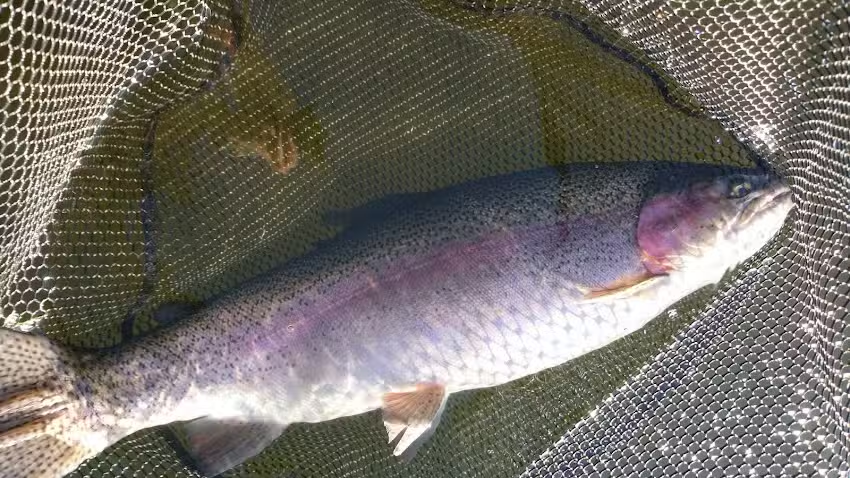
The quality of the fish is often highlighted as one of the strongest positives. One angler describes the water as a hidden treasure with large fish, suggesting that the stock includes specimens capable of providing a real test on appropriate tackle. There are reports of anglers reaching their bag limits and landing multiple trout in an evening, reinforcing the impression that, when the conditions and stocking cycles align, the lake can fish very well for those using effective techniques and presentations. Another visitor mentions landing a notable tiger trout of around seven and a half pounds, describing it as a powerful, hard-fighting fish, which points to both variety and size within the stocking policy.
This emphasis on good-quality, strong fish will appeal to anglers who value sport over sheer numbers, as a relatively small water holding sizeable trout can offer exciting takes and energetic runs. At the same time, the presence of larger fish places a premium on balanced tackle; anglers are likely to benefit from stepping up to robust leaders and lines, as is widely advised for catch-and-release trout venues where controlling fish quickly is part of good fish care. Those accustomed to lighter set-ups may want to adjust their approach to protect both fish welfare and their own success rate.
In terms of the experience on the bank, comments indicate that Woodhill Fishery can deliver enjoyable sessions for both individuals and families. Anglers mention pleasant evenings and successful outings, including family days where a parent and child have shared the experience of hooking into trout and achieving personal milestones such as a first tiger trout. For potential visitors, this suggests that the fishery is not purely for experts; reasonably competent anglers, including those bringing family members, can enjoy productive fishing with the chance of memorable captures.
However, not all feedback is positive, and it is important for potential visitors to recognise the less flattering aspects as well. One review portrays the water as little more than a muddy pond with few visible fish and criticises the operation as disorganised, with particular frustration directed at staff attitude on the day. While this is a single perspective, it does highlight that experiences can vary, and that expectations of slick, fully serviced facilities may not always be met. Anglers who are accustomed to commercial fisheries with highly structured pegs, on-site shops and formal reception areas might find Woodhill Fishery more low-key and, at times, rough around the edges.
The contrast between anglers describing the venue as a hidden treasure with big fish and others calling it a waste of time points to inconsistency rather than a uniformly poor or excellent venue. Stocking patterns, water clarity, weed growth and weather conditions can all influence how a single-lake fishery performs on any given day, and smaller waters tend to show those fluctuations more dramatically. This means that some visitors may hit the water under favourable conditions and encounter active, visible fish, while others arrive when trout are less responsive or more difficult to locate.
Prospective visitors should also be aware that information about facilities and amenities is limited. Listings confirm the basic details of the site and its focus on trout, but they do not emphasise extensive infrastructure such as cafés, large tackle shops or purpose-built lodges. For many day-ticket anglers this is not a problem, as the priority is access to productive water and decent fish, but it does shape what type of experience to anticipate. Those who prefer venues with extensive non-angling amenities for accompanying family members may find better options elsewhere, whereas anglers who like simple, purpose-driven fishing lakes may see this as an acceptable trade-off.
Because Woodhill Fishery is based around a single lake, pressure and angler numbers can significantly influence the feel of a session. Smaller stillwaters can provide a more intimate atmosphere when lightly attended, but on busier days space can feel limited, particularly for fly anglers who require room for back-casting. Visitors who prefer a quieter bank may benefit from choosing midweek sessions or less popular times, while those who are comfortable sharing water and working around other anglers might not find this a major concern.
From a technical perspective, anglers interested in fly fishing will find that the typical tactics used on smaller fly fishing lakes are applicable here: intermediate or floating lines, a range of nymphs, lures and dry flies, and a willingness to adjust retrieve patterns according to conditions. Although there is no detailed, official guidance published about recommended patterns at this specific venue, general best practice for catch-and-release trout waters—such as using barbless or debarbed hooks, handling fish quickly and carefully, and avoiding unnecessary wading—will help maintain stock quality and fish welfare. Anglers who adopt these approaches are more likely to enjoy repeat sport from well-conditioned fish.
Accessibility is another point that potential customers often consider when choosing among UK fisheries. Available information indicates that the fishery is reached via local roads and is associated with a farm setting, rather than being situated within an urban or heavily developed area. While this generally appeals to anglers seeking a quieter environment, it also means that visitors should plan their journeys, check access points in advance and be prepared for a rural approach rather than clear, urban signage. Reviews mentioning closed gates on certain days illustrate the value of verifying access arrangements, particularly around holidays or adverse weather.
Customer service feedback is mixed. Some anglers imply that their interactions at the fishery have been straightforward and that they have been able to enjoy their sessions without issue. Others, however, mention encounters they perceived as unhelpful or dismissive, which contributed to a negative impression of the venue. For a relatively small operation without a large staff, service quality can hinge on the presence and mood of individuals on a given day, and potential visitors should be aware that the experience may feel less structured and polished than at larger, heavily staffed day ticket fisheries.
Value for money will depend heavily on what each angler expects from a session. For anglers who place the highest value on hard-fighting trout, including the chance of fish such as sizable tigers, a modestly sized water with a reputation for strong fish can be very satisfying, even if facilities are basic. On the other hand, anglers who prioritise immaculate banks, extensive amenities and guaranteed high catch rates every visit may feel that the occasional quiet day, combined with reports of a sometimes untidy or muddy water, does not fully justify their investment of time and travel.
For those comparing options in the region, Woodhill Fishery stands as a specialist trout venue among a wider mix of coarse and carp fisheries elsewhere in the country. Dedicated trout anglers looking for single-lake stillwaters will likely weigh the promise of strong, sizeable fish and a relatively peaceful environment against reports of inconsistent service and occasional dissatisfaction with water condition. The decision to visit may ultimately come down to personal priorities: whether one values raw angling potential and individual fish quality more than cosmetic refinement and a fully commercialised set-up.
In practice, the most satisfied visitors to Woodhill Fishery are likely to be anglers who arrive with realistic expectations: a small, trout-focused water, basic facilities, the potential for very good sport with big, powerful fish, and a level of variability in both fishing quality and customer experience. Anglers willing to adapt their methods, use appropriate tackle and treat the fishery as a straightforward venue rather than a full-service complex are best positioned to appreciate its strengths while accepting its limitations.
Key positives for potential visitors
- Focus on trout fishing in a single-lake format, appealing to anglers who prefer dedicated stillwater trout venues without the distraction of mixed coarse species.
- Reports of large, hard-fighting fish, including notable tiger trout, offering the chance of memorable sport on balanced tackle.
- Catch-and-release oriented approach that supports sustainable fishing and the development of larger, better-conditioned fish for ongoing sport.
- Intimate water size that can suit anglers who enjoy reading a smaller lake and working it thoroughly rather than rotating across many ponds.
- Family-friendly potential, with visitors mentioning enjoyable shared sessions and first significant catches for less experienced anglers.
Potential drawbacks to consider
- Mixed reviews on water condition, with at least one visitor describing the lake as muddy and unimpressive on their particular visit.
- Criticism of organisation and staff attitude from some anglers, suggesting that service standards may vary between visits.
- Limited published information on amenities, indicating a more basic set-up than large commercial fisheries that offer cafés, shops and extensive infrastructure.
- Single-lake format means that if conditions are unfavourable or the fish are not feeding, there is no alternative water on site to move to.
- Access and gate arrangements may occasionally cause confusion, making it wise for visitors to confirm details beforehand, especially around holidays or unusual conditions.
For anglers deciding whether Woodhill Fishery is the right choice, the available information suggests a venue with genuine strengths in trout quality and focused sport, balanced by a degree of operational variability and modest infrastructure. Those who value strong fish and straightforward fly fishing on a dedicated trout water may find it a worthwhile option, provided they approach it with an understanding of both its capabilities and its limitations.