
York Railway Pond
BackYork Railway Pond is a compact, well-established coarse fishery tucked within a residential setting and managed with clear care by a dedicated team of local anglers and volunteers. It offers an accessible introduction to coarse fishing for beginners while still presenting enough challenge to keep experienced anglers engaged, especially those who enjoy working out a water’s changing moods over multiple visits. The setting is peaceful rather than remote, so visitors get a mix of natural tranquillity and the low-level background activity of a local community space.
For anyone interested in a friendly, social venue to enjoy match fishing, York Railway Pond has become a recognised spot in the area. Regular club-style matches are organised, often overseen by anglers who know the pegs and depths in great detail, which helps newcomers understand how the pond responds to different approaches and weather conditions. These matches are described as relaxed and inclusive rather than high-pressure tournaments, and many visitors mention that all abilities are welcome, which makes it a practical option for someone stepping up from casual pleasure sessions to more organised angling.
The water itself is relatively small but offers surprising variety, both in terms of depths and fish behaviour. Anglers report that the depths can alter significantly from peg to peg, with some spots remaining quite shallow and others dropping away quickly, so careful plumbing and line choice are essential for consistent results. This variation means that simple methods can work very well on one peg while a more technical approach may be needed only a few pegs further along, which is part of the appeal for those who like to fine-tune their tactics and rigs. It is not a featureless pool: islands, reed lines and changes in bottom contours all contribute to the sense that every session demands a slightly different plan.
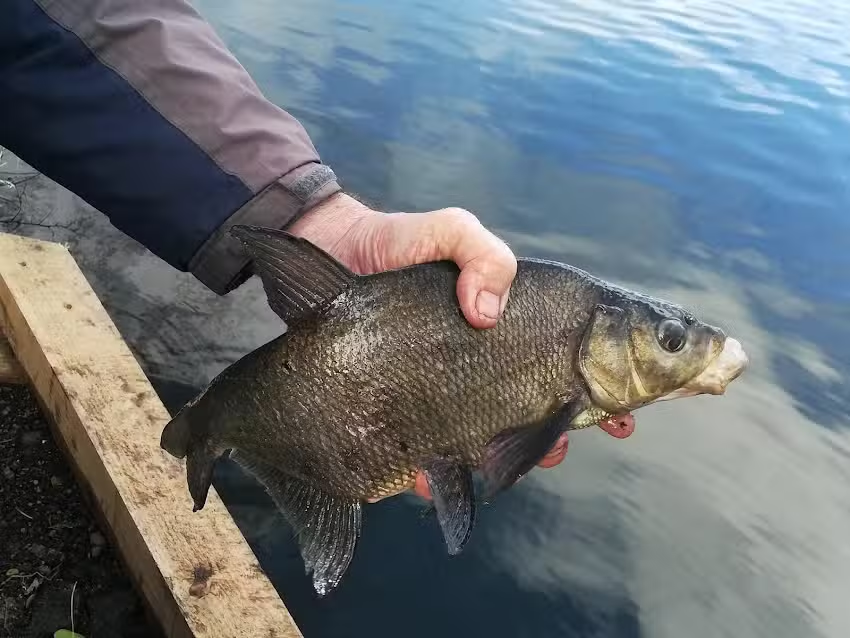
In terms of fish stocks, York Railway Pond supports a healthy mix of species that lend themselves to both pleasure and competitive sessions. Reports and videos from regulars describe plenty of silver fish, particularly roach and perch, which makes the venue attractive for busy days on the pole or waggler rather than chasing just one or two big specimens. Alongside these silvers, there are crucian carp, tench, bream and the occasional larger carp that provide extra interest when the conditions are right and the angler is prepared to adapt. This combination allows visitors to choose whether they want steady bites from smaller coarse fish or to take a more selective approach in the hope of something heavier.
York Railway Pond has a reputation among some local anglers as a technically demanding water at times, especially in colder months or on heavily pressured days, and this is often mentioned in online discussions and angling videos. Catch rates can fluctuate, and there are sessions where the fish prove cautious, requiring lighter tackle, careful feeding and a willingness to rotate lines. For some visitors, this challenge is a positive aspect: it rewards those who think about depth, presentation and feeding patterns rather than simply casting out and waiting. For others who prefer easy, high-volume sport every time, the more testing nature of the pond on difficult days could feel less appealing.
From a practical perspective, access is relatively straightforward. The pond sits just off a residential road, and the approaches have been improved over time with defined paths and purpose-built pegs. Many of the pegs are solid platforms rather than rough banks, which is particularly helpful if you are bringing a seat box or more substantial fishing tackle. The pathways and layout also mean that moving a trolley or barrow around the water is manageable, though visitors should be aware that it is still a compact suburban site with limited space behind some swims; those with long poles need to think about where their rollers will go and how busy the track behind them might be.
Comfort on the bank is supported by several benches positioned around the water, which is noted by general visitors and walkers as much as anglers. People often comment on the pond as a quiet place to sit, watch the ducks and unwind, suggesting that it functions as a shared green space as well as an angling venue. This dual identity means that while you are likely to encounter other anglers, you will also see dog walkers and local residents enjoying the surroundings. Dogs are usually expected to remain under control or on leads, so most anglers find the environment calm enough to concentrate, though those who prefer completely secluded fishing lakes may find the occasional pedestrian activity less to their taste.
One of the notable strengths of York Railway Pond is the amount of volunteer work invested in the site. Long-standing visitors describe how much the water has changed over the years, with significant efforts made to improve pegs, manage vegetation and refresh the fishery after periods when sport had become more difficult. These efforts are visible in the condition of the swims and the general tidiness of the banks, and there is a sense of pride among regulars in how the pond has been brought back to life. Families and grandparents mention that it offers play and learning opportunities for children, from spotting wildlife to seeing anglers using different tactics, which reinforces the idea of a community-led space rather than a purely commercial fishing lake.
The management style is relatively informal compared with larger commercial fisheries. Day-ticket arrangements are typically straightforward: anglers choose a peg and a bailiff visits the bank to collect payment and issue a ticket, rather than using a tackle shop or barrier on entry. For potential visitors this has clear advantages in simplicity, but it also means there is less of the on-site infrastructure some people expect, such as a dedicated tackle shop, café or formal reception area. Those who are used to full-service day-ticket fishing venues might find the lack of such facilities a drawback, especially if they like to pick up bait, snacks or extra tackle items on arrival.
On the other hand, that looser structure contributes to the friendly, clubby atmosphere that many anglers value. Regular match organisers and experienced local anglers often share advice freely, discussing how the pond is fishing, which pegs are currently producing and what baits are working best. Popular tactics frequently mentioned include pole fishing for roach and perch, light float fishing close in, and waggler or feeder approaches to reach deeper or more distant features. Simple baits such as maggots, pinkies, casters and hemp tend to dominate on productive days, with fish responding well to regular but modest feeding rather than heavy introductions.
Because York Railway Pond sits among housing, visitors should be realistic about the level of background noise and activity. Trains, road traffic and everyday neighbourhood sounds form part of the setting, and while many find this easy to tune out, anglers seeking absolute isolation might prefer a more rural coarse fishing lake. Space behind certain pegs can also be tight, particularly where a narrow track runs close to the platforms, so handling long poles or standing to cast repeatedly with large fishing rods may require more awareness of passers-by than at more open sites. For some this creates a slight compromise in comfort, especially on very busy days.
The pond’s popularity also means there can be pressure on the most favoured pegs, especially during matches or at peak times in warmer weather. Anglers sometimes comment that catch results are very peg-dependent, with some swims consistently producing better nets of silvers or more chances of larger carp and tench. While this is common at many small fishing ponds, it does mean that those arriving late or without local knowledge might find themselves in a less productive area. Regulars, however, tend to accept this as part of the challenge and adapt their methods to suit whatever peg they draw or find available.
In terms of overall atmosphere, feedback is generally positive. Visitors describe the pond as quiet, relaxing and well worth a short visit if you are nearby, whether for a lunchtime walk or a few hours on the bank with a pole or light feeder fishing setup. The combination of wildlife, accessible paths and maintained pegs gives it a welcoming feel for adults and children alike, and there is clear appreciation for the volunteers who keep on top of maintenance. This is not a high-profile specimen venue, but rather a localised coarse fishery where consistent silvers, the chance of a better fish and a sociable environment come together.
For potential customers deciding whether York Railway Pond suits their needs, the key strengths lie in its friendly community, varied fish stocks, manageable size and the effort put into peg and habitat improvements. It is particularly suitable for anglers who enjoy pole fishing, light match fishing and regular bites from mixed silver fish, as well as those who value a community-run water over a heavily commercialised complex. On the downside, limited facilities, occasional challenging sport, peg dependence and the suburban surroundings may not suit everyone. However, for many local anglers and visitors willing to approach it thoughtfully, York Railway Pond offers a characterful, well-tended fishing pond that rewards patience, technique and respect for a shared community resource.